Bouchra
Directors – Orian Barki, Meriem Bennani – 2025 – Italy, Morocco, US – Cert. 15 – 83m
***1/2
A queer artist and filmmaker jackal living in New York desperately wants to come out to her mother back in conservative Morocco – out in UK cinemas on Friday, August 7th
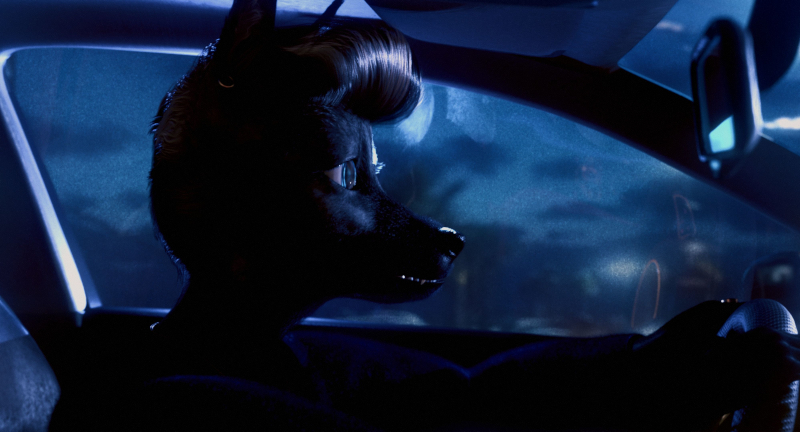
This opens with a lengthy, bravura shot framing a section of a moving carriage on an urban, New York train. Inside, passengers include our main protagonist, the eponymous, anthropomorphised, leather jacket-clad, female jackal Bouchra, standing. The shot is static in the sense that the camera and the train are moving completely in sync, so that the moving carriage, although clearly moving, is motionless relative to the viewer (apart from the occasional judder caused by the travelling of the train).
As the train travels its route, our moving view of the moving carriage is constantly interrupted by objects between us and the carriage – grids of cabling, sections of barrier and other trackside features. This momentarily recalls the similar urban carriage interior early on in Perfect Blue (Satoshi Kon, 1997), although there are no reflections here, merely levels, and any similarity between the two films stops beyond this point.
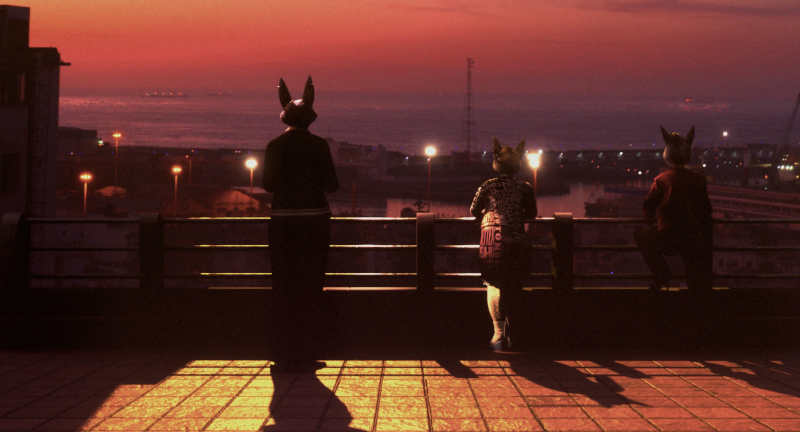
Bouchra is very different from Perfect Blue in intent, with a narrative – such as it is – that feels as if someone is shooting a documentary within New York’s queer subculture, capturing footage on camera and seeing what turns up, then trying to turn the resultant footage into a film. Except that that process implies live action, whereas Bouchra is made using computer animation, a process where pre-planning is key.
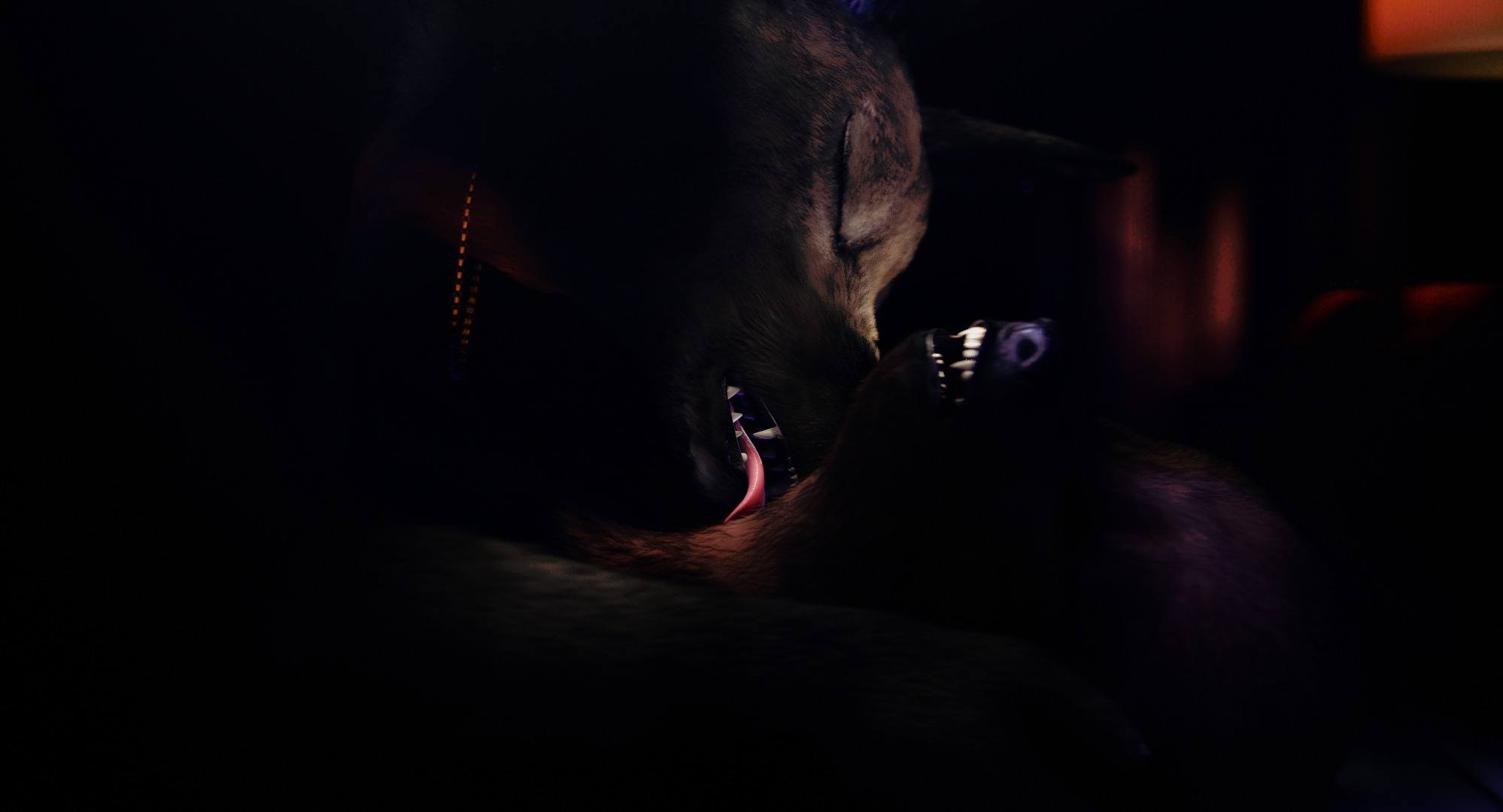
The piece would appear to have developed by recording a lot of dialogue with actors, some of it no doubt scripted, much of it improvised on the fly, and then animating the characters to that dialogue. That said, there are parts of the film (such as the opening) or a number of sex scenes where few if any words are spoken, so dialogue is less frequent or non-existent in parts of the film.
The voice artists / actors, it turns out, are, in fact, directors Barki and Bennani who developed this methodology of making films on their animated series 2 Lizards which premiered on Instagram in 2020. The first has a background making documentary shorts and shooting commercials; the second works in the are of filmk, sculpture and immersive installation, so very definitely an art world type. That places the film at quite some distance from the milieu of regular film production, and it seems reasonably to categorise it as avant-garde.
The core of the piece is twofold. On the one hand, Bouchra herself is a artist and filmmaker living life and working on her projects in New York as she navigates that city’s gay subculture. On the other, she has a complex relationship with her conservative mother back home in Morocco to whom she’s never come out as gay. She doesn’t even begin to know how to broach the subject, yet would desperately like to do so.
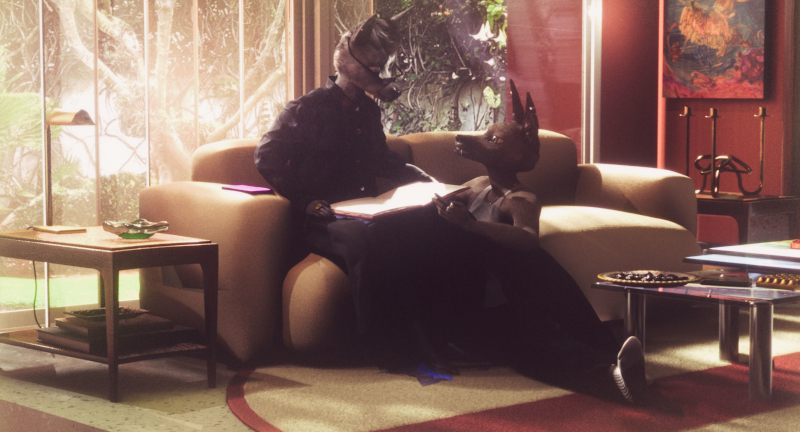
There is likewise a duality about the way the film has been put together. On the one hand, the piece is driven both by recorded or found dialogue, the latter performed by voice actors who happen to be the filmmakers. On the other, there is something visually compelling about the anthropomorphised characters and the world in which they live, which holds the attention even when there apparently isn’t very much happening. How effective this is in a film where the narrative all too often feels prisoner to the desire of the voice artists to experiment and improvise is open to conjecture, but there’s no question that Barki and Bennani have, between them, begun to articulate a unique and highly original voice.
Bouchra is out in cinemas in the UK on Friday, August 7th.
Trailer: