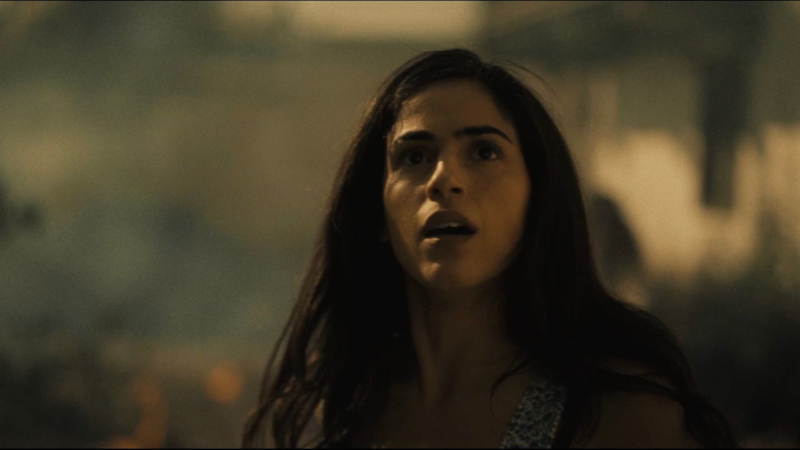
Apart
Director – Stelana Kliris – 2026 – Cyprus, United Kingdom, Greece – 104m
***1/2
Here is your coffee, madam, served with human spittle.
This review originally appeared on DMovies.org: you can find it it here.
A Greek Cypriot refugee entering an arranged marriage to escape a war zone finds she must navigate the injustices of South Africa’s apartheid regime – premieres in the Critics’ Picks Competition of the 30th Tallinn Black Nights Film Festival
Its title suggests separation or distance. In Afrikaans, ‘apartheid’ means apartness. At the centre of its narrative is Eleni (Leem Lubani), a Greek Cypriot woman. Some historical background: in 1974, as an opening onscreen title informs us, Turkey invaded Cyprus. The only way many women could get out of the country was by arranged marriage.
Such an opportunity is presented to Eleni to escape this mess: an arranged marriage to a friend of the family in South Africa’s small Greek Cypriot community. Thus she finds herself meeting a man she doesn’t know, Nico (Luca Pasqualino), at the airport in South Africa, going straight to the registry office.
There, in the presence of two witnesses, Spiros (Andreas Phyactou) and Jenny (Rachel McKay), neither of whom she knows, a Justice takes them through a civil wedding ceremony, following which Eleni is asked to sign her name for the last time, and pronounced “Mrs. Cristadulu” (not, tellingly, “man and wife” – as the wife, she appears to be considered a mere adjunct to the man).
The Justice echoes the international audience’s minimal knowledge of Cypriot history when he comments, wasn’t there a war there recently, or something?
Over a friendly meal with Nico’s extended family, her background comes up. She is from a mixed village, in which Cypriot Greeks and Turks lived side by side. They were not all bad, she says, when Nico refers to the other side as “Bloody Turks”. Eating an olive, she remembers her and a companion as kids dipping olives in water before eating them: the warm, yellowish browns of these images contrasts with the cooler blue and green pastel shades of her immediate, present surroundings.
Nico shows her street corner cafe where he works. He doesn’t own it, just manages it. He starts on about her sympathy for the Turks, telling her she embarrassed him earlier. He shows her his – their – simple living quarters adjoining the shop. A room with a double bed and a clothes line. He gallantly offers to take the floor so she can use the bed.
In the morning, she learns there are two doors and two customer counters, one for whites, the other for blacks “to stop them stealing, I guess,” he says. His black assistant Johanna (Girley Jazama) scoffs at Eleni’s small talk that at least there’s no fighting in South Africa. There are clearly tensions. Nico is constantly refusing to handle stolen goods from a black supplier, Eleni upsets Afrikaans-speaking Mrs. Van Zyl (Mary-Anne Barlow), later revealed as the owner’s wife.
When Mr. Van Zyl (Robert Hobbs) drops by late in the evening, she is alarmed that he carries a holstered gun – “just a precaution, my dear”, he reassures her. As Johanna leaves the shop at night, a policeman demands her pass and takes the liberty of tucking it back inside her blouse before letting her move on.
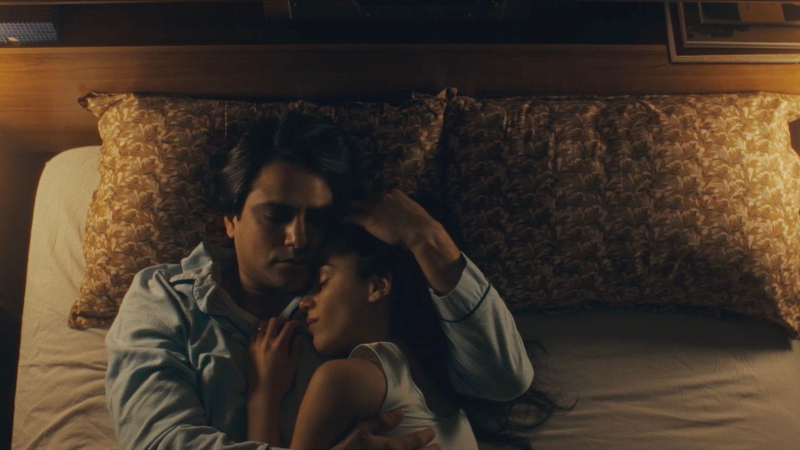
Slowly, Eleni adapts to her new home, sharing her bed with Nico after a mouse on the floor startles him, getting on better with Mrs. Van Zyl while regularly noticing Johanna spitting in the woman’s coffee. Johanna brings her boy Themba to the premises since her mother is sick. He is not Johanna’s son because he’s mixed race and that’s against the law. Then comes the night when Eleni intervenes to stop Mr. Van Zyl raping Johanna in the back room, rendering him unconscious. Johanna is horrified.
Eleni’s intervention has further repercussions: Mr. Van Zyl has the police investigate Nico for dealing with a supplier’s stolen goods. And Themba fatally attends a protest rally.
On a day in Cyprus back in 1964; the police turn up to take away the apparently innocent Hasan (Aytunc Sabanli) for “questioning”: when his young son (Aren M Tantura) intervenes, they take the boy too. The two girls are laughing, coming home, but at the sight of the truck driving away with the man and the boy inside, their laughter ceases.
Eleni herself is not in fact who she appears to be, absent-mindedly handling the crucifix hanging round her neck, keeping among her possessions half of a torn photograph of what we presume to be the two young girls, the other being on the missing half. This suggests the Hitchcockian territory of the double, so brilliantly deployed in previous Critics’ Picks entry I, the Song (Dechen Roder, 2024), yet rather than mining that potentially rich seam, the current entry prefers instead to highlight the injustices and similarities of social systems which divide people along ethnic lines.
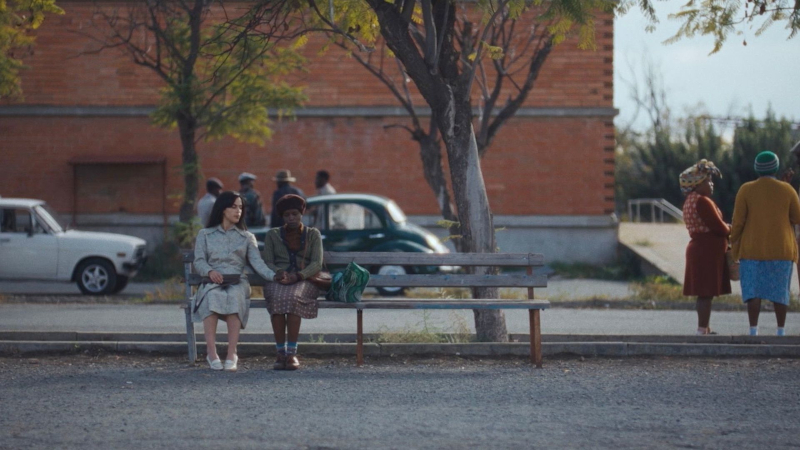
Still, Leem Lubani impresses as Eleni, hiding her true self in her new surroundings and trying to make sense of the apartheid regime alongside people who have learned to live within its unjust system over the years, while Girley Jazama as Johanna perfectly embodies such lived contradictions. Many movies have been made about that South African regime while few have been made about the Greek-Turkish antagonisms in Cyprus and their attendant atrocities. This one gains much from using the former familiar regime as a backdrop to the latter unfamiliar one.
Apart premieres in the Critics’ Picks Competition of the 30th Tallinn Black Nights Film Festival which runs in cinemas from Friday, November 6th to Sunday, November 2nd 2026.
This review originally appeared on DMovies.org: you can find it it here.
Trailer:
Critics’ Picks mashup trailer:
Festival teaser trailer: