Wildwood
Director – Travis Knight – 2026 – US – Cert. 12a – 132m
*****
Portland, Oregon teenager Prue must rescue her little brother from Wildwood, a forest she’s forbidden to enter, following his abduction by a murder of crows – out in UK cinemas from Friday, October 23rd
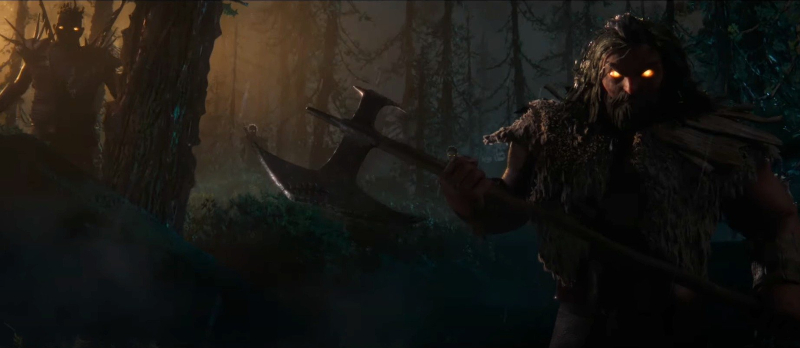
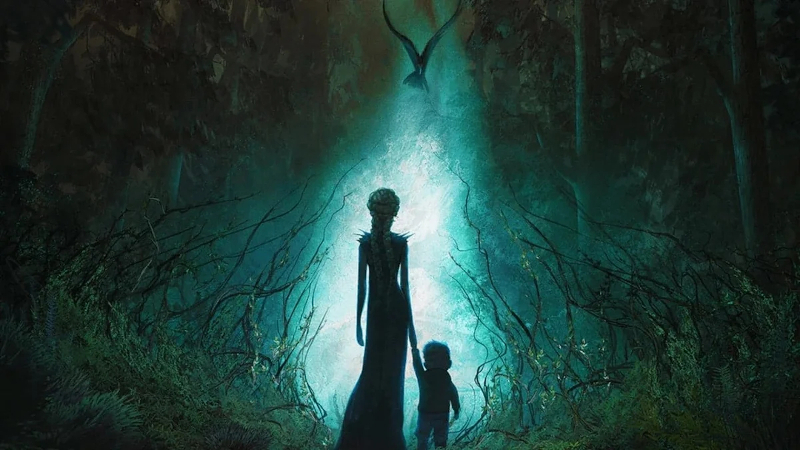
Somewhere in a town within Wildwood, a teenage boy kills himself by throwing himself off the balcony of the family mansion immediately after revealing that his body, when he tears the flesh of his chest apart, is not flesh and blood but a mechanical construct of cog wheels and other metal parts.
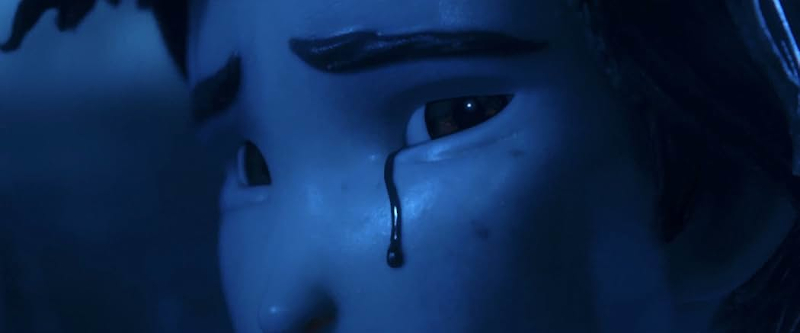
His ‘mother’, the Dowager Governess Alexandra (voice: Carey Mulligan) built this robot boy as a substitute for her son, from whose tragic loss she has never recovered.
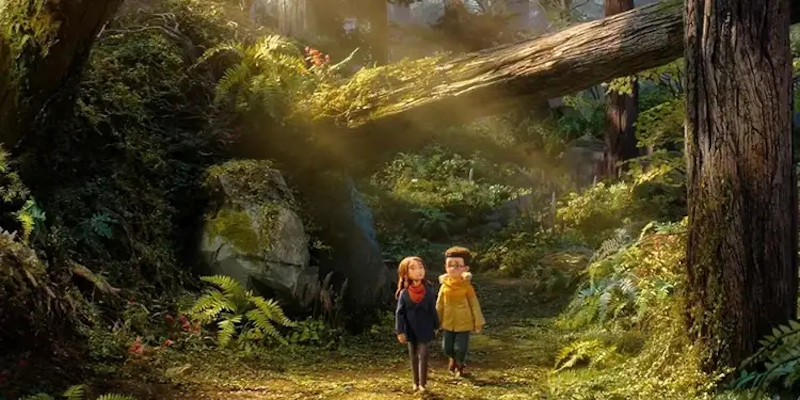
Outside Wildwood, in neighbouring Portland, Oregon, for years the parents of teenager Prue (voice: Peyton Elizabeth Lee) have regaled their daughter with stories about why she must never enter the Wildwood on the edge of Portland Oregon where the family live: father (voice: Jake Johnson), mother (voice: Maya Erskin), and her little toddler brother Mac (voice: Arthur Knight, the director’s son).
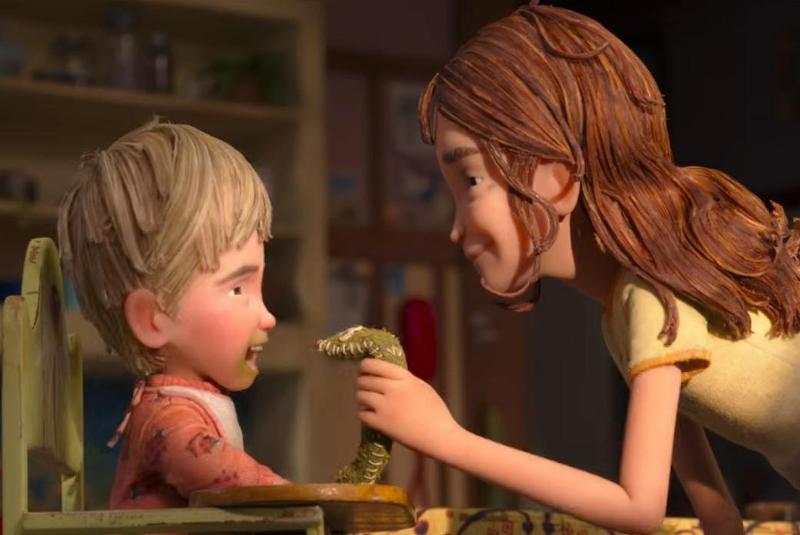
Rebellious as are all teenagers, on an afternoon where her parents are out and have left her babysitting Mac, on strict instructions that she not go out of the house with him, Prue bicycles out taking Mac with her in her trailer cart on a journey through Portland. En route, she encounters and can’t seem to shake local, nerdy, teenage boy Curtis (voice: Jacob Tremblay), a role-playing games obsessive, something in which she hasn’t the slightest interest. Somehow, though, he tags along.
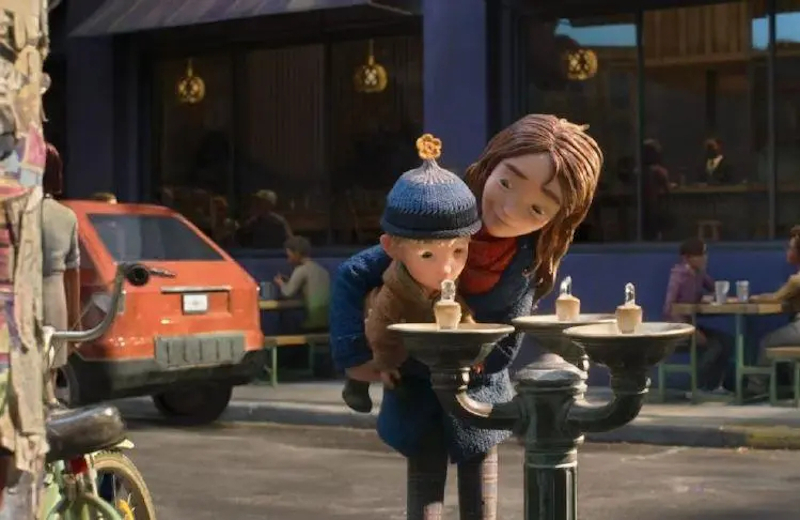
Visiting various shops and places to eat, they end up at a kid’s playground where Mac can enjoy the slide. However, in a steal from The Birds (Alfred Hitchcock, 1960), the climbing frame is slowly but surely covered with the murder of crows who snatch Mac and fly off Into the sky, hotly pursued by Prue with Curtis in her cart.
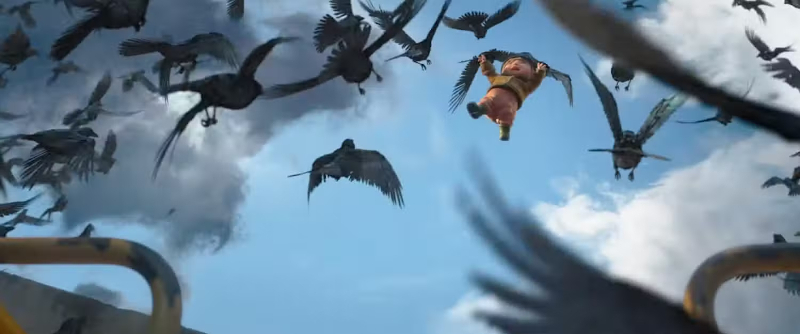
After a lengthy and hair-raising chase, the birds and Mac disappear Into the Wildwood. Prue and Curtis follow, unwise as this would seem, the chase now recalling in terms of editing and pacing nothing so much as the feeling of running through movie studio-constructed vegetation in the chase through the jungle in King Kong (Merian C. Cooper, Ernest Schoedsack, 1933).
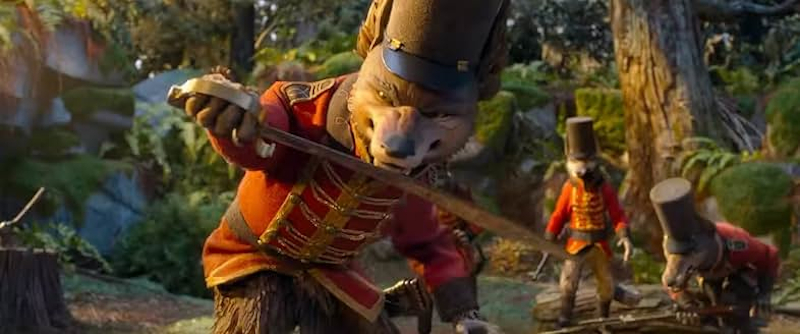
The pair become separated with Curtis running into a detachment of coyote soldiers and ending up first enjoying the hospitality of and later being imprisoned by Alexandra.
This presents Prue with a terrible dilemma in which she doesn’t really have a choice. She can’t really return home without Mac. However, return home she must. Her parents prove sympathetic. Prue learns they were a childless couple who cut a deal with Alexandra that her sorcery would enable them to have children on the condition that any second child would be hers. She is merely taking that to which they agreed. In snatching Mac, it seems, the crows have been doing Alexandra’s bidding.
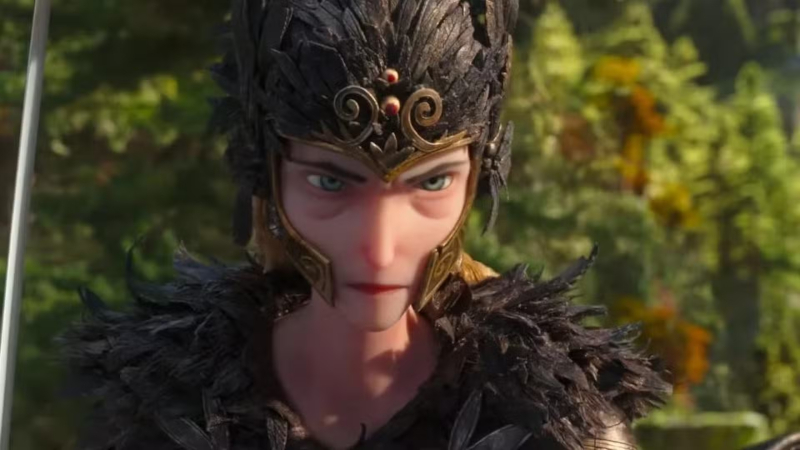
Alexandra controls South Wildwood with her coyote Army and her crows. Part of Wildwood is controlled by a bureaucracy so snowed under with paperwork that nothing ever gets done. Another part is a kingdom of birds known as the Avian Principality presided over by eagles such as the General (voice: Angela Bassett) and owls such as the venerable Owl Rex (voice: Richard E. Grant) among whom no love is lost with the crows.
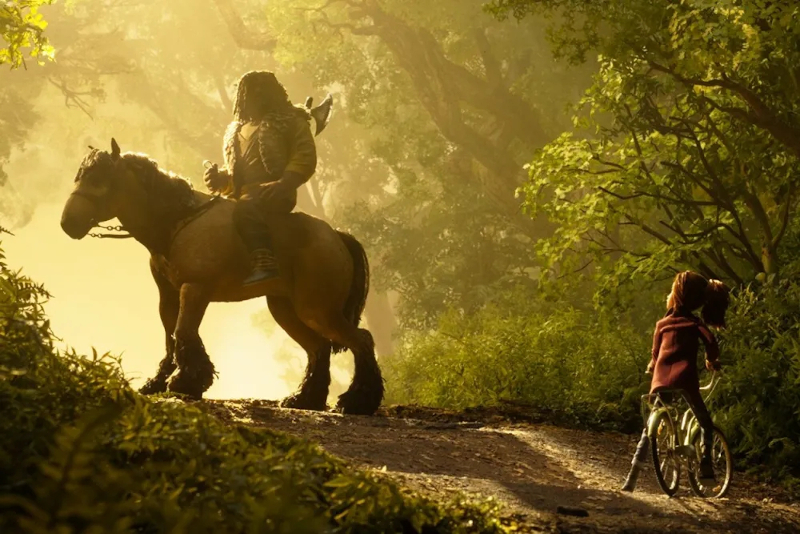
Also, in the forest are a group of rebels led by the Bandit King (voice: Mahershala Ali), and in order to defeat Alexandra and rescue her brother Mac, Prue must lead his rebel forces, along with the farmers and the birds, forging them into an army to take on Alexandra’s forces in a battle for the very soul of Wildwood itself. And, at the centre of that struggle, is her fight to rescue her little brother from Alexandra’s plans to sacrifice him to awaken the powerful ivy which could fatally overrun Wildwood…
16 years in the making at Portland’s Laika stop-frame studios, Wildwood is an extraordinary achievement which breaks the mould both of previous Laika productions specifically and stop-frame production generally.
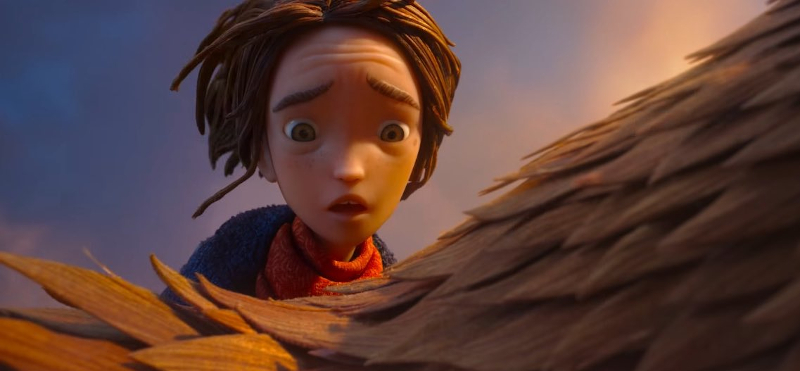
While Laika’s first three productions (Coraline, Henry Selick, 2005; ParaNorman, Chris Butler, Sam Fell, 2012, The Boxtrolls, Graham Annable, Anthony Stacchi, 2014) set an unexpectedly edgy tone for children’s films, veering towards the macabre – something also present in Tim Burton-produced stop-frame outings (Corpse Bride, Tim Burton, Mike Johnson, 2005; The Nightmare Before Christmas, Henry Selick, 1993; Vincent, Tim Burton, 1982) – Wildwood is a lot darker than any or all of these. It’s the first time a Laika production is absolutely not suitable for small children given its depictions of both suicide right at the start and violence, particularly in the huge battle scene towards the end.
The film plays around on the most fundamental level with the idea of restoring a family after one of its members is kidnapped by dark forces. This of itself is scarcely original. One could perhaps trace a line through Hollywood Cinema going right back to The Searchers (John Ford, 1956). Yet combine it with the technical innovation as Laika continue to push the envelope with stop-frame, and it delivers something unique and remarkable.
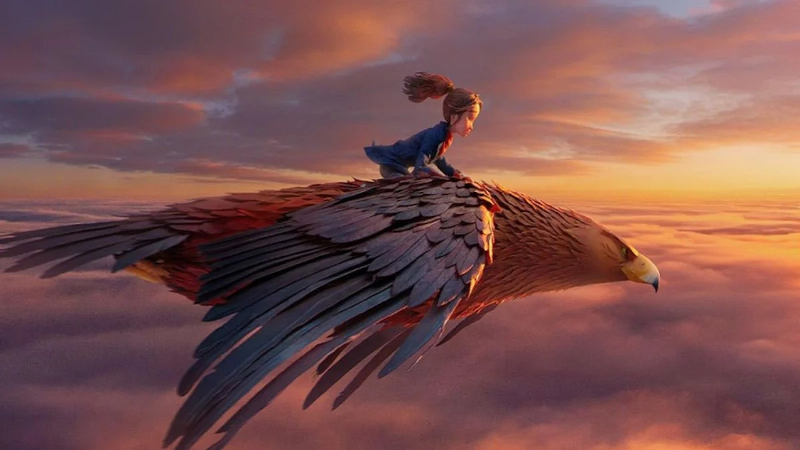
The other, arguably far more significant, difference between this and previous stop-frame films, not just Laika’s, is its sense of scale in terms of its cast of thousands – scarcely a new term in Hollywood, but much less common in animation.
There is a precedent in 2D animation from the 1990s. Disney’s The Lion King (Roger Allers, Rob Minkoff, 1994 and The Hunchback of Notre Dame (Gary Trousdale, Kirk Wise, 1996) both integrated computer technology to animate a herd of wildebeast and crowds of people respectively using particle systems, alongside more individually crafted characters using Disney’s traditional character animation techniques, seamlessly realising crowd scenes and casts of thousands within a 2D animation narrative feature.
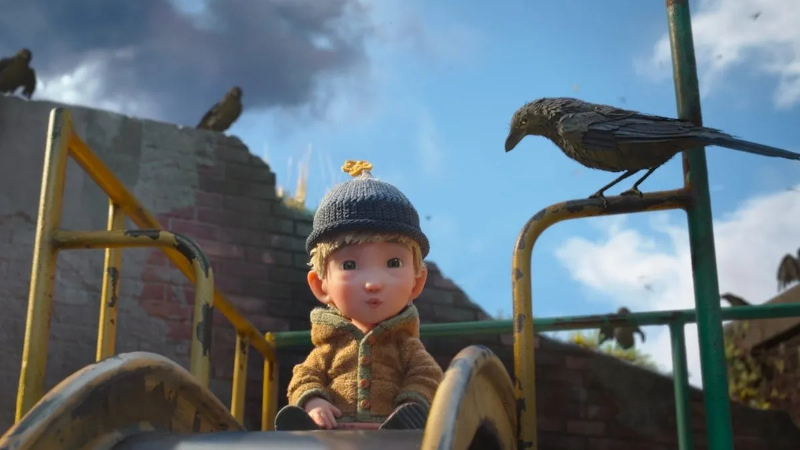
Wildwood brings similar innovation to Laika’s brand of stop-frame in the late battle scenes (and the much earlier abduction by crows). Essentially, everything you see in the foreground is stop-frame, animated puppet or model work. The use of green screen allows the inclusion of computer animated elements which are so seamlessly integrated that the impression is of a battle sequence fought by a cast of thousands of stop frame puppets – although, in fact, everything seen in the background of the wider shots is computer generated.
This brings an unprecedented sense of scale to the whole enterprise, while a look through the history of stop-frame animation reveals scenes with multiple characters as far back as Starevich’s Tale of the Fox (1930-1939) through the live action / stop-frame composite area of Ray Harryhausen pitting live action ancient Greek soldiers against an army of seven stop-frame skeletons in Jason and the Argonauts (Don Chaffey, 1963).
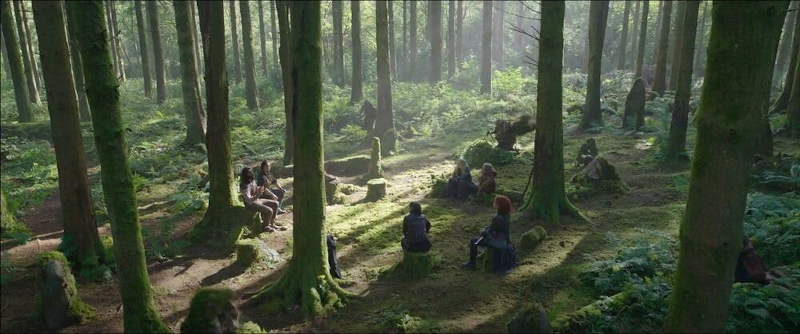
However, no previous stop-frame film of which this writer is aware has used the medium to stage battles with the complexity and mass cast of an extras-heavy live action production like, say, Spartacus (Stanley Kubrick 1960). The results pay off handsomely. Wildwood. with its early murder of crows sequence and its vast, epic battle scenes, takes the achievements of Laika specifically and the art of stop-motion generally to a much wider level than has hitherto been possible.
Stop-frame productions like Wildwood take a great deal of time, work and very specific expertise, such as that developed by Laika, to make. So, it’s therefore probably unlikely that we will see a flurry of stop-frame films on anything like this scale in the immediate future.
Nevertheless, it’s equally possible that in the years to come, Wildwood will be seen some as something of a watershed in stop-frame production, raising the bar for such films to a new level.
Which is not to say that people won’t continue to make remarkable, small scale productions using stop-frame. Indeed, it wouldn’t surprise me at all if Laika’s next film, whatever it might be, made no attempt whatever to imitate the epic cast of thousands aspects of Wildwood.
In short, a magnificent and groundbreaking achievement.
Wildwood is out in UK cinemas from Friday, October 23rd following its appearances in the BFI London Film Festival 2026 which ran from Wednesday, October 7th to Sunday, October 18th in cinemas and on BFI Player.
The accompanying LAIKA presents Wildwood: The Exhibition shows at the Design Museum, Kensington from Thursday, 15th October 2026 to Sunday, 10th January 2027
Trailer:
LFF 2026 Trailer: