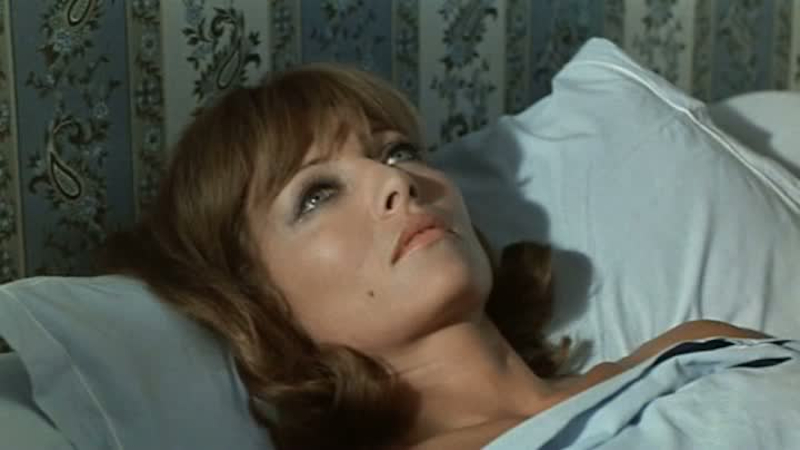
La Femme Infidèle (The Unfaithful Wife)
Director – Claude Chabrol – 1969 – France – Cert. 15 – 98m
*****
A man suspects his wife is having an affair, hires a private detective, and then acts upon what emerges… – back out in UK cinemas on Friday, September 11th; Claude Chabrol – Elements of Crime, a season of the director’s films, plays at BFI Southbank from Tuesday, September 1st to Tuesday, October 6th 2026.
Charles Desvallées (Michel Bouquet from Just Before Nightfall, 1971; Cop au Vin, 1985, both Claude Chabrol; The Bride Wore Black, François Truffaut, 1966) lives outside Paris with his wife Hélène (Stéphane Audran, then the director’s wife, from Les Biches, 1968, Le Boucher, 1970, both Claude Chabrol; Babette’s Feast, Gabriel Axel, 1987) and pre-teenage son Michel (Stéphane Di Napoli from Que la Bête Meure, Claude Chabrol, 1969).
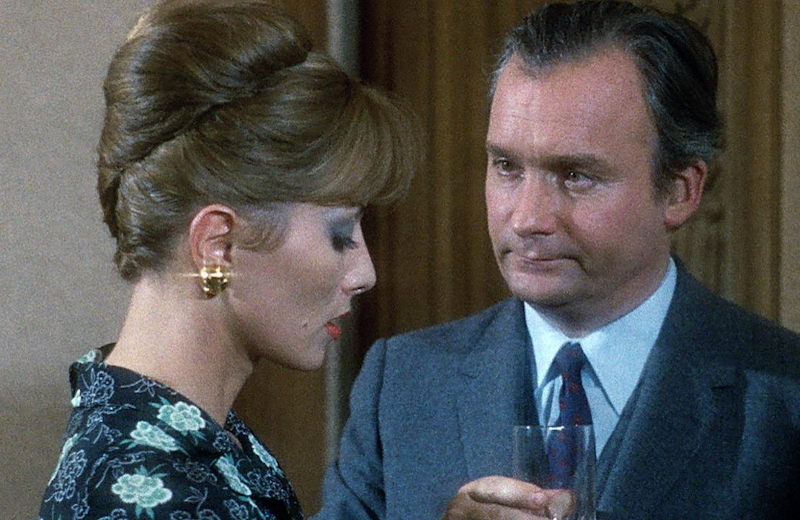
He works in an office in Paris, to which he commutes by car. She often goes into town, for instance to get her hair done or visit the cinema. One day, he becomes suspicious and hires a private detective to follow her, who reports back that she is visiting the apartment of another man Victor Pegala every few days.
We see Hélène relaxing in Pegala’s bed, naked under he sheets. Her bedroom scenes with Victor Pegala (Maurice Ronet from The Champagne Murders, Claude Chabrol, 1967; Le Feu Follet, 1963; Lift to the Scaffold, 1958, both Louis Malle; Plein Soleil / Purple Noon, René Clément, 1960) play in marked contrast to those with her husband, who seems more interested in the book he is reading than in her.
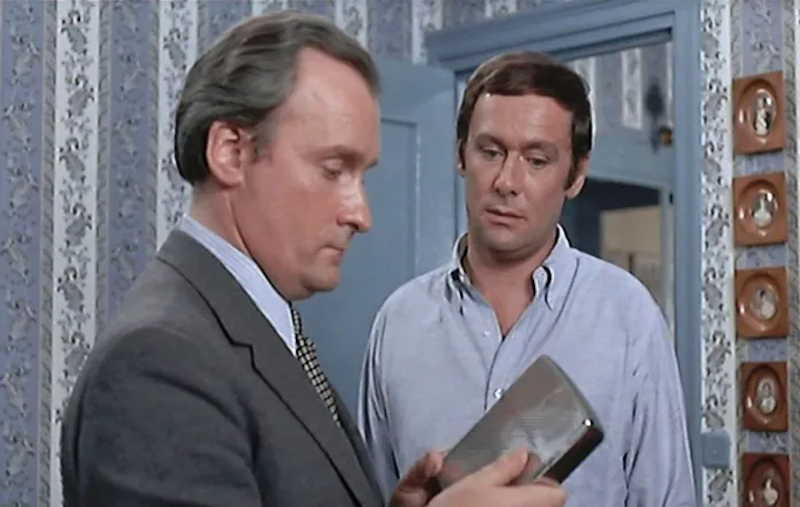
Charles goes to the address that the detective has given him to explain to Victor Pegala that he is Helen’s husband, and that the couple allow each other to live their own lives. This clearly isn’t true, because in a moment where his emotions get the better of him, Charles unexpectedly grabs a small statue of an ethnic head to batter Victor over the head, killing him.
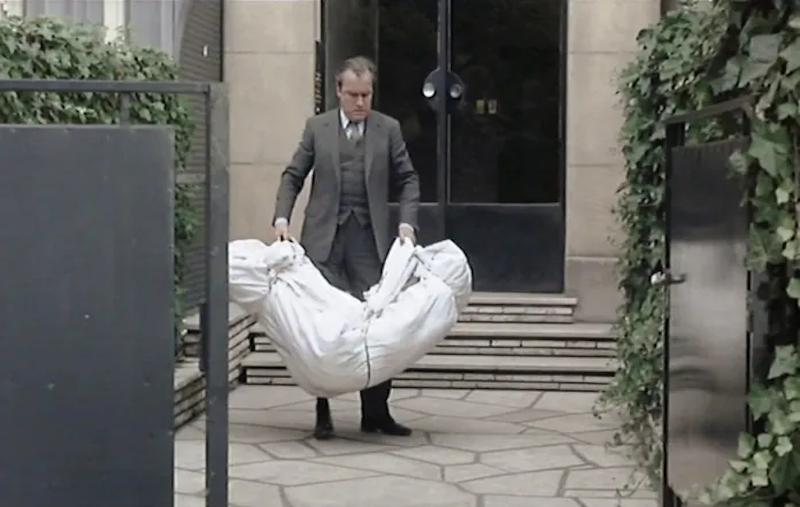
Now, in scenes reminiscent of Psycho (Alfred Hitchcock, 1960), Charles must dispose of the body, mopping up the blood then wrapping the corpse in bed linen to carry it out of the apartment to his car boot. Driving recklessly through Paris (passing a cinema showing Les Biches), he is involved in an accident when a man drives into his rear. When a crowd gathers, along with a policeman, Charles wants nothing more than to get out of there as fast as possible.
He drives to a lake, and in further scenes reminiscent of Psycho, dumps the wrapped corpse there and waits for it to sink.
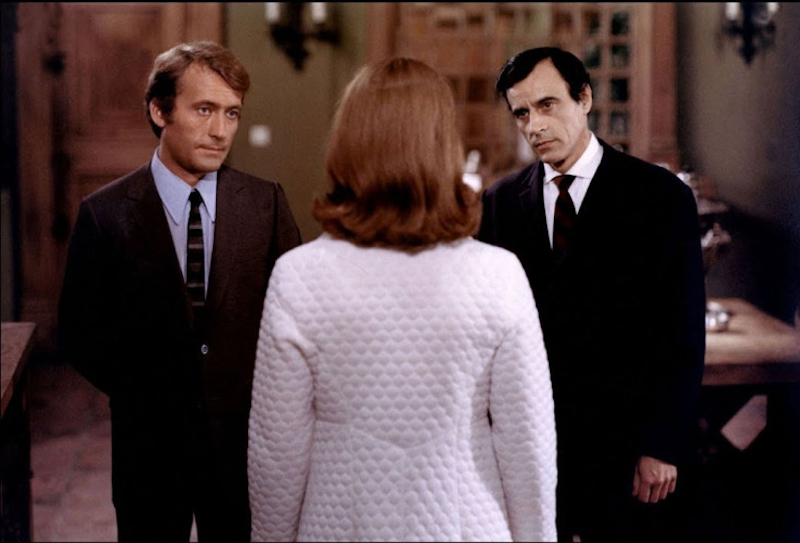
Hélène, meanwhile, is distraught when she hears nothing from her lover. She is visited by two policemen Duval (Michel Duchaussoy from Mesrine, Parts 1 & 2, Jean-François Richet, 2008; Intimate Strangers, Patrice LeConte, 2004; Milou en Mai, Louis Malle, 1990; Just Before Nightfall, 1971; Que la Bête Meure, 1969, both Claude Chabrol) and Gobet (Guy Marly from Que la Bête Meure) who found her address in the missing man’s address book. She explains that she only met him once, at a party. More visits from the police to the family home will follow…
Chabrol is clearly fascinated by the institution of marriage, in particular when it no longer works for people in the light of the changing sexual mores of the 1960s when the film was made. Husband and wife appear trapped within the institution. The husband is busy with his office job (we never see exactly what it is he does, although he seems reasonably content within it, apart from his dissatisfaction at the claims of his younger colleague Paul (Henri Marteau from Indochine, Régis Wargnier, 1992) to have slept with pretty, mini-skirted secretary Brigitte (Donatella Turri) – who he will later fire. The wife has lost interest in a husband who now takes her for granted and is only motivated within their family unit by being there for her young son.
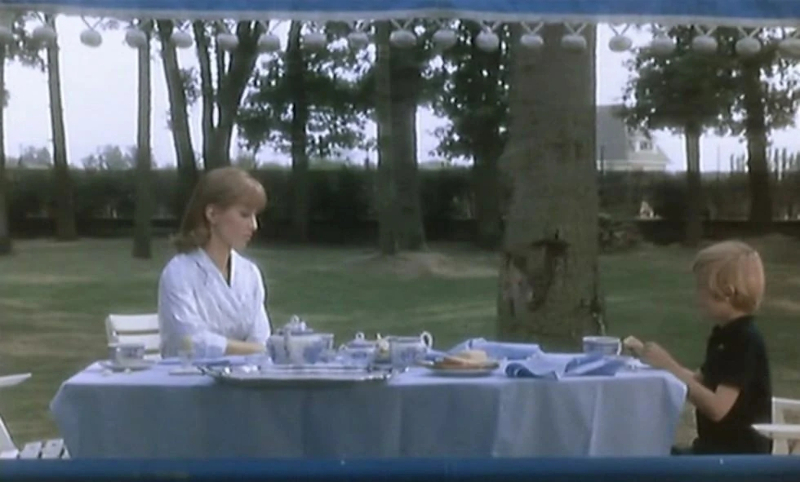
Just as the office secretary becomes the focus of her husband’s ire – possibly because he’s envious of his younger colleague’s having slept with her – so the wife’s lover represents something she can no longer get from her husband. When that something is taken from her by her lover’s disappearance, she is completely at a loss, entering into a state of limbo in which she appears almost ghostlike.
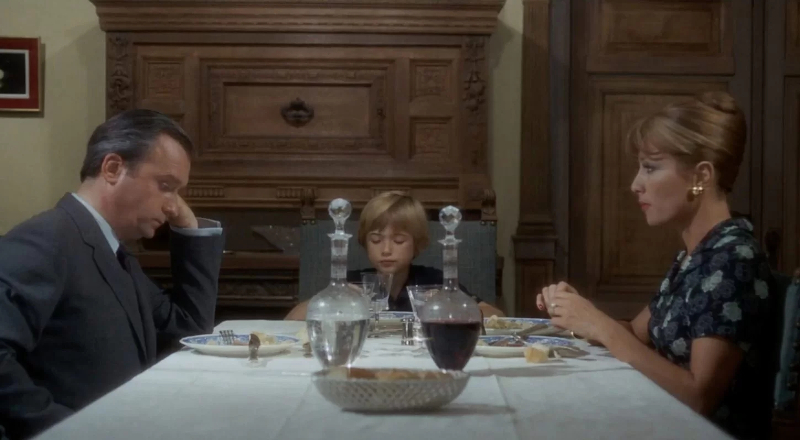
Indeed, in the second half of the movie, after Hélène’s lover’s death, Chabrol, who co-authored with Eric Rohmer the first critical book about Hitchcock – Hitchcock: the First Forty-Four Films – is clearly enamoured of Vertigo (Alfred Hitchcock, 1958), makes Audran over like Kim Novak in that film, with final haircut but one, green dress, and wraithlike appearance. (The book goes up to The Wrong Man, 1957, which means that Vertigo is the first film not to be covered, and Psycho the third. See also the documentary Kim Novak’s Vertigo, Alexandre O. Philippe, 2025.)
The film has stood the test of time well. It may be set in late 1960s Paris, but its crime movie dynamic of sex, jealousy, murder, emotional collapse and police investigation remains as potent as ever.
La Femme Infidèle (The Unfaithful Wife) is back out in cinemas in the UK on Friday, September 11th.
Claude Chabrol – Elements of Crime, a season of the director’s films, plays at BFI Southbank from Tuesday, September 1st to Tuesday, October 6th 2026.
UK wide BFI Player Claude Chabrol subscription collection of 10 titles from his prolific career.
BFI Blu-ray releases in 2027.
Trailer: