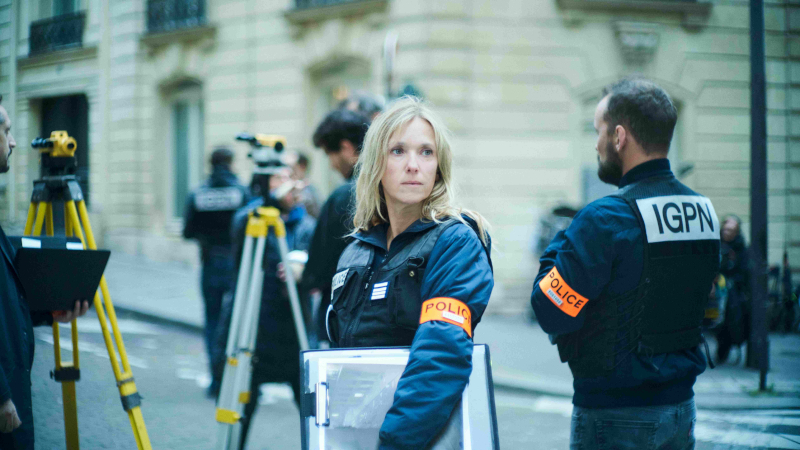
Case 137 (Dossier 137)
Director – Dominik Moll – 2025 – France – Cert. 12a – 116m
*****
A member of the internal police watchdog department investigates a complaint of police violence in the 2018 Yellow Jackets riots – out in UK cinemas on Friday, October 16th
Who watches the watchmen? Who polices the police? It’s a question with great relevance to today’s societies, including our own in the UK. In the US, the Police have the Internal Affairs. In France, the police have a branch called the IGPN (L’inspection générale de la police nationale / The General Inspectorate of the National Police). So if members of the public accuse the police of bad or criminal behaviour, they have a department set up to investigate that. An internal department, not an external body.
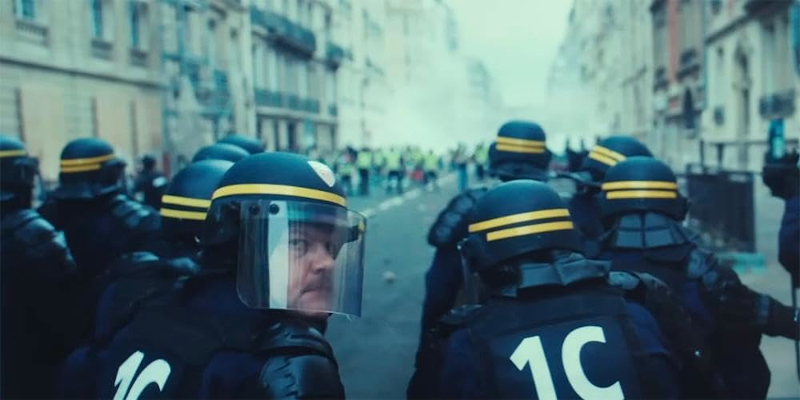
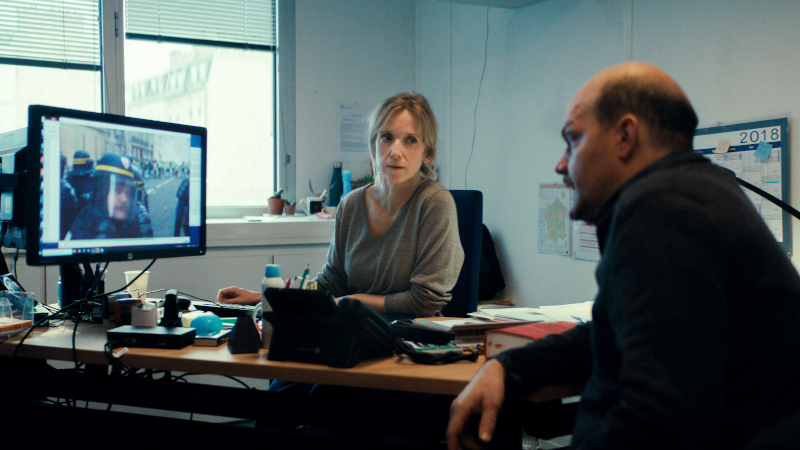
IGPN inspector Stéphanie Bertrand (Léa Drucker from Mars Express, Jérémie Périn, 2023; Two of Us, Filippo Meneghetti, 2019; The Blue Room, Matthieu Amalric, 2014) is working on allegations of police misconduct during the Yellow Jackets protests of 2018. She tries to be scrupulously fair in questioning an officer who threw stones at rioters, later defending him to superiors as being in a situation that put him under intense psychological pressure. Her boss tells her and her colleagues that the department is being assigned the job of going through all the specific complaints made by the public about the police’s handling of the riots. Stéphanie finds herself dealing with the folder for the eponymous Case 137.
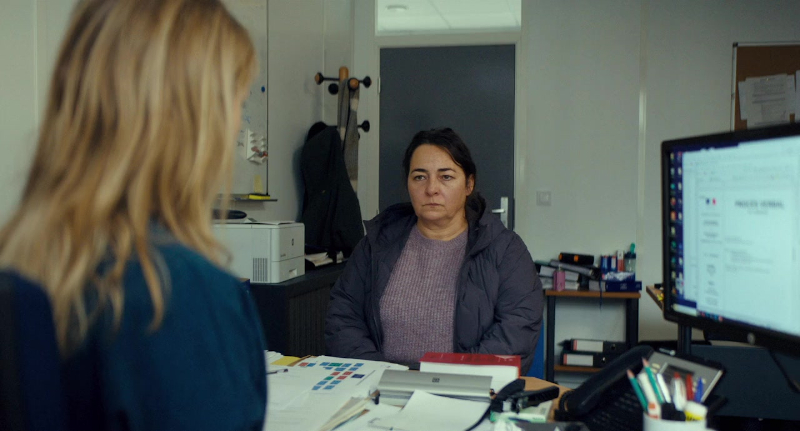
Interviewing the complainant Mme. Girard (Sandra Colombo), whose teenage son Guillaume’s severe injuries have left him in the hospital in no fit state for anything, let alone filing a complaint, which his mother was advised to do by the hospital staff, Stéphanie learns that the single-parent family come from her own home town of Saint-Dizier, a provincial town where people feel they’ve been forgotten by the national politicians supposed to represent them and, as such, are likely to be sympathetic to the Yellow Jackets’ cause. Mme. Girard is a case in point: she’s never been on a protest march before, and she thought it might make a nice day out for her and young teenage son and daughter who have never had the chance to see Paris.
The mother’s accusation is that while they were separated from her, Guillaume (Côme Peronnet) and her daughter’s boyfriend Rémi Cordier (Valentin Campagne from Colours of Time, Cédric Klapisch, 2025) were fired upon by riot police. When Stéphanie interviews Rémi, in police custody, he tells her the pair of them were walking down a street minding their own business when the cops fired upon them for no reason. The boy is convinced no-one will believe him, because it’s his word against the cops.
Like contemporary urban Britain, Paris is clearly seen to be fitted with a large volume of surveillance cameras and some if not all police wear bodycams, so Stéphanie is able to examine video of the incident. Sure enough, the two boys wander down a street and are fired upon by a few cops, one of whom kicks Guillaume while he’s down. It also emerges in footage that this group of cops have just had a run in with some extremely violent Yellow Jacket protestors, and thought (or perhaps they didn’t think, but assumed subliminally) that the two boys were part of that violent group.
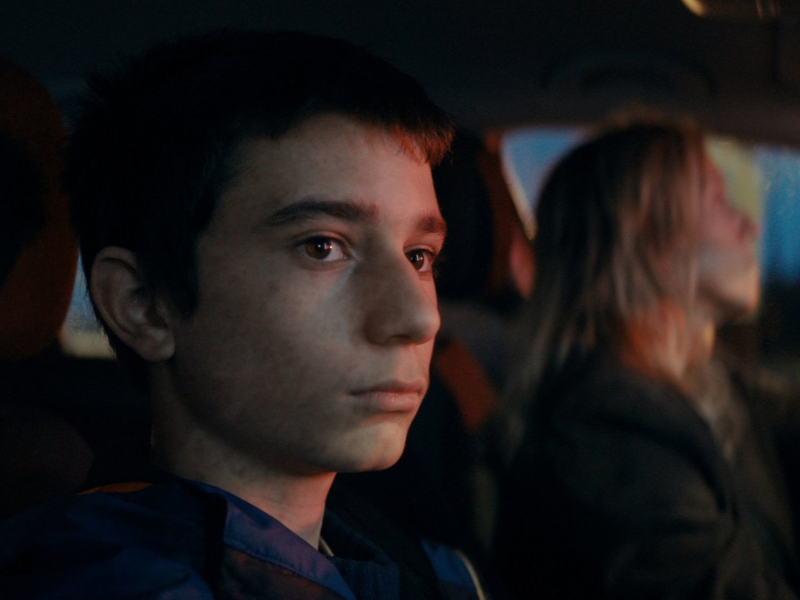
Stéphanie must interview a bewildering array of officers involved in policing that day’s protests, and their superiors. It swiftly becomes apparent that her job is not an easy one, since the IGPN are viewed as traitors to the profession by most police and seen as getting in the way of the police doing their often very difficult job properly. This pressure extends to her ex Jérémy (Stanislas Merhar from Almayer’s Folly, Chantal Akerman, 2011; The Knights of the Quest, Pupi Avati, 2001; Dry Cleaning, Anne Fontaine, 1997) and his girlfriend Noélie (Antonia Buresi), who view her similarly. Even her young son Victor (Solan Machado-Graner) asks her why his peers hate the police. And with the victim hailing from her home town, there’s always the outside possibility that Stéphanie might find herself compromised.
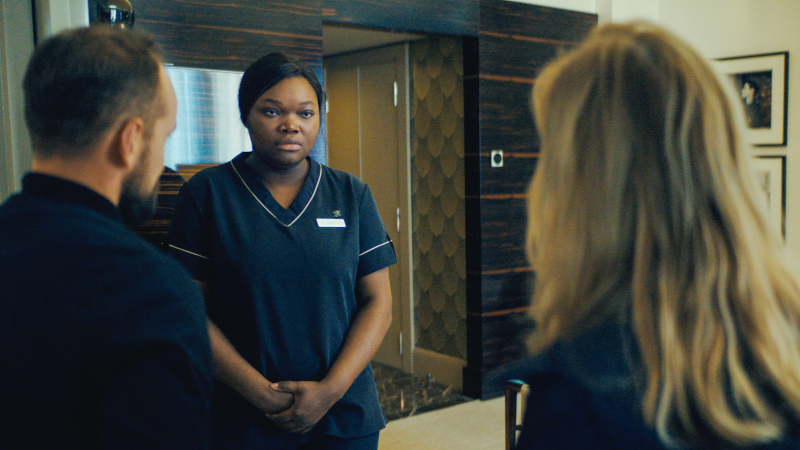
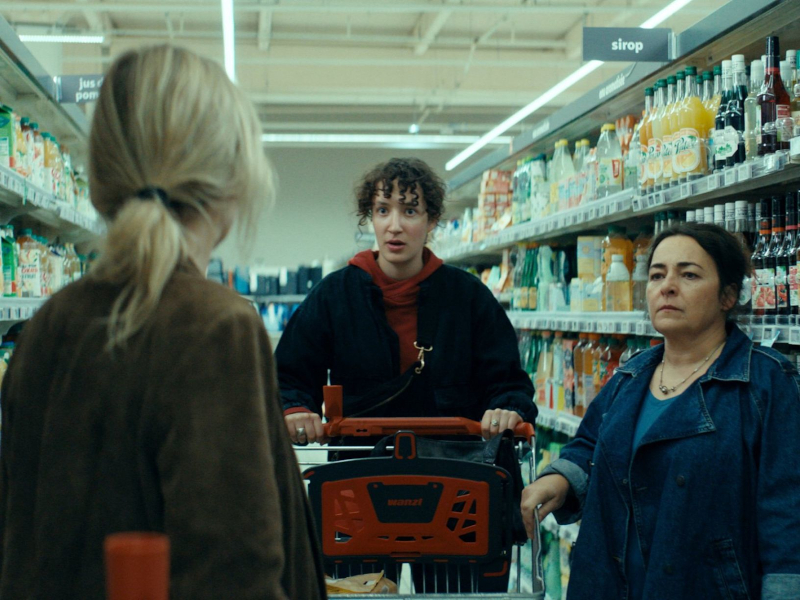
Then there is the question of witnesses: Stéphanie uncovers a hotel maid Alicia Mady (Guslagie Malanda from The Beast, Bertrand Bonello, 2023; Saint Omer, Alice Diop, 2022) who may have witnessed the whole thing from a hotel window; however, like the second boy, she is concerned that if she speaks out against the police, it might cause her trouble, and anyway, who would believe her? Wanting to speak to the woman in private, Stéphanie follows Alicia home on the train after her shift ends and confronts her. Elsewhere, she finds herself out shopping for her mum in Saint-Dizier and running across Mme. Girard, and finding it near impossible not to spy on the complainant across the supermarket aisle.
It’s all gripping stuff, capable of taking a welcome diversion as when, for instance, Stéphanie bonds with a cat, but at its core is the issue of police accountability. A terrific cast, with most members of which this critic was not familiar, has a highly believable performance from Drucker at its core and a likeable turn from Jonathan Turnbull as her buddy on the force Benoît Guérini, who is onscreen a lot yet doesn’t have that much input into the overall dramatic thrust.
The whole thing is to be commended for its complexity; Moll, co-screenwriter Gilles Marchand and their collaborators can’t be accused of taking one side over the other or reducing the issue to the simplistic. The result is a gripping police procedural that will have you on the edge of your seat.
Case 137 is out in cinemas in the UK on Friday, October 16th.
Trailer: