
Director – Bart Layton – 2025 – US, UK – Cert. 15 – 140m
*****
A high class lone operator thief and the rigorously analytical cop on his trail cross paths with a disillusioned insurance saleswoman to the wealthy – out in UK cinemas on Friday, February 13th
As coloured dots come into focus, they are revealed to be the lights of a Los Angeles freeway upside down, an image which bookends the movie. Davis (Chris Hemsworth) exercise in his sparse apartment before donning a suit. Detective “Lou” Lubesnik (Mark Ruffalo) shaves in his small, untidy bathroom. Sharon Coombs (Halle Berry), in her bathroom, goes through the laborious task of applying make-up.
This is essentially a four-hander – more of the fourth character later on.

Davis is a lone operator who thinks through his proposed robberies beforehand in such a way as to ensure that no-one gets hurt. LAPD investigator Lubesnik has become obsessed with a string of robberies he believes committed by the same person, to the detriment, as his colleagues and superiors see it, of his regular police work. Sharon works for a high end insurance company who have been stringing her along for years with hollow promises of board membership to use her now fading good looks to close sales to wealthy clients.
All three are people who extensively research, meticulously plan and then get things done. At least, that’s the theory. But the robber has a near-fatal experience on a job where an additional, unexpected person in a car that he his robbing has a second gun and shoots at him point blank, the insurance lady’s fading looks mean that she’s no longer closing those wealthy male client deals, and the cop’s obsessive investigation has effectively ground to a halt, stumped by a lack of clues as to the perp’s identity.
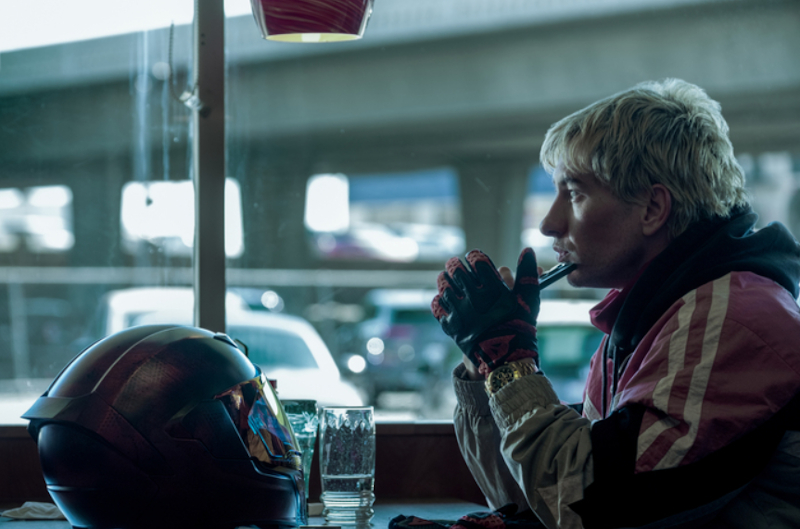
Into this world of finely balanced order steps Ormon (Barry Keoghan), an agent of chaos who, like the Angels of Death in Orphée (Jean Cocteau, 1950), rides a motorbike. Although the robber Davis puts his own heists together alone so there’s no possibility of an unreliable or duplicitous partner messing them up, he needs a backer to bankroll him. That backer is a shady figure known as Money (Nick Nolte) with whom Davis periodically meets at street coffee vendors’ tables to share details of upcoming jobs. When Davis tells Money that he’s not going to do the final job he’s planned, Money simply hires someone else to do it. That someone is Ormon.
The robber Davis might wield a firearm, but he’s worked out in advance how to carry out the job so no-one gets hurt. (Even if, at the start of the film, a job goes slightly wrong due to unforeseen circumstances and he almost gets killed.) He even goes so far as to return mobile phones to victims after confiscating them. His whole modus operandi is that the job should go as smoothly as possible for all involved, including the victims.
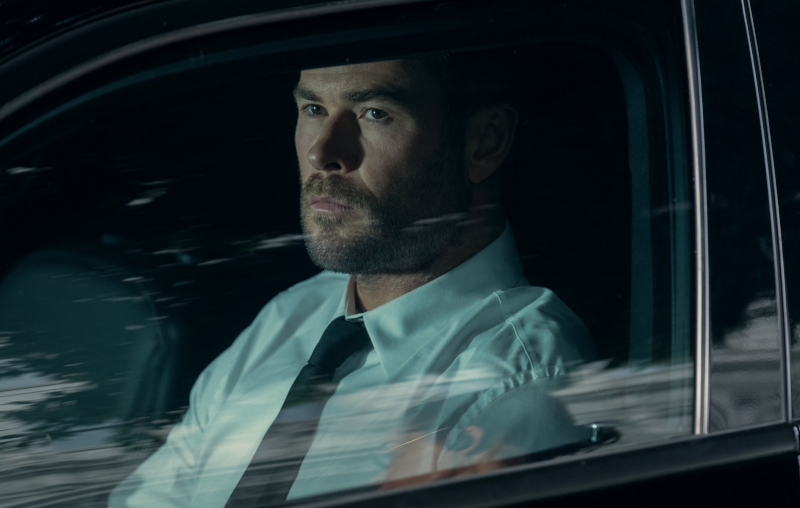
The biker Ormon, conversely, is what you might call a smash and grab man of action. Even when gifted with the robber’s unrealised plan, for what should be a straightforward bank robbery, we see no sign of Ormon casing or having cased the joint beforehand for himself. It should be a foolproof job, but it isn’t, because when put into action by a fool such as Ormon, it plays out very differently from the no-one gets hurt scenario its author intended. Ormon’s idea is to go in, all sound and fury, gun at the ready, and get the job done, never mind what might happen in the process, what evidence he might leave behind, or what level of sentencing his crimes might potentially incur.
Executing the bank robbery, Ormon is a fearsome figure in a face-concealing bike helmet who won’t think twice about shooting anyone if he has to. When he asks if there’s anyone in the back room and is told no, he is unimpressed to discover that there’s actually a baby in the back room, even though the fact shouldn’t affect his immediate plans. (Although, in a sense, it does affect him, because he now finds himself carrying out the entire robbery against the disruptive sound of a crying baby.)
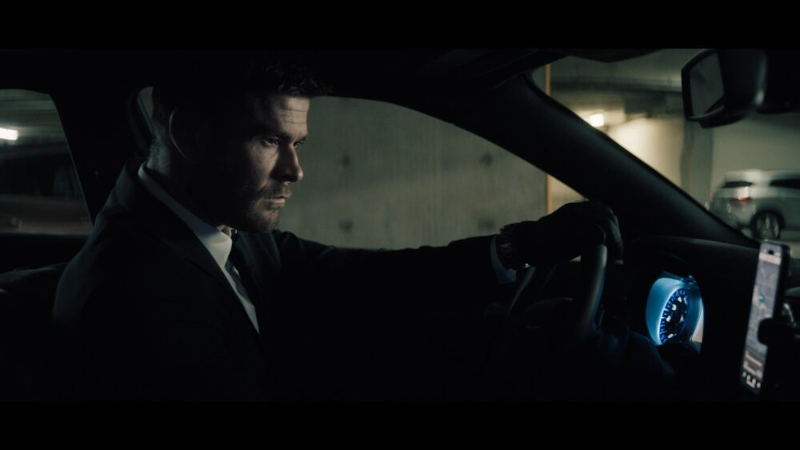
All this is in marked contrast to the robber’s job at the start of the film. Actually, a double job: Davis is up early and before sunrise has carried out a job in which he forces a victim into the boot of a car at gunpoint. This later turns out to be part of a larger job, the rest of which takes place in daylight and involves the transportation of expensive jewels from a jeweller’s shop to another location. Davis’ plan involves tailing cars to later rob their occupants when they’re stationary. Which includes an awful lot of driving. His driving, which always gets him where he wants to be, is not particularly slick; indeed, it leaves a lot to be desired. Which suggests, in turn, that for all his foresight and forward thinking, Davis, in the moment, can himself have about him something of the agent of chaos.
As these three lives intersect with each other and the fourth life, London-based writer-director Layton, adapting his screenplay from Don Winslow’s novella, has a lot of fun throwing into the mix additional secondary characters. Way down the cast list is Payman Maadi (from Oh, What Happy Days!, Homayoun Ghanizadeh, 2025; Opponent, Milad Alami, 2023; Law of Tehran, Saeed Roustayi, 2019; A Separation, Asghar Farhadi, 2011), memorable as the jeweller whose merchandise is the target of the opening heist.
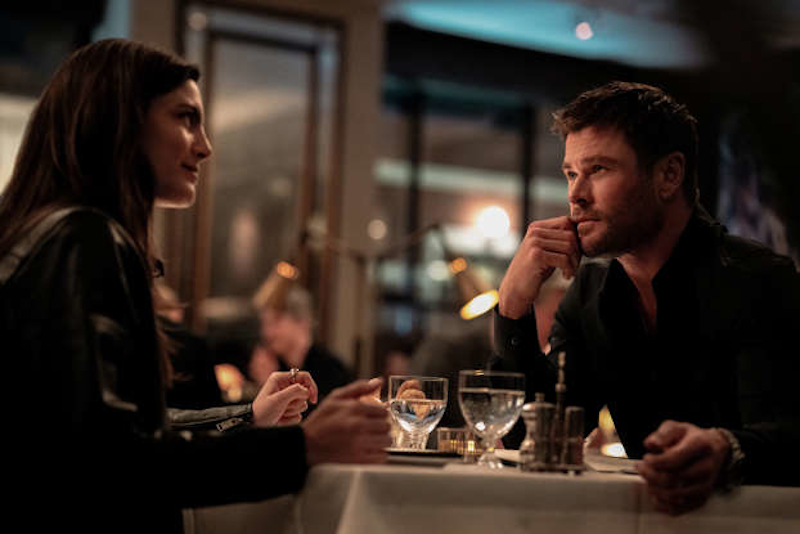
Forced to exchange insurance details with stranger Maya (Monica Barbaro from A Complete Unknown, James Mangold, 2024) who accidentally drives her car into the rear of his when he unexpectedly stops in front of her, Davis finds himself subsequently getting in touch with her to start dating, embarking on a romance which will prove difficult since he normally walls himself from everyone else for reasons of personal and professional security and survival. He also crosses paths with Sharon, having gleaned considerable amounts of personal and professional information on her from her social media, to tempt her into betraying client information so he can pull off one last job. As Ormon starts following and watching Davis, the lives of both women become perilous for simply being in Davis’ orbit.
Sharon can’t quite get through to prospective client Monroe (Tate Donovan), who is about to marry a girl young enough to be his daughter. Nor can she earn the trust of her immediate and duplicitous boss Mark (Paul Adelstein). Her company insured the jewellers robbed early on, so he finds herself interfacing with the cops and Lubesnik in an attempt to have her client take a lie detector test. Anything to prevent the company having to make an expensive payout. She realises that both she and the detective are good at reading people, and may have more in common than you might suspect at first glance.
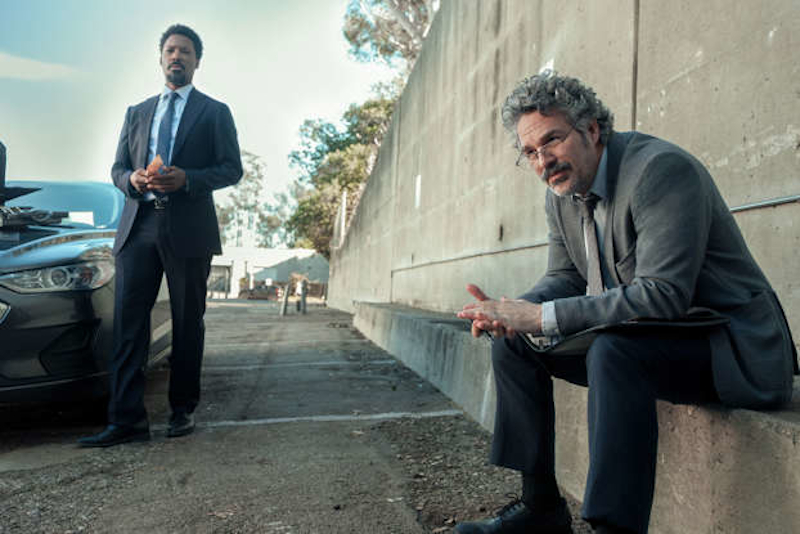
Lubesnik, meanwhile, runs into marriage difficulties when his wife Angie (Jennifer Jason Leigh from eXistenZ, David Cronenberg, 1999; Single White Female, Barbet Schroeder, 1992; Last Exit to Brooklyn, Uli Edel, 1989) leaves him and work difficulties when his patrol buddy Detective Tillman (Corey Hawkins from The Color Purple, Blitz Bazawule, 2023; The Tragedy of Macbeth, Joel Coen, 2021; In the Heights, John M. Chu, 2021; BlacKkKlansman, Spike Lee, 2018) decides to find a less obsessed partner. And Detective Townsend (Drew Powell), a briefly seen cop on the plot’s fringes, is memorably positioned as the officer who shoots first and asks questions afterwards, here shooting dead a key suspect at a robbery preventing the gutted Lubesnik from questioning him.
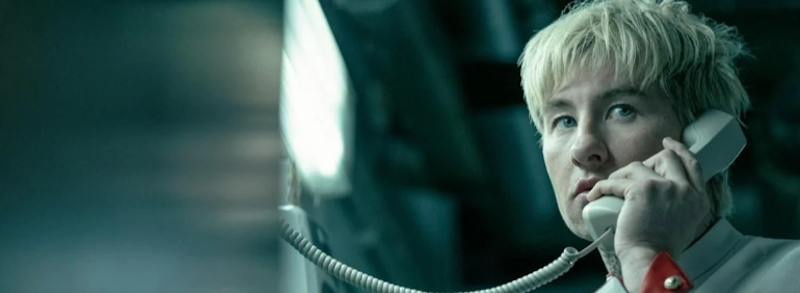
After Sharon gets beaten up in her apartment by the information-hungry Ormon, she talks to Lubesnik who starts to put pieces of the puzzle into place. He takes on the role of an unsuspecting victim visiting Monroe and girlfriend at the Beverly Wilshire Hotel. Ormon, having mugged and assumed the identity of a bellboy, is headed towards the same hotel room where he will find Davis and Lubesnik, guns at the ready, locked in a Mexican stand off…
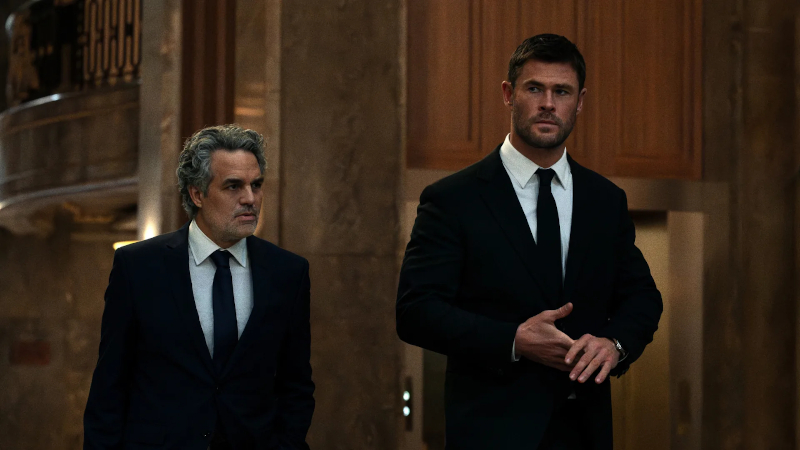
We’ve all seen too many Hollywood movies to mention where an all-star cast such as this works as a means to to get people into the cinema but doesn’t really provide worthwhile roles for the actors on the screen. Not so here: All four leads are as good if not better than anything they’ve ever been in; Berry is particularly extraordinary as the woman passed over by the corporate world in favour of a younger model. The quality persists as you work your way down the cast list: the bit-parts here are just as much of a pleasure to watch as the major roles.
In addition, the film is skillfully plotted as it expertly juggles the intersection of the lives of its four main characters. One would like to think Patricia Highsmith, who wrote the archetypal, intersectioning lives novel Strangers on a Train, and Alfred Hitchcock, who filmed it in 1951, would look favourably on the film.

There’s also a framing metaphor of L.A. as an off-kilter, upside down world where people at various social strata have completely lost their way. The title derives not, as a non-Anglino might expect, from the idea of a primer in crime, but from the fact that Davis’ crimes occur at various points along the Southernmost section of Route 101 near L.A.
Following a degree of writer’s block, the first part of this review was eventually written in the wee small hours before sunrise, then completed, like Davis’ opening job, in daylight. Which seems strangely appropriate.
Highly recommended.
Crime 101 is out in cinemas in the UK on Friday, February 13th.
Trailer: