Pressure
Director – Anthony Maras – 2026 – UK, France – Cert. 12a – 100m
*****
Days before the proposed Allied D-Day landings in 1944, the Scots meteorologist in charge becomes convinced that it should be postponed due to impending bad weather – out in UK cinemas on Wednesday, September 9th
Taking leave from his heavily pregnant wife Liz (Tamsin Topolski), due in hospital imminently for the birth, Scots meteorologist RAF Gp Capt. James Stagg (Andrew Scott) travels by military car to Southwick House, the stately home requisitioned for the Supreme Headquarters Allied Expeditionary Force (SHAEF) under General Eisenhower (Brendan Fraser), where he meets his own liaison officer Andrew Carter (Jojo Macari) and, in what is to be his office, MTC First Lt. Kay Summersby (a nicely understated Kerry Condon), Eisenhower’s private secretary. All communications with the General go through her.
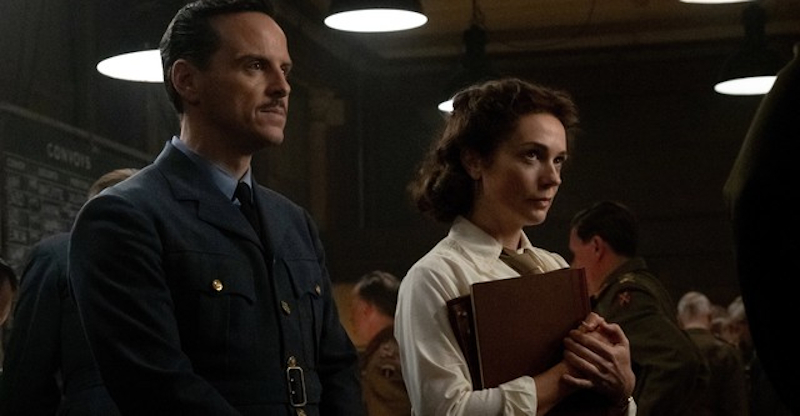
From their first encounter – three days from the proposed D-Day landing on Monday morning, when USAAF Col. Krick (Chris Messina) and his weather room staff are improvising a version of The Boogie Woogie Bugle Boy from Company B with a piano – Stagg is less than impressed with his American counterpart. Krick boasts that he not only correctly predicted the weather for Eisenhower ahead of various military battles in North Africa and elsewhere, but also did the same for David O. Selznick when that Hollywood producer was staging the burning of Atlanta for Gone with the Wind (Victor Fleming, 1939). As Stagg later points out in a meeting with Eisenhower, Krick was lucky in that he was dealing with stable weather systems. Quite unlike North West Europe. And Eisenhower has put Stagg in charge of the whole meteorological division. Above Krick.
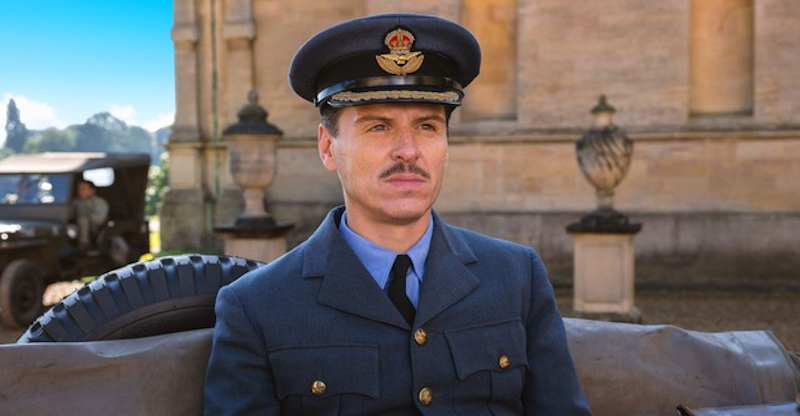
The screenplay was adapted from his own play, set in just the one room, by David Haig who saw a way of moving much of the action out of the meteorological room into Stagg’s office, Eisenhower’s conference room, beaches in England and Normandy, bookending the whole thing with Stagg’s domestic, suburban life as he departs from his home and his soon to give birth wife at the start, and arrives at the heavily bombed St. Mary’s Hospital, Clapham, where his wife may or may not be among the fatalities at the end. It could so easily have felt stagebound, but Haig’s opening out of the whole into a broader range of physical locations ensures it feels like a movie, not a piece of filmed theatre.
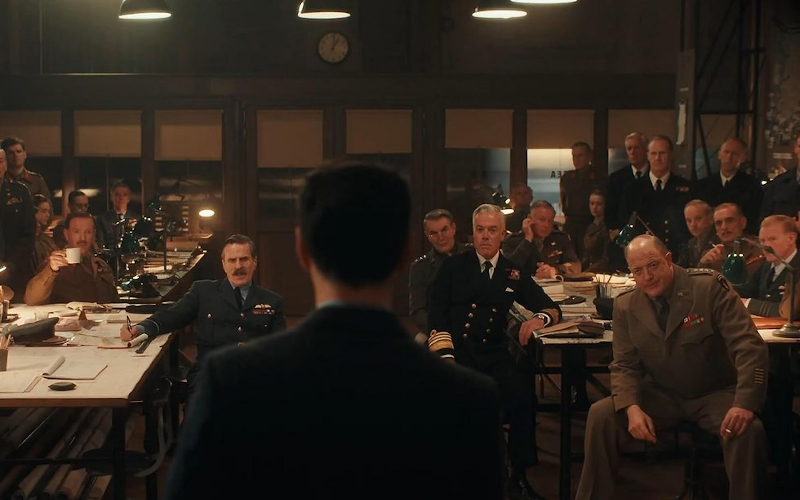
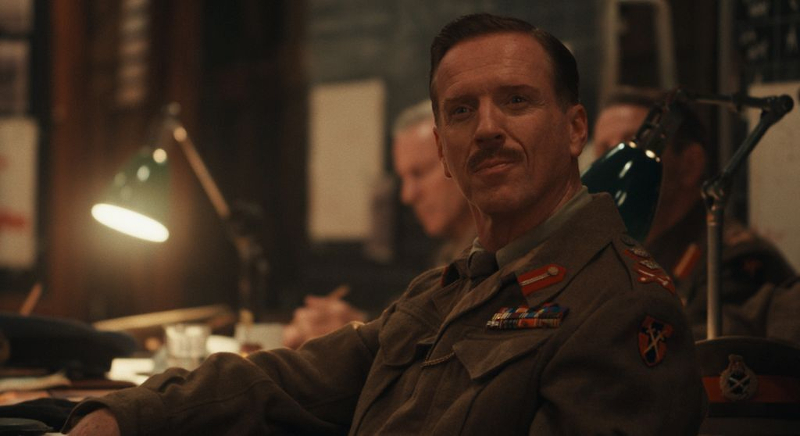
In Eisenhower’s conference room, we meet his top brass, among them the talkative and opinionated British Army General Montgomery (Damian Lewis).
Graced with the task of portraying a protagonist who, although conscientious in the execution of his work, doesn’t care in the slightest whether people like him or not, Andrew Scott delivers an extraordinary performance as Stagg, quietly confident and reserved, a man passionate about his chosen discipline who doesn’t like to shout about the fact. He contrasts heavily with Messina’s Krick, who might almost be a showman in the American manner, unafraid to self-promote and give his audience what they want. Yet despite their professional and personal differences, Stagg and Krick ultimately have the same aim as everyone else here: they want the D-Day plan to go ahead and succeed.
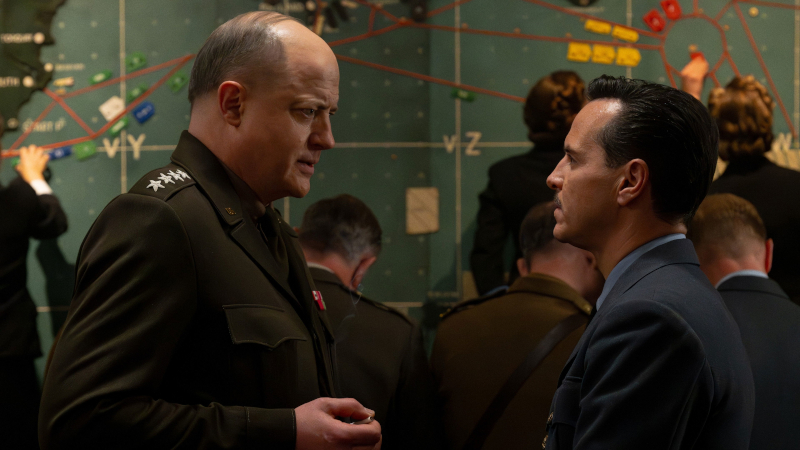
However, where Krick relies on previous precedent weather events and their recorded charts from previous years, Stagg is chasing up-to-the-minute data from various weather stations in Britain, Europe and beyond, noting Krick has collected no data whatsoever on air currents. Krick is convinced the weather will be fine on Monday morning; Stagg thinks there is a major storm coming. All this is conveyed, incidental insert shots of weather balloons notwithstanding, through Krick pointing at charts on the wall and Stagg and his company on the phones. We never see the operatives on the other end of the phones, but that doesn’t seem to matter – what we see is enough.
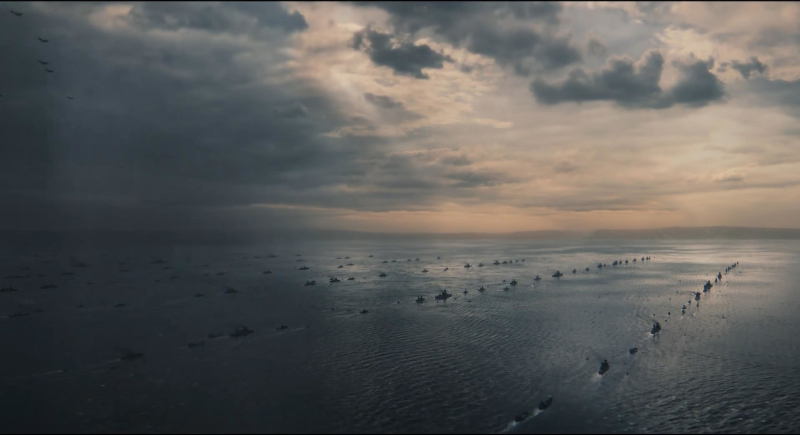
Director Maras is also the film’s editor, and an extremely skilful one. He fleshes out the dramatic scenes with montages of restaged, archive and visual effects. The trick of integration is so well executed and flows so effectively that it’s often impossible to tell which is which. Indeed, the whole drama is beautifully paced in terms of its editing.
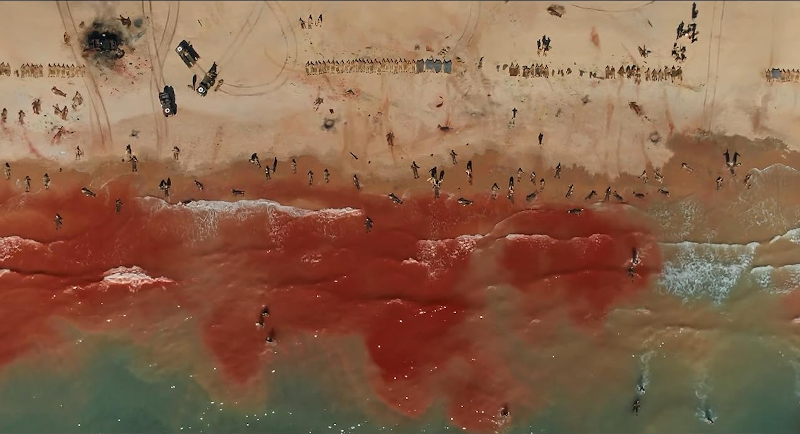
The title conveys the strength of the piece, which opens on the tragic aftermath of Allied D-Day rehearsal Operation Tiger which used live ammunition and went disastrously wrong, resulting in heavy casualties. This incident informs the film’s second great performance, Brendan Fraser as the tormented Eisenhower, projecting calm despite the the considerable weight of responsibility upon his shoulders as commander-in-chief.
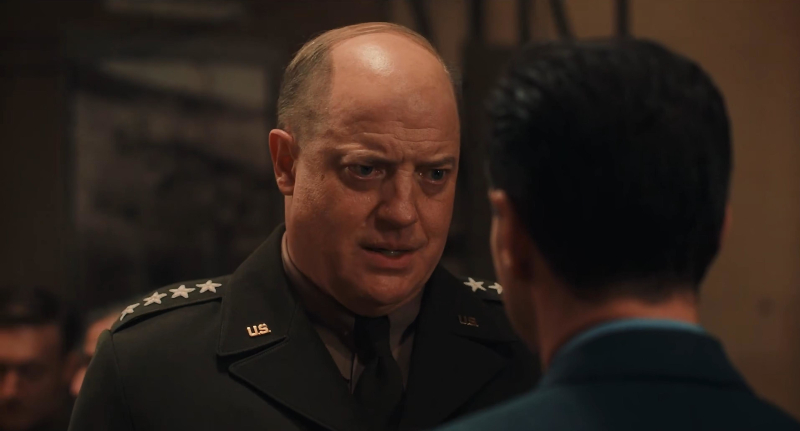
All these characters are, one way or another, under pressure. ‘Pressure’ is also a meteorological term, the element that affects the way weather can play out. It has consequences in terms of weather just as humans under pressure make decisions which have consequences in life or history. Which is, ultimately, what this extraordinary movie is about.
Pressure is out in cinemas in the UK on Wednesday, September 9th.
Trailer: