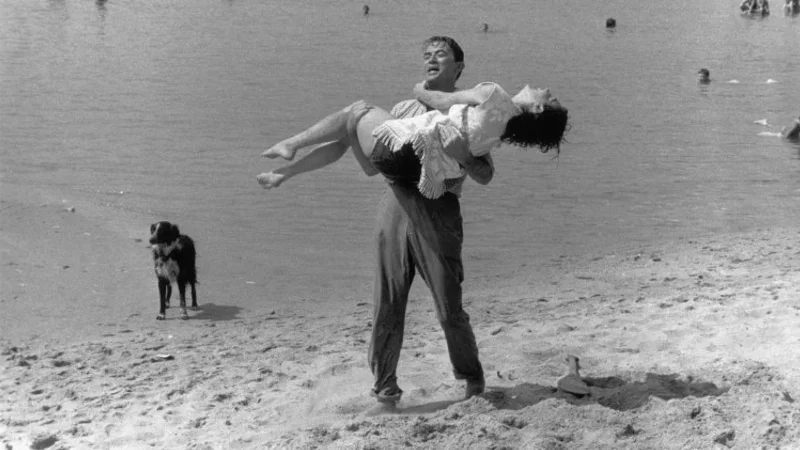
On the Beach
Director – Stanley Kramer – 1959 – US – Cert. PG – 134m
*****
Australia is the only country yet to succumb to radiation sickness following a nuclear war – on Blu-ray from Monday, July 27th
The nuclear submarine USS Sawfish, under the command of Commander Dwight Lionel Towers (Gregory Peck), surfaces in Melbourne, Australia. Lieutenant Peter Holmes (Anthony Perkins) makes a bottle of milk for baby Jennifer and a cup of tea for his sleeping wife Mary (Donna Anderson from Inherit the Wind, Stanley Kramer, 1960; Count Yorga, Vampire, Bob Kelljan, 1976). He has to pick up the milk as it won’t be delivered any more. He’s on his way to see the admiral, who gives him a job on the Sawfish.
Reporting to the commander, he offers to take the latter for a drink, and winds up inviting his to stay at his home. He puts local woman Moira Davidson (Ava Gardner) in charge of him; at a party, where there’s a row between scientist Julian Osborn (Fred Astaire) and another man over who caused the nuclear war, she gets very drunk and comes on to Towers, but she falls asleep, so he puts her to bed.
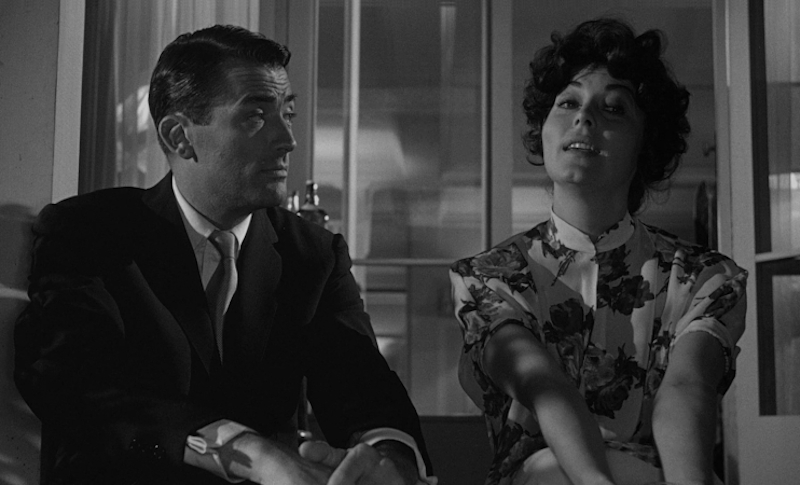
Next day she visits him on the docked sub, and he takes her out on a sailing boat race in which she capsizes the boat to get more of his attention. Because he’s married, he holds back from romantic involvement – however, his family are in the US and could not possible have survived the nuclear war that has taken out the Northern hemisphere, so he is in denial of the fact, behaving as if he could still go home to them at any time.
Meanwhile, Lt. Holmes uses his connections to get early issue of the euthanasia pill which which everyone will be issued when the time comes. Mary doesn’t want to face up to it, but he wants her to have everything in case the radiation should reach Melbourne earlier than expected.
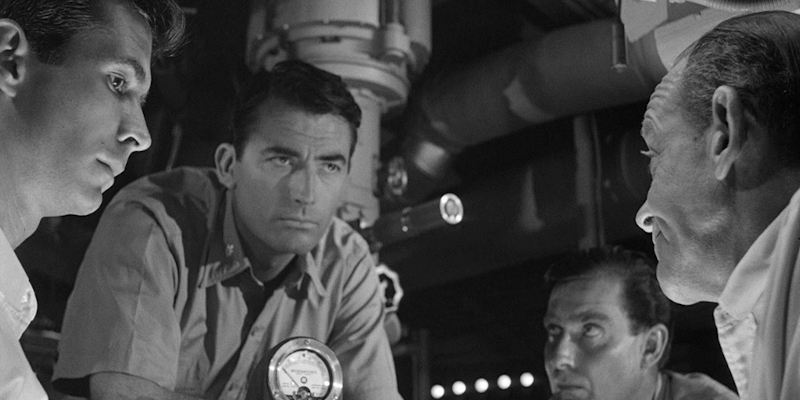
There is a chance that the radiation levels in the North may have dropped, so the Swordfish (with Cmdr. Towers, Lt Holmes and technical advisor Osborn on board) go to check them out. The levels haven’t dropped. Next, they must investigate a radio signal apparently coming from San Diego suggesting that, against the odds, someone has survived there… First they stop at the deserted San Francisco,
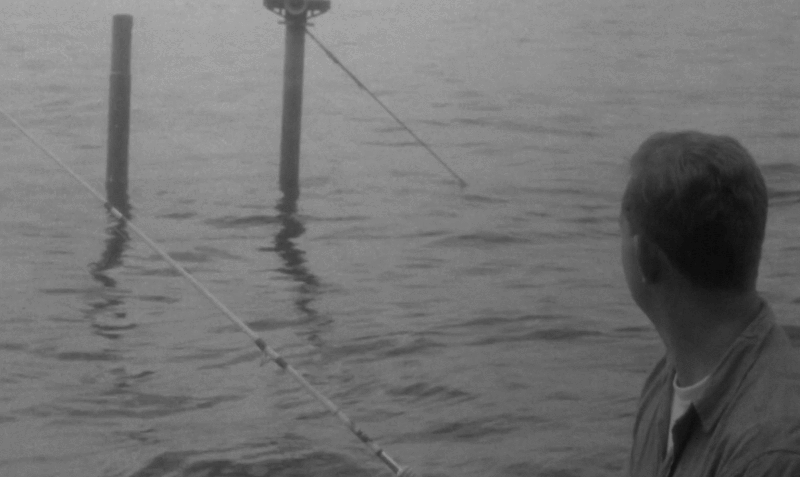
where crew member Ralph Swain (John Meillon from Crocodile Dundee, Peter Faiman, 1986; The Cars that Ate Paris, Peter Weir, 1974; Wake in Fright, Ted Kotcheff, 1971), who comes from there, leaves the ship. He can’t be persuaded to return, instead staying in the city where he has between four days and a week before the radiation kills him.
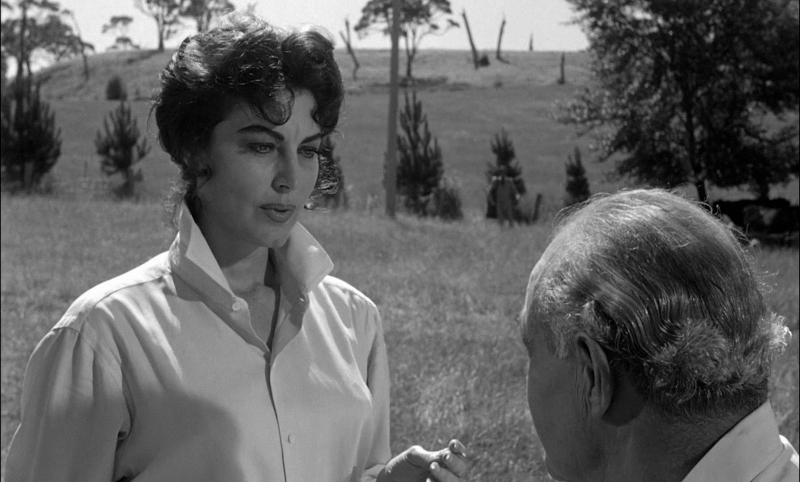
Moira is waiting for Dwight when he turns up unannounced at her father’s farm, where she runs across the field to him. They kiss passionately. But later, he will be parted from her as he must command the submarine and take his crew back to the US to die. Lt. Holmes, meanwhile, discovers that his wife has had a breakdown…
Gregory Peck is perfectly cast as the submarine commander trying to carry on as if everything were normal, thinking of himself as a married man and father when his wife and kids have long since died back home. Ava Gardner is equally compelling as the promiscuous woman who falls hard for him (it being 1959, her lifestyle is conveyed subtly with nothing explicit shown).
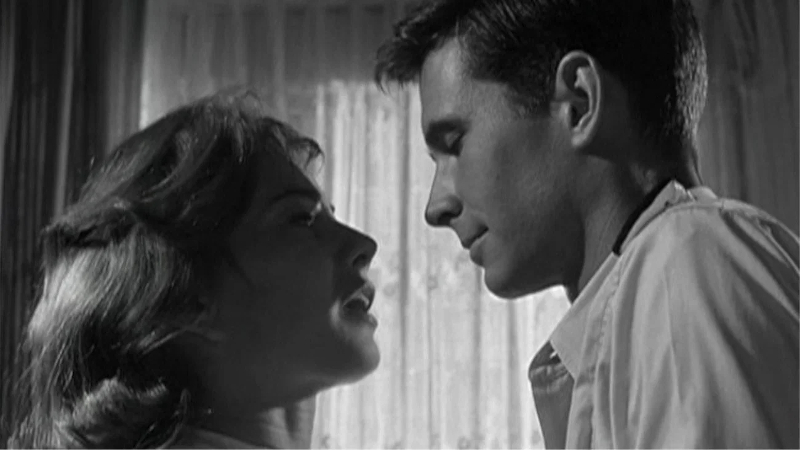
Anthony Perkins takes you with him on his impossible journey of a naval husband due to be away trying to do the right thing by his wife and daughter in terms of obtaining euthanasia pills for them. It’s fascinating to watch him on the screen a year before Psycho (Alfred Hitchock 1960) forever typecast him as a slightly loopy, off-kilter type. Newcomer Donna Anderson, plucked from obscurity by director Kramer, gets under the skin of the wife who, like so many of the characters here, doesn’t want to talk about the coming extinction.
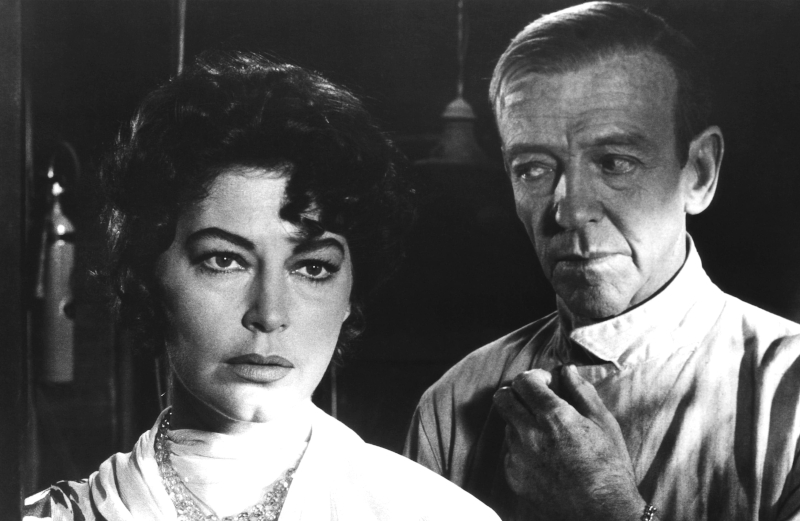
The real casting coup, however, is Fred Astaire, known for his long and highly successful career as a dancer in musicals, who Kramer thought would be perfect as the only one of Moira’s former love interests we actually see, now a man whose passion is the Ferrari he bought cheap which he plans to race in an upcoming local fixture. The race sequence, although his presence in close ups in it is achieved by the now somewhat creaky back projection process shots of the time, provides an exciting highlight towards the end, with spectator Moira convinced he’s going to kill himself. Elsewhere, Astaire surprises both himself and us in proving he possesses the acting chops to pull the role off, delivering a further memorable character to an already impressive ensemble cast.
Although many of the smaller roles are filled by Australian acting talent, the film suffers somewhat to contemporary eyes from having Australian roles portrayed by American actors such as Gardner, Perkins, and Astaire (the submarine commander played by Peck is American).

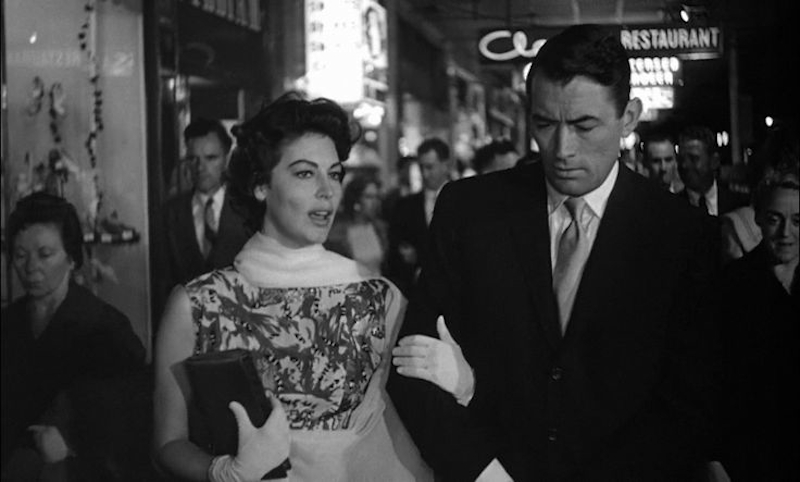
One is also aware that this is a Hollywood movie as Ava Gardner models a frankly astonishing wardrobe from scene to scene, and the disc contains a visually informative, documentary short examination of it by costume historian Elissa Rose.
Based on the novel by Nevil Shute, a Brit who migrated to Australia in the latter part of his life, the film became in its day something of a clarion call in the protest movement against nuclear weapons. The depiction of nuclear war is fairly low key, depicting only its aftermath where cities such as San Francisco are depicted as ghost towns, while Australian cities such as Melbourne which are still a going concern are largely devoid of cars due to petrol shortages, with people mostly relying on bicycles or horse-drawn buggies to get around.
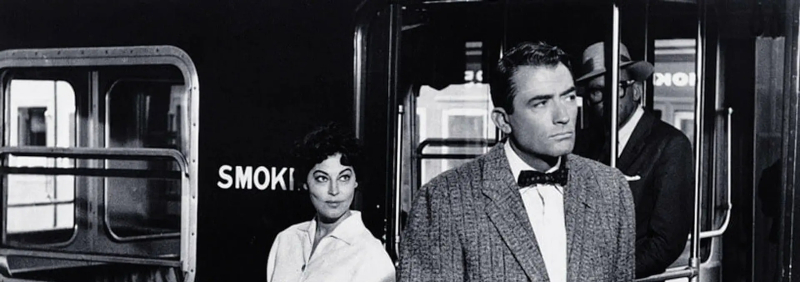
The concern overall is less with the mechanics of nuclear war and it’s aftermath – although the film is very effective at dealing with that as far as it goes – and much more with the psychological effect on populations trying to come to terms with the fact that they’ve only a few months to live. Towards the end, although very much in the panoramic backdrop of the film rather than inside the central drama of its main characters, a Salvation Army rally exhorts individuals to return to the Christian faith before it’s too late. As the days pass and radiation sickness takes its toll, the large numbers attending dwindle, telling their own story.
Watching the film in the UK in the Summer of 2026, with Europe suffering from devastating heatwaves due to global warming, the film, although clearly about rising radiation levels following a nuclear war, reads as a fable about an extinction level event much closer to home. The experience of watching the film at the present time is therefore a deeply affecting one.
Extras
The extras-laden disc features a high definition transfer of the film. Two very different commentaries focus on the Australian locations (written by Dr. Philip Davey, author of When Hollywood Came to Melbourne) and the issue of nuclear war (by Scott Harrison).
A mini documentary short Remembering Stanley Kramer contains interview material with his wife Karen Sharpe and the writer of Judgement at Nuremberg, Abby Mann, and in a separate extra, Donna Anderson discusses Kramer and her career.
Kim Newman delivers a typically entertaining and well researched analysis of end of the world movies, although he focuses on primarily books and movies (when there’s a lot that could be said about other media, e.g. paintings by Bosch and Breugel in the fifteenth and sixteenth centuries) and he has little to say here on movies after the 1980s.
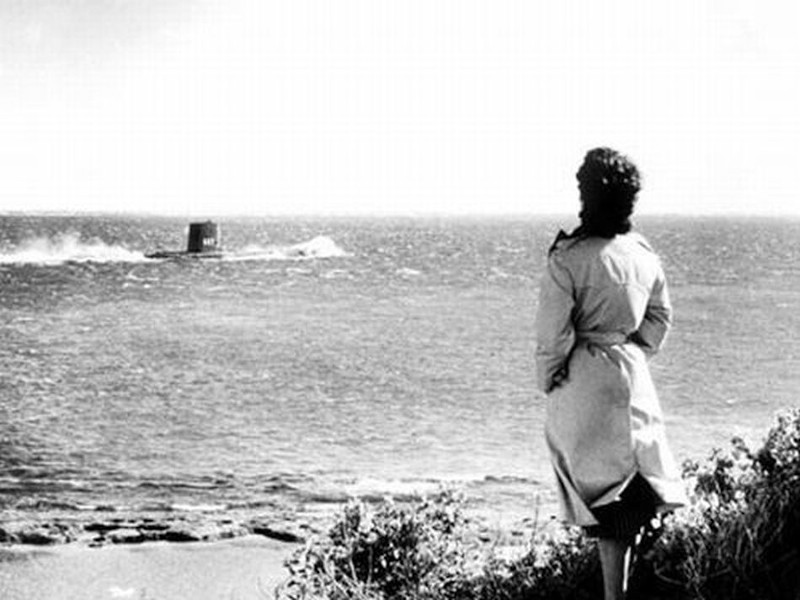
An amateur (Super 8?) film underscores footage of two days of the film’s shooting with jocular music and a cheery (and hilarious) voice over. By way of contrast, the overly serious, half-hour British Ministry of Supply short Operation Hurricane (Ronald Stark, 1952) documents the first A-bomb test on the Monte Bello islands.
The extras, which also include a short mentioned earlier exploring Ava Gardner’s costumes, conclude with galleries of (1) extensive publicity stills plus related material , (2) a book of productions stills given by Kramer to cast and crew members, and the original trailer.
On the Beach is out on Blu-ray in the UK on Monday, July 27th.
Trailer: