Categories
Features Live Action Movies

Wild Foxes
(La Danse des Renards)

Director – Valéry Carnoy – 2026 – Belgium, France – Cert. 15 – 91m

***1/2

A promising young school boxer’s mindset changes following an accident which damages his arm – out in UK cinemas on Friday, May 1st

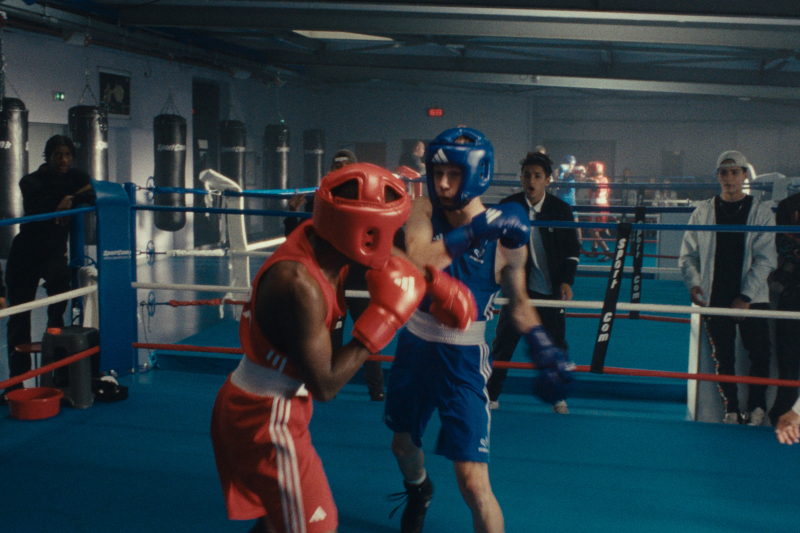
This starts off with the camera darting nimbly around a boxing ring in a gym in which two teenage fighters (one in red, one in blue) spar while their compatriots and trainer spur them on from the sidelines. Camille (Samuel Kircher), in blue, is the winner. Afterwards, five of them lark around in the changing rooms, filmed on a smartphone. (The French title, with its reference to dancing, seems particularly apt here.)

A coach journey. Camille rehearses his fighting moves in a mirror and hangs up the medal round his neck. And on a football field with a team mate. And back in the gym. Which routine is interrupted when his trainer Bogdan (Jean-Baptiste Durand) summons him for a talk with the director. The dates have come through for the Brussels competition in June, but rather than train alongside his professional team mates, Cam wants to stay at the gym and practice with his friend Matteo (Faycal Anaflous) – who has been warned by the gym, one more screw up and you’re out.… Read the rest
Categories
Documentary Features Live Action Movies Music

Ennio: The Maestro
(Ennio)

Director – Giuseppe Tornatore – 2021 – Italy – Cert. 15 – 156m

****

Documentary Ennio: The Maestro looks at the career of Italian film composer Ennio Morricone – out in cinemas on Friday, April 22nd

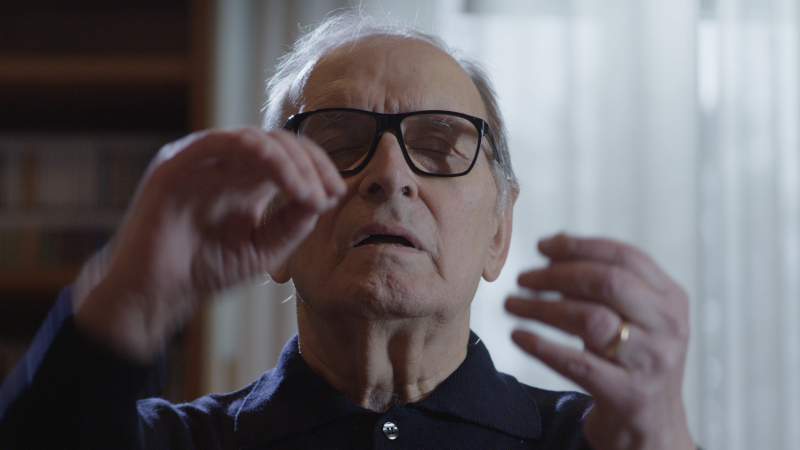
It’s difficult to know where to start with Ennio Morricone, whose career in film music covers some 70 years. Tornatore adopts the chronological approach, starting with his early life. The composer’s father was a trumpeter who pushed young Ennio to learn that same instrument, leading to entry into Rome’s Santa Cecilia Conservatory where he studied both trumpet and composition. His father had raised him with a strong work ethic – using the trumpet to feed your family – and much of his early work was as a trumpeter on movie soundtrack sessions, including Othello (Orson Welles, 1951).

His wife secured him a brief stint at TV channel RAI where she was working, but on being told that he wouldn’t be able to perform anything recorded there anywhere else, Morricone quit almost immediately. Inspired by seeing experimental composer John Cage perform live, he formed the Nuovo Consonanza Improvisation Group to experiment with what he called “traumatic sounds”. This approach would inform a number of his later soundtracks.… Read the rest