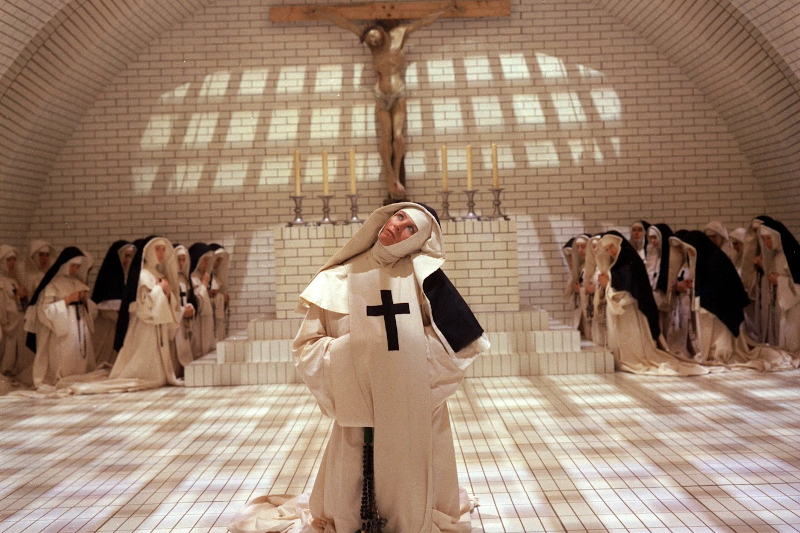
Ken Russell’s The Devils
Director – Ken Russell – 1971 – UK – Cert. 18 – 114m
*****
Restored. Remastered. Uncensored. Ken Russell’s notorious masterpiece finally reaches the big screen as he originally intended it to be seen – from the BFI London Film Festival 2026 which runs from Wednesday, October 7th to Sunday, October 18th in cinemas and on BFI Player, a new 35mm film print previews at BFI Southbank from Friday, October 23rd to Thursday 29th, and the film is out in UK and Ireland cinemas Friday, October 30th
NSFW.
To anyone who has seen the version of The Devils released theatrically in the UK with an X certificate in 1971, and put out on DVD by the BFI about ten years ago, watching this new version has about it the sensation of tasting forbidden fruit. (If you’ve never seen that version, all I can say is, start with this one: this is the version that Russell intended.) It’s perhaps instructive to look at what has changed, in other words those scenes which were considered by the BBFC and / or distributor Warner Bros. too shocking for inclusion back in the day.
Writing about the X certificate version on its DVD release, I noted that the four areas in which the film didn’t hold back were sex, religion, politics and torture. Watching the new version, it felt to me like the torture material was pretty much unchanged, although in fact there are some minor changes which have been added back in. Even so, had Russell wanted to dwell far more on the salacious aspects of the torture, he could easily have done so, yet it seems that that element of the film wasn’t primarily what upset the censor and the distributor at the time. (The whole film narrative is permeated with politics, so anything that might be censored is political.) The material about sex and religion is where most of the cuts fell.
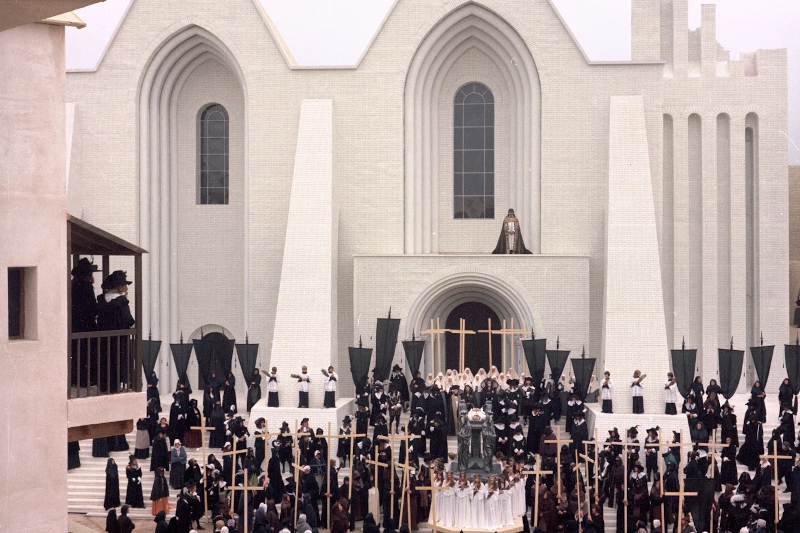
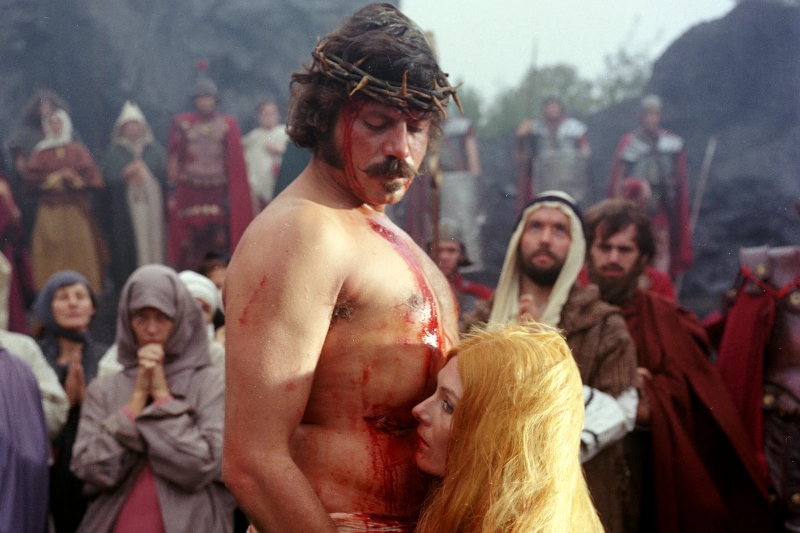
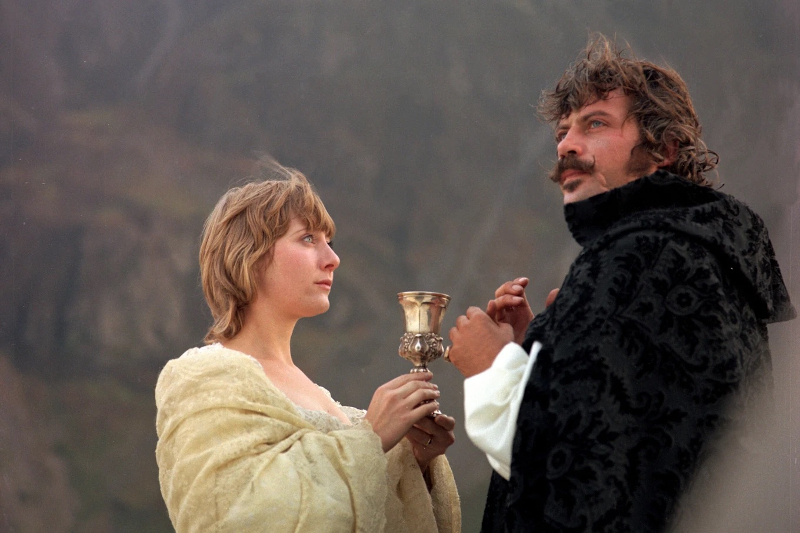
I wrote: The plot concerns seventeenth century France where Cardinal Richelieu (Christopher Logue) is attempting to increase the Catholic Church’s hold on the nation by persuading decadent monarch Louis XIII (Graham Armitage) to knock down the walls surrounding cities that enable their functioning as self-governing entities. With Louis resisting this concession as regards the city of Loudun, Richlieu exploits that city’s ‘demon-possessed’ convent under its Mother Superior Sister Jeanne (Vanessa Redgrave) to produce an orgiastic sideshow as a diversion for getting rid of promiscuous priest Father Grandier (Oliver Reed), the city’s protector who is determined that the walls of Loudun should remain intact. Reed and Redgrave give arguably the performances of their careers, while the supporting cast are terrific. Derek Jarman’s set designs brilliantly realise Russell’s vision of both Loudun as a modern city and its convent interior as a public lavatory where a rape takes place. Peter Maxwell Davies’ eerie, experimental score lends an unsettling atmosphere.
It’s easy to see how an uncritical approach could reduce the film to a mashup of blasphemy and gratuitous nudity; however, Russell’s achievement deserves better understanding.
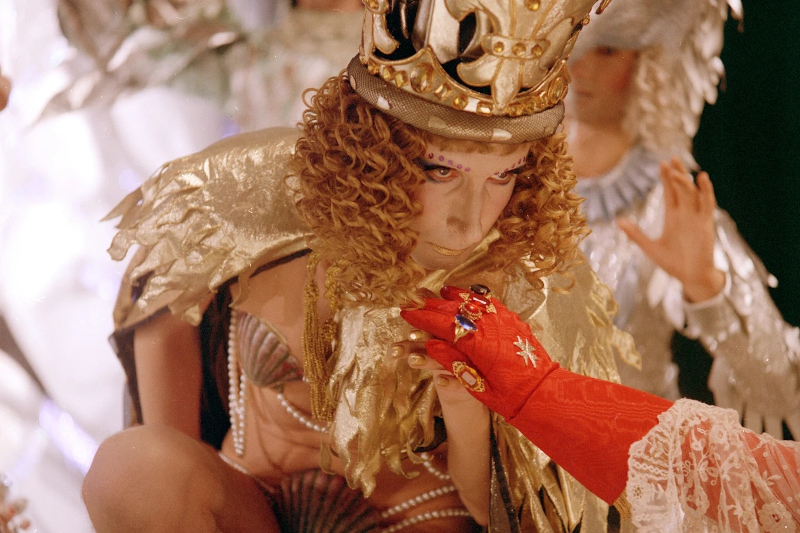
Central to Russell’s concerns, and described by him as the crux of the film, was a sequence dubbed The Rape of Christ, the high point of the orgy in which, as Russell put it, Christ is debased and must be seen to be debased. The scene is intercut with Father Grandier holding a simple mass elsewhere at a roadside to contrast the immorality of the nuns’ naked activities with Grandier’s more devout behaviour. Russell pleaded for this scene to be left intact in his negotiations with the BBFC’s secretary John Trevelyan, but in the end had to “cut it in two”. The removed footage was thought lost if not destroyed for many years until it was discovered in a can of film in the early years of this century.
The difference in this new version of the film is considerable. The whole point of the orgy is to show the unwitting nuns as flying in the face of the values they’re supposed to espouse, and in doing so distract the local populace from what is really going on, i.e. Cardinal Richlieu searching for a pretext to get Grandier out of the way so he can pull down the walls of Loudun and exercise control over the city. The new version achieves this far more effectively than the 1971 BBFC cut version.
Also back in in its entirety is a bizarre sexual / religious dream sequence towards the beginning, and a closing sequence after all the political chicanery has taken place in which Sister Jeanne uses a charred fragment of one of Grandier’s bones, distinctly phallic in appearance, to masturbate, perfectly illustrating the pitiful state to which she’s been reduced.
Even in its mutilated state in the 1971 BBFC cut, The Devils was Russell’s undeniable masterpiece. John Trevelyan’s issue with the film boiled down to whether or not artistic quality justifies total freedom. In the case of Ken Russell and The Devils, the answer must be a resounding yes: this new version provides far more satisfying viewing than the problematic 1971 version.
Following its two LFF screenings, the newly restored / reconstructed version of the film, under the name Ken Russell’s The Devils, is getting a week in cinemas throughout the UK. One hopes it will get a subsequent Blu-ray or UHD release, but given the film’s history of being suppressed, there is no guarantee that there will be one. If you want to see the film as Russell intended – something which, to be honest, few people thought would ever happen – you are advised to seek it out and watch it in its week-long theatrical run. You will not be disappointed.
Ken Russell’s The Devils plays in the BFI London Film Festival 2026 which runs from Wednesday, October 7th to Sunday, October 18th in cinemas and on BFI Player, a new 35mm film print previews at BFI Southbank from Friday, October 23rd to Thursday 29th, and the film is out in UK and Ireland cinemas Friday, October 30th.
Trailer:
LFF 2026 Trailer: