
Categories
Features Live Action Movies

Wasteman

Director – Cal McMau – 2025 – UK – Cert. 18 – 90m

*****

A prisoner’s chances of achieving parole are threatened by the arrival of a ruthless and manipulative new cellmate – out in UK cinemas on Friday, February 20th

Taylor (David Jonsson from The Long Walk, Francis Lawrence , 2025; Alien: Romulus, Fede Alvarez, 2024; Rye Lane, Raine Allen-Miller, 2023), a young inmate in prison, is due for parole provided he behaves as required. However, his new cellmate Dee (Tom Blyth from The Hunger Games: The Ballad of Songbirds & Snakes, Francis Lawrence, 2023; Benediction, Terence Davies, 2021; Robin Hood, Ridley Scott, 2010) has other ideas, including making money by dealing all manner of illicit goods from the outside.

This opens with a row between inmates, one of whom is determined to mete out punishment to whoever it was took his mobile phone. Very quickly, the situation descends into his suspected thief being assaulted with a television set that happens to be nearby. As another prisoner says to the one who carries out the assault, part in awe, part in jest, and part in newly-found respect, “Fucking TV, mate.”

Welcome to the world of Wasteman, the term used to designate central character Taylor who has been written off by British society.… Read the rest
Categories
Documentary Features Live Action Movies

The Battle for Laikipia

Directors – Daphne Matziaraki, Peter Murimi – 2024 – US, Kenya, Greece – Cert. 12a – 94m

**

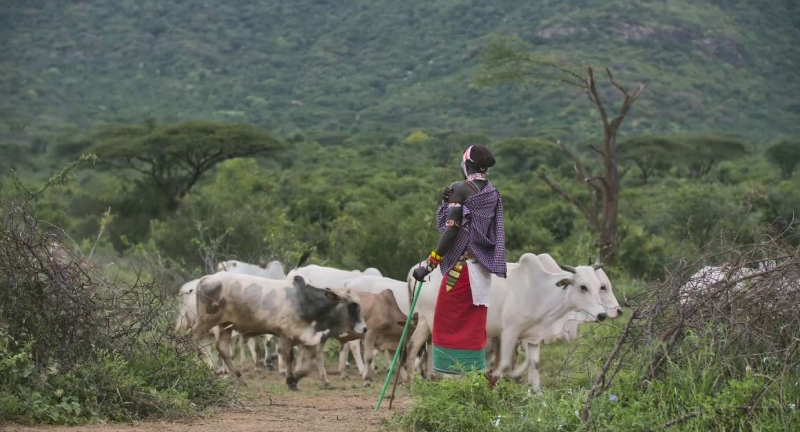
Disagreements in Kenya between indigenous, pastoralist herdsmen and white immigrant farmers come to a head during a severe drought exacerbated by climate change – out in UK cinemas on Friday, October 4th

Shot mostly between 2017 and 2019 – so before the COVID pandemic – this is a brave attempt to relate two opposing and seemingly irreconcilable sides to a specific conflict.

Laikipia is a large, wildlife conservation area of Kenya, and the film was made some 60 or so years after Kenyan independence.

On the one hand, indigenous Kenyan tribesmen have been grazing their herds of goats and cattle on the land, simply wandering around and letting the animals graze at any suitable pasture they find. There is no concept of land ownership, except the unspoken idea that this is their country and this is therefore their land, which seems reasonable enough.

On the other hand, the early part of the twentieth century saw white British settlers awarded large areas of land to set up farms on the more profitable, Western capitalist business model. These people have now lived in the country and run their farms as enclosed ranches for some four generations.… Read the rest