Categories
Animation Features Live Action Movies

The Lord
of the Rings:
The Return
of the King

Director – Peter Jackson – 2003 – New Zealand – Cert. 12a – 201m (263m)

*****

(NB Extended Edition, in cinemas from Monday, August 10th 2020, 263m in cinemas due to extended frame rate = 252m version released on DVD 2004.)

This review of the 201m theatrical version was originally published in Third Way.

A much shorter review appeared in What’s On In London.

A pre-screening article on The Lord Of The Rings appeared in Sussed in 2001.

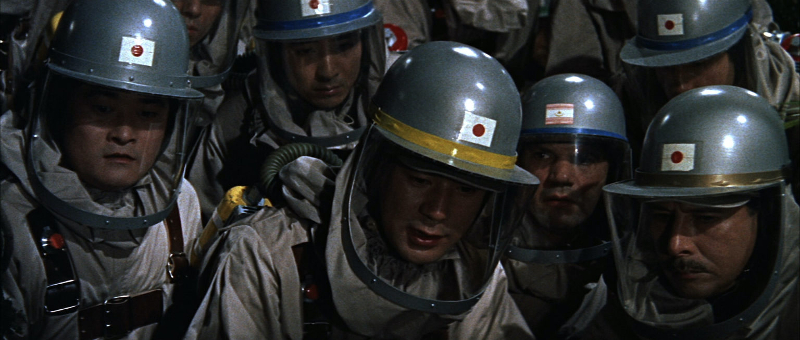
Tolkien’s The Lord Of The Rings is a labour of love by a brilliant academic obsessed by myth and language better at creating an alternate world than at story construction. Nowhere in the trilogy is this more evident than in The Return Of The King. Frodo’s trip to Mount Doom to unmake Sauron’s One Ring builds up incredibly to a climactic pivotal event running little more than a paragraph. This is followed by another hundred pages or so tying up loose ends, including a sequence in which evil wizard Saruman turns the Shire into a post-industrial dictatorship that’s trivial compared with the geographic enormity of what has gone before.

Jackson and co-writers wisely omit that sequence; indeed, in its last weeks of post-production his The Lord Of The Rings: The Return Of The King has chopped its scenes of Saruman (Christopher Lee) at Isengard – on the grounds that it slowed down the start.… Read the rest

Categories
Animation Features Live Action Movies

The Lost World
(1925)

Director – Harry O. Hoyt – 1925 – US – Cert. U – 110m

*****

Review of PAL VHS release originally published in Starlog UK, mid-1990s.

£12.99, Original Aspect Ratio (Academy), Mono (Golden Age Films)

Before Michael Crichton and Steven Spielberg purloined the name for their Jurassic Park sequel, The Lost World was Sir Arthur Conan Doyle’s first Professor Challenger novel. In the book, the bombastic scientist leads an expedition to a plateau deep in the Amazon cut off from the rest of the world which he claims to be populated by dinosaurs.
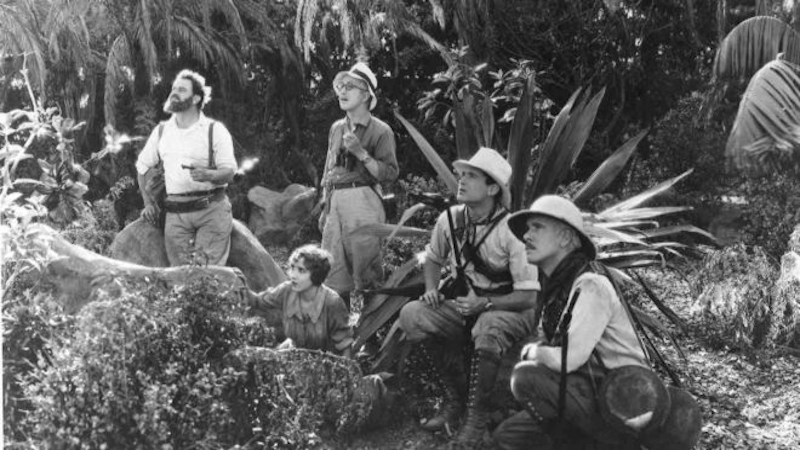
This 1925 silent Hollywood adaptation (here released in 1993’s restored, untinted, black and white print with piano accompaniment) features prominently in any serious shortlist of live action movies featuring dinosaurs along with King Kong, The Beast From 20,000 Fathoms, Godzilla, One Million Years BC and Jurassic Park. Indeed, leaving aside 1954’s Japanese, man‑in-a-rubber-suit entry Godzilla, the remaining titles are The Lost World’s descendants via their use of optical trickery and stop‑motion animation.
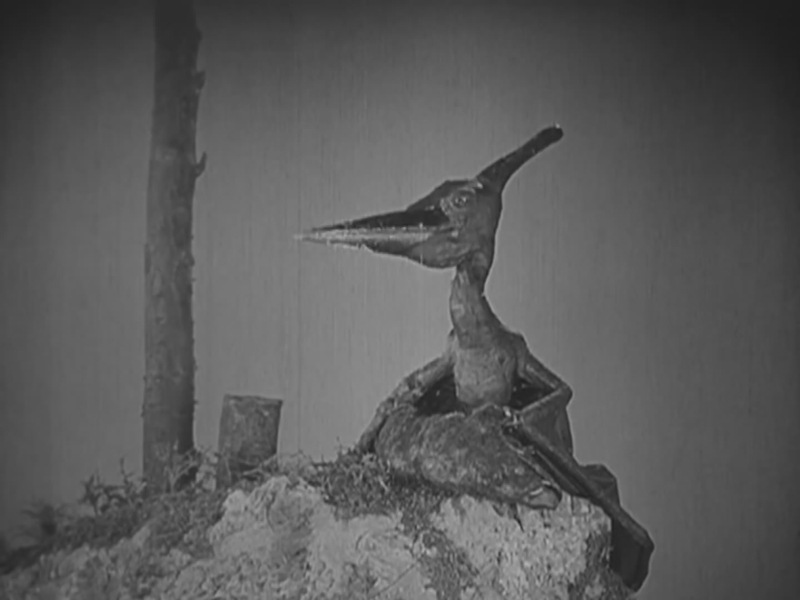
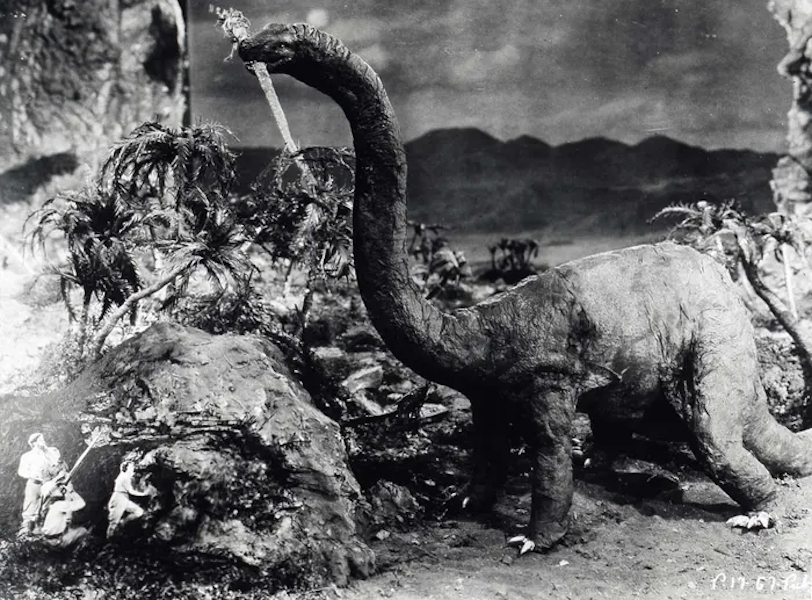
The Lost World’s miniature model dinosaurs and their incorporation as fully articulated giant beasts into live action cinematography was primarily the work of stop-frame animator cum special effects genius Willis O’Brien, later to put the dinosaurs into 1933’s King Kong and win a belated special effects Oscar on the back of 1949’s Mighty Joe Young.… Read the rest

Categories
Features Live Action Movies

The Invisible Man
Appears
(Tomei Ningen
Arawaru,
透明人間現る)

Director – Nobuo Adachi – 1949 – Japan – Cert. PG – 82m

****

With a title that seems to proclaim, “look at me, I’ve arrived”, Daiei’s The Invisible Man Appears (1949) is a Japanese manifesto, a statement that they can match American movies. Eiji Tsuburaya‘s effects are as good as anything in Universal’s The Invisible Man (1933) and were almost certainly produced at a fraction of the cost.

Although the concept originates with H.G.Wells’ 1897 novel, images from the Universal version starring Claude Rains are lodged in the popular consciousness. Thinking of The Invisible Man, I immediately recall a hat being removed then bandages being unwrapped from covering a man’s head to reveal… nothing… a shirt collar with no neck inside. The Invisible Man Appears recreates such effects convincingly… [read more]

On a Blu-ray double bill with The Invisible Man Vs The Human Fly (1957). Full review at All The Anime.

Trailer:

Trailer (double bill):

Categories
Features Live Action Movies

The Invisible Man
Vs
The Human Fly
(Tomei Ningen
To Hae Otoko,
透明人間と蝿男)

Director – Mitsuo Murayama – 1957 – Japan – Cert. 12 – 96m

**1/2

The lesser of Daiei’s two Invisible Man movies. Mitsuo Murayama, working from a script by Hajime Takaiwa, delivers not so much a sequel but, much like the different entries in Universal’s Invisible Man series, a different story with a different set of characters built around the concept. Without Eiji Tsuburaya’s guiding hand, the invisibility effects are less memorable but do what they need to. A striking theramin score by Tokujiro Okubo adds an unearthly atmosphere.

This time, the Invisible Man is not a criminal but on the side of the law. It’s a murder mystery with a bizarre twist… [read more]

On a Blu-ray double bill with The Invisible Man Appears (1949). Full review at All The Anime.

Trailer (double bill):

Categories
Features Live Action Movies

Ishiro Honda
Double Feature
The H Man
(Bijo
To Ekitai-ningen,
美女と液体人間)
and
Battle
In Outer Space
(Uchu Daisenso,
宇宙大戦争)

The H Man

*****

Director – Ishiro Honda – 1958 – Japan – Cert. X – 86m

Battle in Outer Space

*****

Director – Ishiro Honda – 1959 – Japan – Cert. U – 90m

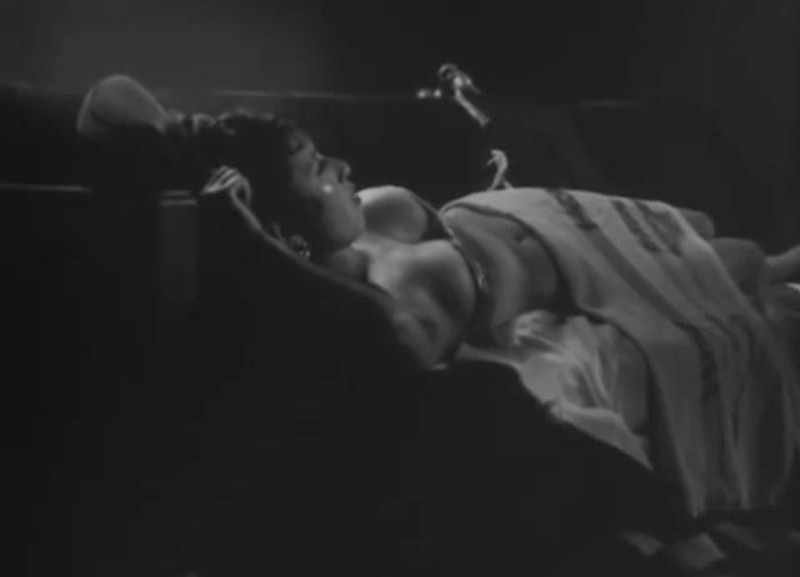
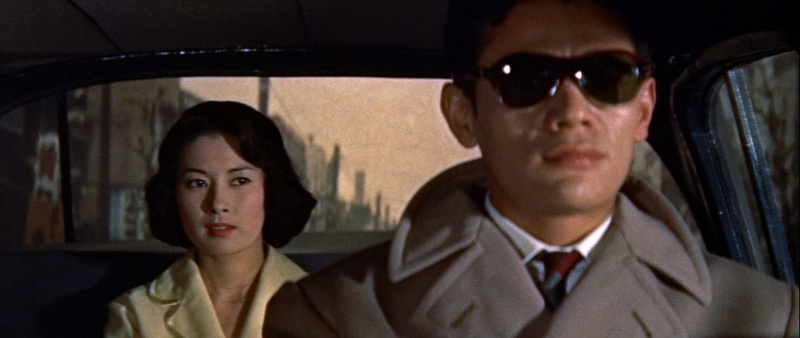
Alongside the standalone release of Mothra (1961) comes a double bill of two more Toho science fiction movies directed by Ishiro Honda with special effects by Eiji Tsuburaya: , The H Man (1958) and Battle In Outer Space (1959). The Toho studio is associated more with monster movies than any other genre, notably Godzilla (1954) and Mothra. The superior entries in this cycle tend to be the ones they directed, including the initial 1954 film which ticked all the right boxes to prove a massive success.

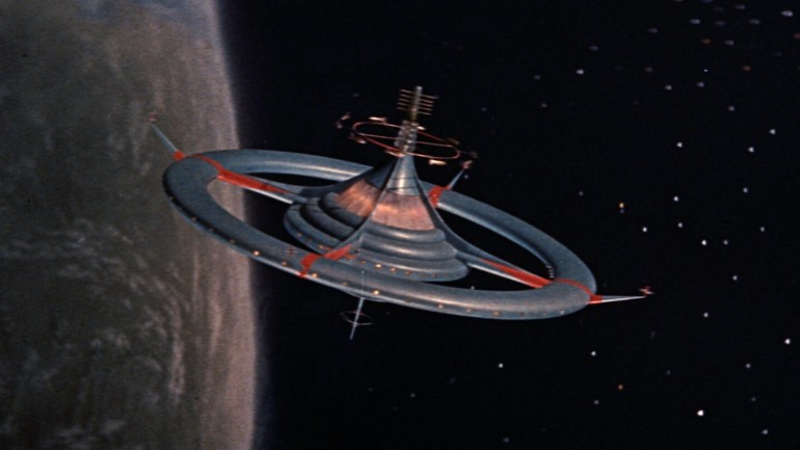
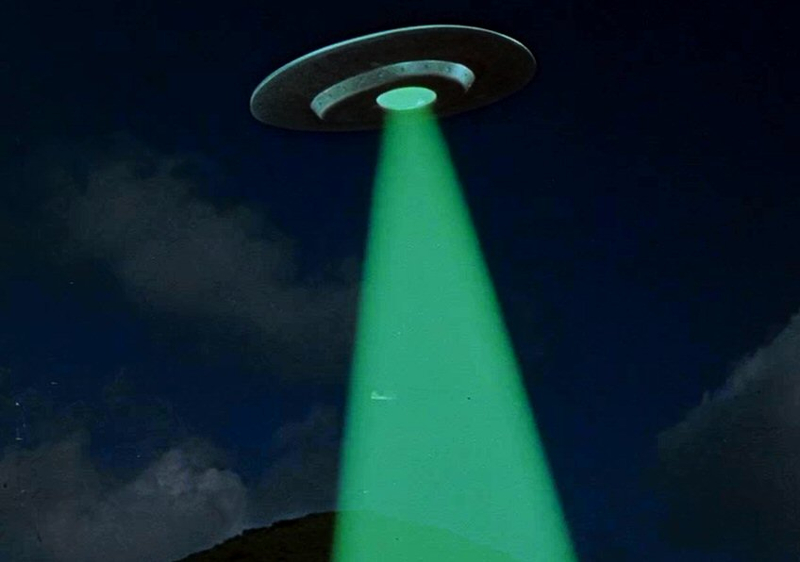
When no-one at Toho was quite sure what had made Godzilla work, the pair collaborated on a number of different SF films before everything came together on Mothra. The H Man is a monster film dressed up in gangster trappings while Battle in Outer Space is an epic with space stations, flying saucers, rocket ships, an alien moon base and alien mind control… [read more]

Over at All The Anime, I review Eureka!’s Ishiro Honda double bill Blu-ray.

Categories
Features Live Action Movies

Battle
In Outer Space
(Uchu Daisenso,
宇宙大戦争,
lit. The Great Space War)

*****

Director – Ishiro Honda – 1959 – Japan – Cert. U – 90m

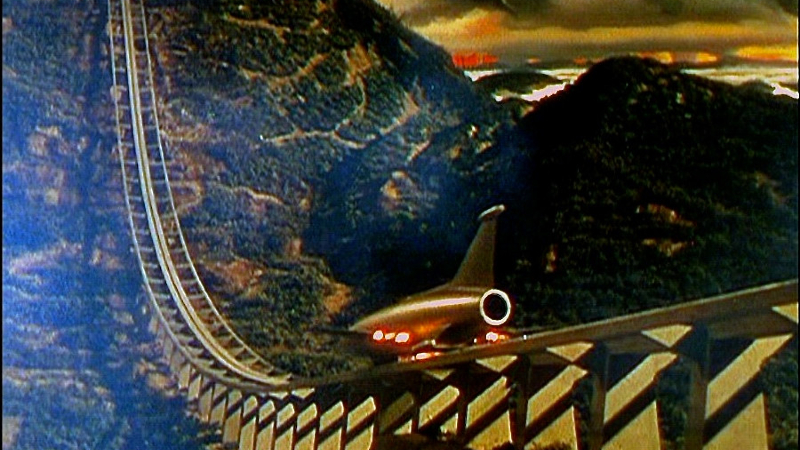
Battle In Outer Space is one of those films that paints on a bigger canvas and sacrifices character development in favour of big-screen visual spectacle, brought to life with state-of-the-art special effects. According to Kalat, the film owes much to the bigger Hollywood 1950s SF feature film films made in colour. These include not only films by former Puppetoon animation creator George Pal such as The War Of The Worlds (1953) and Conquest Of Space (1955) but also This Island Earth (1955) and Forbidden Planet (1956).

Honda’s film wades straight in to alien war scenarios… [read more]

Over at All The Anime, I review Eureka!’s Ishiro Honda Blu-ray double bill of The H Man and Battle In Outer Space.

Categories
Features Live Action Movies

The War
Of The Worlds
(1952)

Director – Byron Haskin – 1952 – US – Cert. PG – 82m

****

RUK PAL laserdisc review, 1997.

Originally published on London Calling Internet.

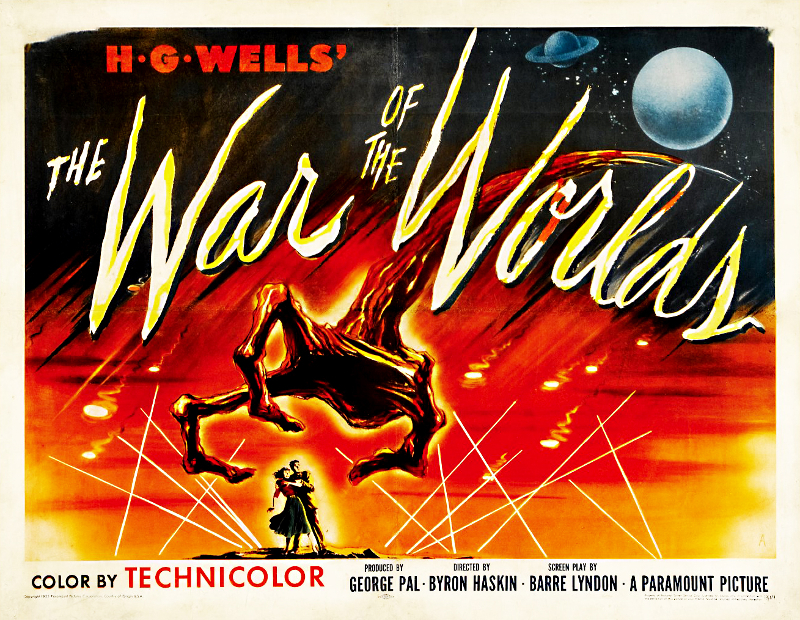
Hungarian born George Pal, who produced the stop-frame Puppetoons shorts in the forties, chose H.G.Wells’ seminal alien invasion novel for his fourth live action production. Media wunderkind Orson Welles had already transplanted the Home Counties setting across the Atlantic to New Jersey for radio; it was only natural that a rising Hollywood producer such as Pal should shift events further West to California. A then‑unknown Puppetoon animator named Ray Harryhausen had pitched a movie version at Welles, without success. However, while Welles was beginning his legendary slow descent from the pinnacle of the movie biz, Pal was clearly in the ascendant.

It’s not hard to see the attraction of the Wells’ novel to such creative heavyweights. Orson Welles, whose radio version had interrupted what appeared to be a programme of live, on air dance music with a series of eye-witness newsflashes of the Martian landings, clearly relished the prospect of panicking an entire nation in art if not in life. Harryhausen, one imagines, would have recreated Wells’ towering tripods, mechanical Victoriana burning up the Home Counties with their terrifying death rays (a decade later, Harryhausen’s First Men In The Moon, Nathan Juran, 1964 is packed with Victorian industrial ephemera).… Read the rest

Categories
Features Live Action Movies

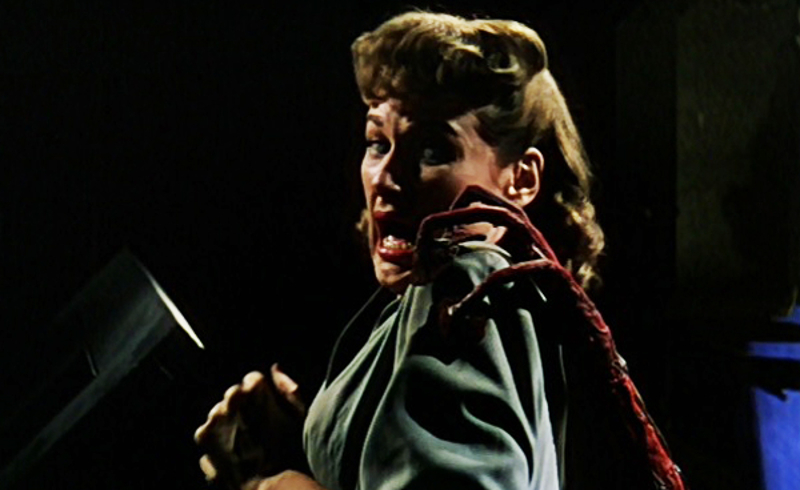
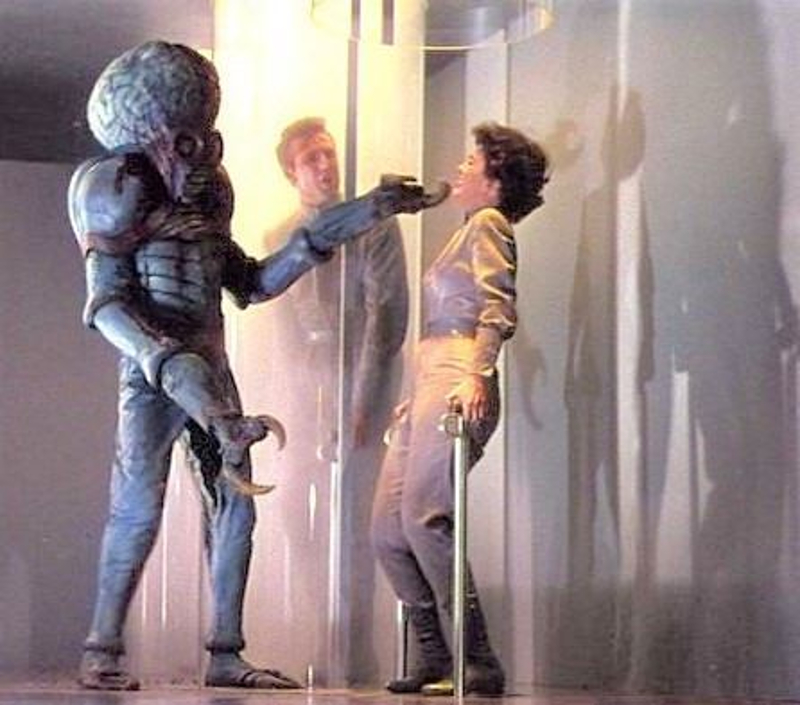
This Island Earth

Director – Joseph Newman – 1955 – US – Cert. PG – 83m

*****

UK PAL laserdisc review, 1997.

Originally published on London Calling Internet.

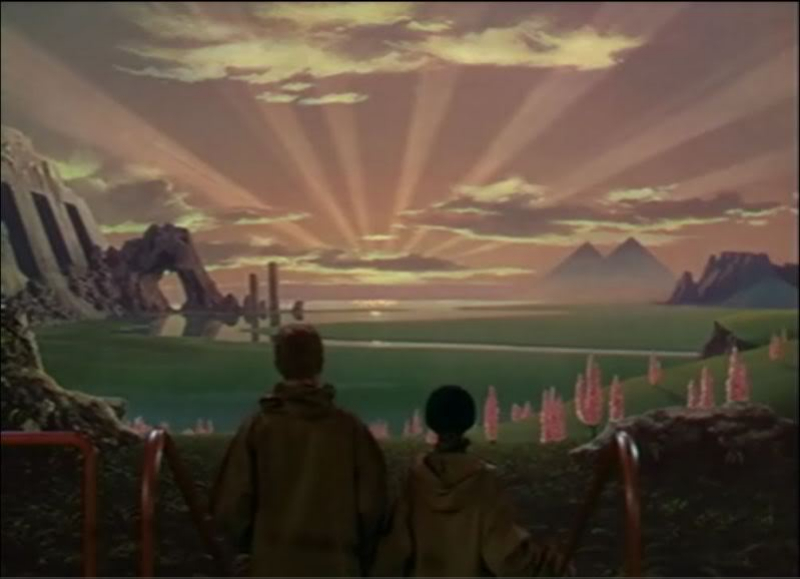
Pioneer continue to plunder the Universal vaults for SF gems. I’d never heard of This Island Earth when a print turned up for a revival run at London’s late lamented Scala repertory cinema in the early eighties, but having seen it several times since it’s a film which stands the test of time admirably. Moreover, being an Academy ratio film, it doesn’t suffer either the necessary indignity of widescreening black bars top and bottom or the thoroughly infuriating cropping of picture sides that accompanies too many video releases. The digital remaster on this Pioneer disc looks superb too – This Island Earth may be a good deal more than merely the sum of its special effects, but it IS an effects movie and those effects are impressive by the standards of the day (even if they creak a little now). What’s more, most of them are on side 2 of this disc in glorious CAV.

Warning: (plot) spoilers.

Eschewing obvious alien invasion plot lines, the narrative has nuclear research scientist Cal Meacham (Rex Reason) slowly lured into an alien conspiracy alongside rival in his field of research Ruth Adams (Faith Domergue).… Read the rest

Categories
Features Live Action Movies

Mothra
(Mosura,
モスラ)

Director – Ishiro Honda – 1961 – Japan – Cert. PG – 101m

*****

Giant moth attacks Tokyo to save fairies. Someone had a meeting about that.

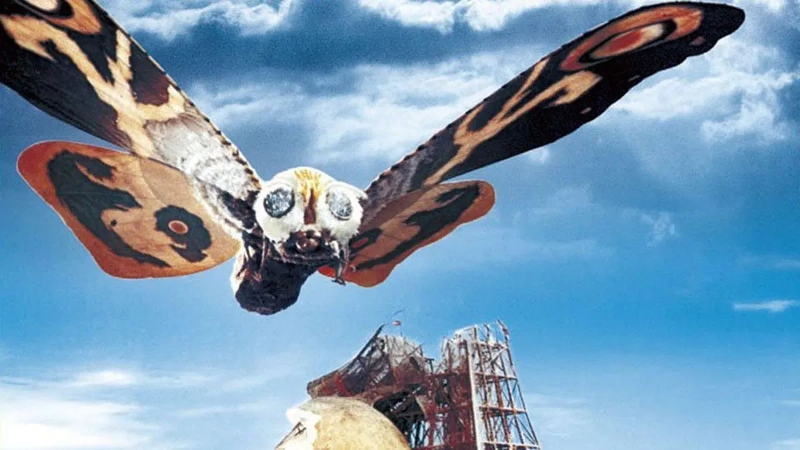
You’d be forgiven for assuming Mothra (1961) a typical Toho monster movie in which a giant moth attacks Tokyo. Yet the film single-handedly redefined the genre much as the original Godzilla film defined it.

With a typhoon moving towards Japan, sailors abandon ship near Infant Island where Rolisica – an amalgam of Russia and the US – has recently tested nuclear weapons. Rescued survivors are tested for radiation sickness but no symptoms found. Two members of the press, reporter Zenichiro Fukuda (Frankie Sakai) and photographer colleague Michi Hanamura (Kyoko Kagawa) sneak into the team of scientists to take pictures and ask questions, learning the natives gave them red juice to drink. They report back to their editor (Takashi Shimura).

Clark Nelson (Jerry Ito) leads an expedition to Infant Island to find a jungle like Pathé’s for King Kong (1933) with man-eating plants, hostile natives and two telepathic, singing Shobijin (lit: ‘small beauties’) about a foot tall… [read more]

Full review at All The Anime.

Blu-ray available from Eureka!

Trailers:

Categories
Features Live Action Movies

When Worlds Collide

Director – Rudolph Maté – 1951 – US – Cert. U – 79m

***

UK PAL laserdisc review, 1997.

Originally published on London Calling Internet.

Made the year before European-born producer George Pal’s The War Of The Worlds (Byron Haskin, 1953), this science-fictional disaster outing stages the end of the world by a star and orbiting planet Zyra rushing headlong towards the Earth. A handful of scientists build a Space Ark to save a chosen few humans via a perilous voyage to Zyra. But who will go – and who will stay behind and face annihilation?

From its opening Bible with destruction quotations to match, right through to its New Start For Humanity In A New World finale, this is infused with Pal’s Christian sensibilities. The script never allows that to get in the way of the story, however: the result is a compelling yarn that remains almost unique in the annals of SF cinema.

Director Rudolph Maté was a former cameraman whose prior experience included shooting Foreign Correspondent (Alfred Hitchcock, 1940) which features one of the most spectacular plane crashes in the movies. Together with lensing Dante’s Inferno (Harry Lachman, 1935), this stood him in good stead for pulling off the outstanding special effects work required for When Worlds Collide.… Read the rest