
Categories
Features Live Action Movies

London Korean
Film Festival
(LKFF)
2025

LKFF, the London Korean Film Festival 2025 runs in cinemas from Wednesday, November 5th to Tuesday, November 18th

The London Korean Film Festival, now celebrating its 20th year, kicks off tonight with its Opening Gala, a World Premiere of Frosted Window (Kim Jong-Kwan, 2025), followed by a Q&A with director Kim and actor Yeon Woo-jin.

It bows out in two weeks time with its Closing Gala, Harbin (Woo Min-ho, 2024), starring Hyun Bin, with cinematography by Hong Kyeong-pyo who shot Parasite (Bong Joon Ho, 2019).

In between these two events comes a Special Screening of Hi-Five, a superhero comedy by Kang Hyoung-chul (Swing Kids, 2018; Sunny, 2011).

Also, this year the Festival launches its first-ever LKFF Audience Award, giving festival-goers the chance to vote for their favourite film and help shape this 20th anniversary edition. Of the four films made available to press in advance, my vote would go to the enigmatically titled 3670 (Park Joon-ho, 2025), a compelling drama about a gay man who has defected from North to South Korea. The film, which picked up four awards at the 26th Jeonju International Film Festival, transcends Korean, gay and religious demographics to speak to a much wider audience, and in this writer’s opinion deserves a proper UK release.… Read the rest
Categories
Documentary Features Live Action Movies Music

Ennio: The Maestro
(Ennio)

Director – Giuseppe Tornatore – 2021 – Italy – Cert. 15 – 156m

****

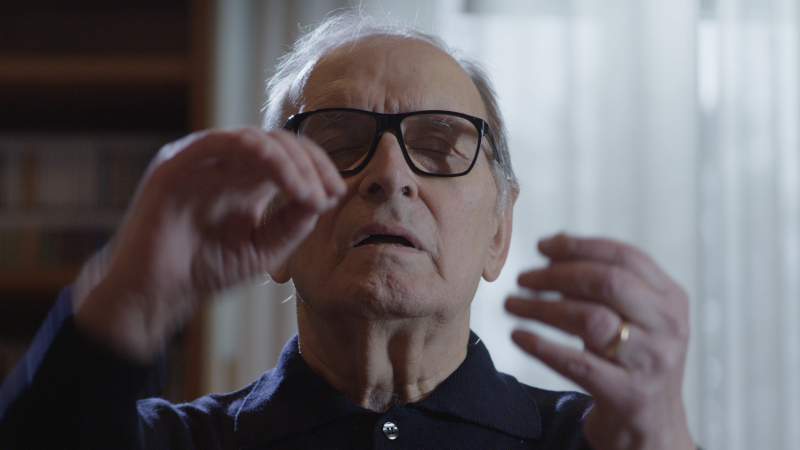
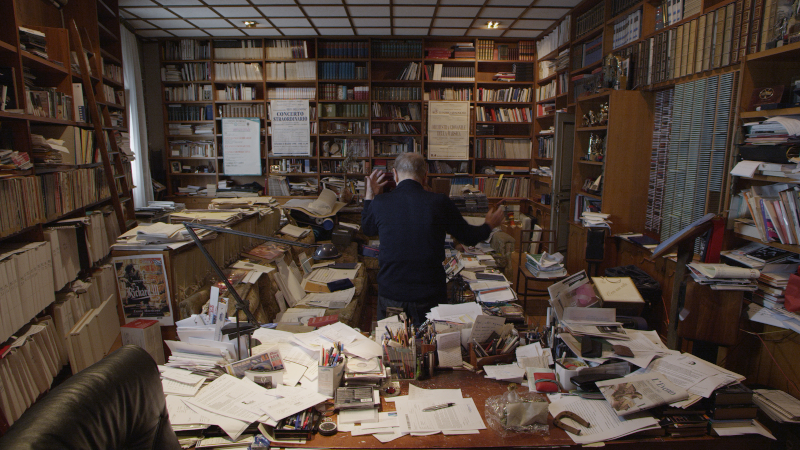
Documentary Ennio: The Maestro looks at the career of Italian film composer Ennio Morricone – out in cinemas on Friday, April 22nd

It’s difficult to know where to start with Ennio Morricone, whose career in film music covers some 70 years. Tornatore adopts the chronological approach, starting with his early life. The composer’s father was a trumpeter who pushed young Ennio to learn that same instrument, leading to entry into Rome’s Santa Cecilia Conservatory where he studied both trumpet and composition. His father had raised him with a strong work ethic – using the trumpet to feed your family – and much of his early work was as a trumpeter on movie soundtrack sessions, including Othello (Orson Welles, 1951).

His wife secured him a brief stint at TV channel RAI where she was working, but on being told that he wouldn’t be able to perform anything recorded there anywhere else, Morricone quit almost immediately. Inspired by seeing experimental composer John Cage perform live, he formed the Nuovo Consonanza Improvisation Group to experiment with what he called “traumatic sounds”. This approach would inform a number of his later soundtracks.… Read the rest