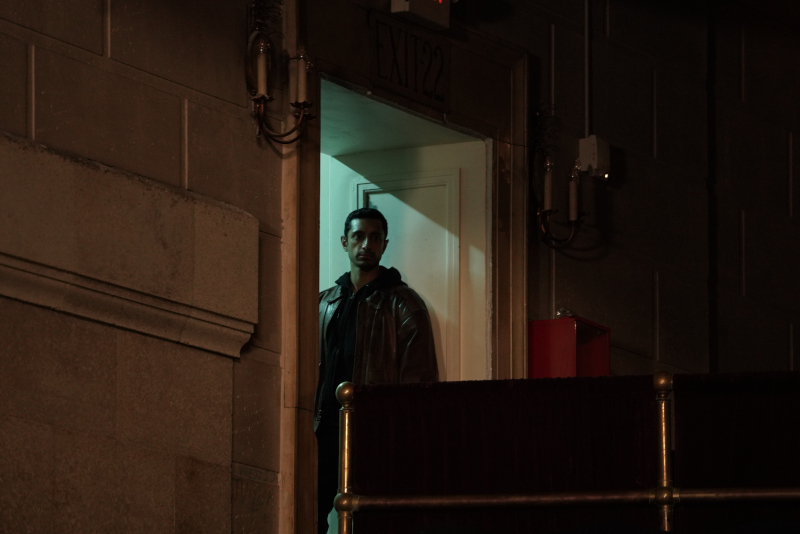
Director – David Mackenzie – 2024 – US – Cert. 15 – 112m
*****
A corporate whistleblower who has changed her mind hires a fixer to give her the leverage she needs to safely vanish and start a new life, only it doesn’t work out like that – out in UK cinemas on Friday, October 31st
Sometimes companies do bad things, and when you think they couldn’t do any worse, they set out to coerce or intimidate former employees attempting to expose them. How widespread this is in real life is anyone’s guess, but it makes for great copy and feeds into paranoid left wing ideas about the immorality of corporate capitalism. Don’t get me wrong: just because you’re paranoid, as the saying goes, it doesn’t mean they’re not out to get you.
To illustrate the point, this narrative opens with Hoffman (Matthew Mayer from Bringing Out The Dead, Martin Scorsese, 1999; Dogma, Kevin Smith, 1999, reissued in cinemas next week (Friday, November 7th); and Funny Pages, Owen Kline, 2022) entering a near empty New York restaurant to surrender a set of incriminating documents to McVie (Victor Garber from Family Law, TV series 2021-2025; Argo, Ben Affleck, 2012; Alias, TV series, 2001-6), safe in the knowledge that another copy of said documents will be mailed to an appropriate recipient should McVie not co-operate and ensure Hoffman’s safety.
Hoffman might have been a potential whistleblower, but all he now wants is to get the company off his back and live his life in peace. He may have wanted to expose corporate malfeasance in the beginning, but now he simply wants to save his own neck. Sitting across the table from McVie, Hoffman can’t resist a quip that he wanted to see what Evil looked like. Before he walks.
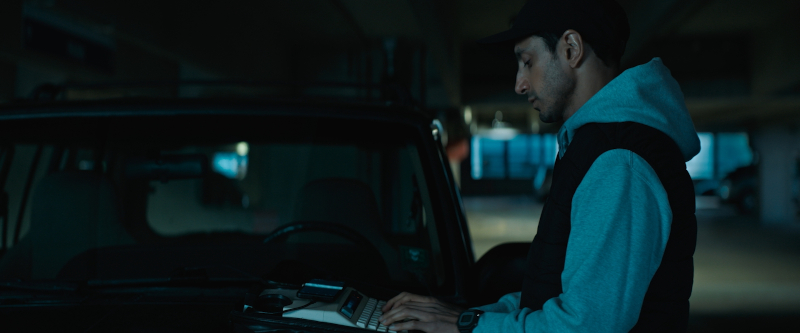
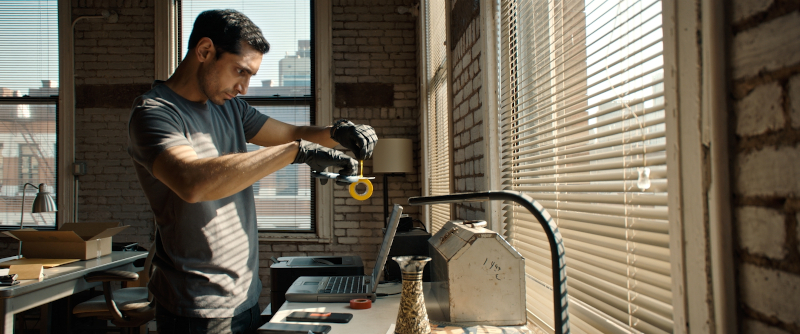
Facilitating Hoffman’s way out of his bad situation is a shadowy figure named Ash (Riz Ahmed from Sound of Metal, Darius Marder, 2019; Rogue One, Gareth Edwards, 2016,; Nightcrawler, Dan Gilroy, 2014). Ash’s next client is a woman named Sarah (Lily James from Baby Driver, Edgar Wright, 2017; Cinderella, Kenneth Branagh, 2015), given a voicemail number by a lawyer when she explains she wants to return incriminating corporate documents and at the same time ensure her personal safety going forward.
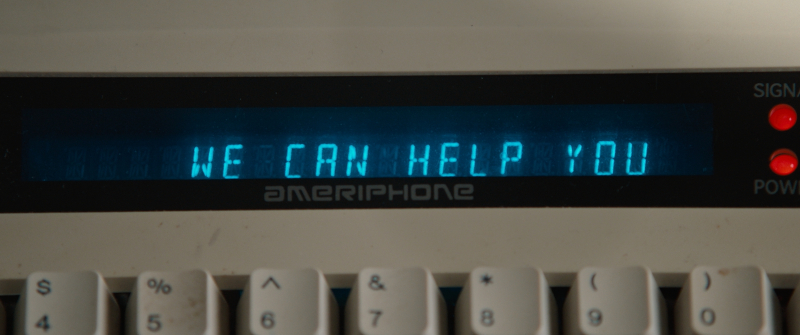
She starts receiving Ash’s instructions, and agrees to hire him at his not inexpensive rates, via the Tri-State Relay Service, a facility designed to help deaf people communicate by telephone. “Have you used Tri-State Relay Service before,” the calls begin, before explaining to new users how the service works. Which basically involves verbally relaying messages typed in from outside to the designated caller. There are no records and the caller is untraceable. It wasn’t designed as an anti-surveillance communication tool in our highly surveillance-oriented, present day society, but it proves most effective as such.
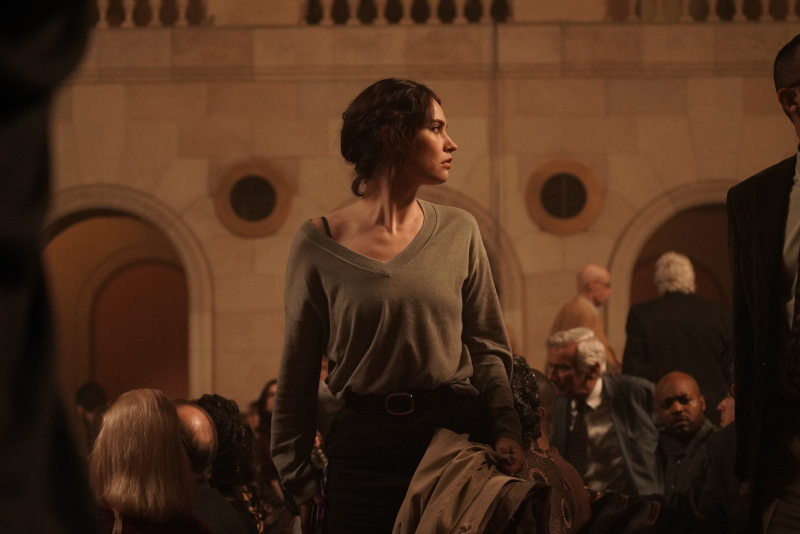
Thus the stage is set for Ash to give Sarah instructions over the coming days to ensure she can at once return the incriminating documents to the company concerned and possess the necessary leverage to walk away and safely start a new life. Unfortunately for both Sarah and Ash, a corporate security detail led by Dawson (Sam Worthington from Avatar: The Way of Water, 2022; Avatar, 2009, both James Cameron; Terminator Salvation, McG, 2009) is determined to get the documents back and eliminate Sarah…
Accompanying Worthington, who seems to have hit his stride here in a piece of perfect casting, are an equally memorable Willa Fitzgerald and Jared Abrahamson as his two sidekicks. For good measure, Ash’s mentor from the AA meeting he attends is a no-nonsense cop, Wash (Eisa Davis), who will play a significant role in the denouement.

The plot proceeds with a bewildering array of parked vans containing spooks straight out of The Conversation (Francis Ford Coppola, 1974), packages mailed through the post, collection boxes, postal protocols, internal US flights, and more. As in Scotsman Mackenzie’s earlier, terrific US thriller Hell or High Water (2016), the film has thought through all its characters’ motivations so that what unfolds on the screen is completely and utterly believable.
It bears comparison with British drama Klokkenluider (Neil Maskell, 2022) about a whistleblower who, unlike Sarah, doesn’t have a fixer making sure they have leverage against the forces that would wish to destroy them.
And in its quiet feeling for characters living, because of present circumstances, in isolation, it resembles Mackenzie’s global pandemic drama Perfect Sense (2011) – there, two people are thrown together as an isolated couple; here, two isolated individuals who never actually meet are drawn together in non-physical ways by their professional relationship. It’s as if the isolationist tendencies of our modern contemporary world appeal to Mackenzie on some very deep level.
Be all that as it may, this is a clever, slow burner of a thriller that constantly stays one step ahead of its audience, much as Hitchcock did in espionage thrillers The Lady Vanishes (1938), Notorious (1946) and North by NorthWest (1959). Yet, as previously mentioned, its protagonists feel much closer to the isolated individuals at the heart of The Conversation and Perfect Sense.
Some of the credit must surely go to screenwriter Justin Piasecki, because you couldn’t make a film like this without the foundation of a well thought out and put together script.
It’s a very quiet, assured and intense film requiring the sort of viewer concentration you can only really get in a cinema, so try and see it there before it turns up on streaming platforms.
Relay is out in cinemas in the UK on Friday, October 31st.
Trailer: