Director – Daniel Minahan – 2024 – US – Cert. 15 – 119m
*****
A husband’s dreams are undermined in 1950s America by the separate lives and desires of his secretly racetrack-gambling wife and his reappearing, disappearing drifter-gambler brother – out in UK cinemas on Friday, September 5th
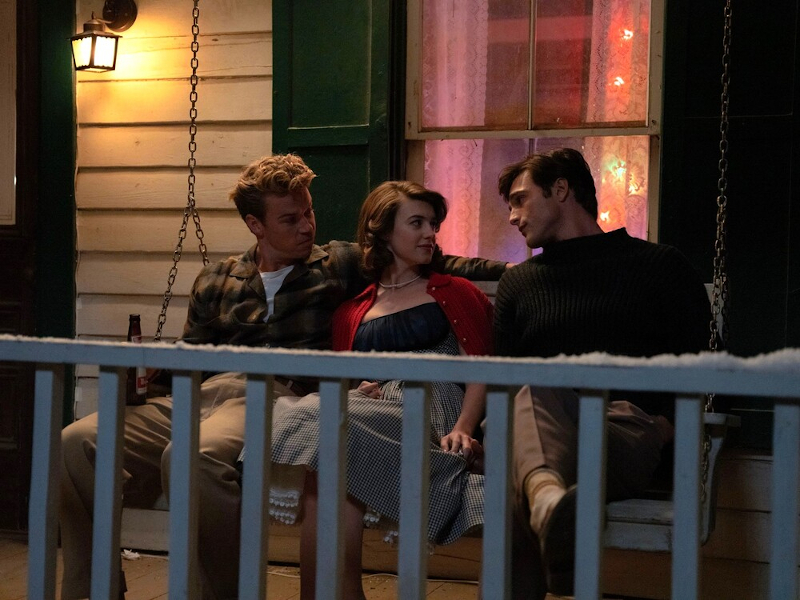
Lee Walker (Will Poulter from Warfare, Alex Garland, 2025; Detroit, Kathryn Bigelow, 2017; The Chronicles of Narnia: The Voyage of the Dawn Treader, Michael Apted, 2010; Son of Rambow, Garth Jennings, 2007) returns home to the US from the Korean War to his adored wife Muriel (Daisy Edgar-Jones from Twisters, Lee Isaac Chung, 2024; Where the Crawdads Sing, Olivia Newman, 2022) who lives in the isolated house she inherited from her mother in the calm prairie lands up North. Their relationship is deeply carnal. And yet, something changes in that relationship dynamic the night Lee’s brother Julius (Jacob Elordi from Frankenstein, Guillermo del Toro, 2025; Priscilla, Sofia Coppola, 2023; Saltburn, Emerald Fennell, 2023) turns up, and she is instantly attracted to him. Of course, that can’t be, because she is with Lee.
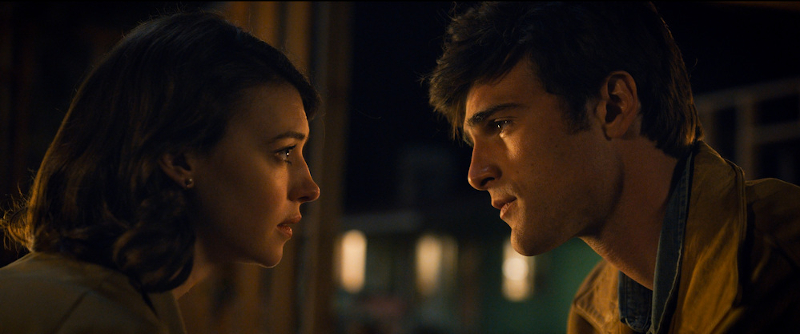
Part of the attraction is that Julius, a drifter who turns up unannounced, is also an inveterate card sharp and gambler. He lives on the fringes of American society, an existence which fascinates Muriel. As they talk, she picks up a few gambling tips, and resolve to stay in touch. They have become friends on a very deep level. Perhaps one day, they might also become lovers. It’s complex, and far from clear exactly what’s going on.
Lee harbours a dream: he wants the three of them to move to California, pitch in three ways financially, and buy one of the first homes on the estates just starting to go up there. An essentially good man, he is also a poor judge of character who, while he loves his younger brother, chooses to think the best of him and ignore the latter’s character flaws. Just as suddenly as he had arrived, Julius is suddenly gone, lured back to the world of Las Vegas and cards where, after getting by from renting out his body to anyone of any gender prepared to pay him for it, sometimes with disastrous results, he soon sets himself up working for a couple of goons running security at a casino.
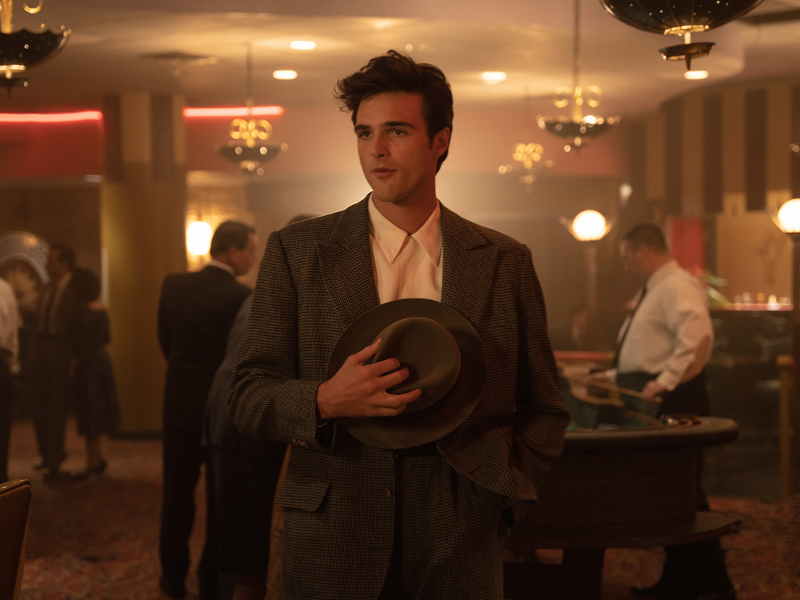
It falls to Julius to patrol the attic above the casino’s gambling floor and through one-way mirrors identify those punters who, rather than simply enjoying the pleasures of gambling the premises have to offer, are professional gamblers actively setting out to exploit the system in pairs. Once spotted, he is to alert the goons, who will take it from there. These two men are not to be messed with. While working in the attic, he runs into similarly employed Henry (Diego Calva from Babylon, Damian Chazelle, 2022) and the two embark on a heavily physical, gay relationship, moving in to Julius’ motel room together.
As Lee is blind towards Julius faults, so Julius is blind to Henry’s; he is heading towards a scenario where Henry, with whom he is romantically involved, will try to outsmart the goons who cannot be outsmarted; the life Julius has set up for the pair of them will collapse, and he will suddenly find himself facing all manner of peril as he pursues the vanished Henry through the American underbelly.
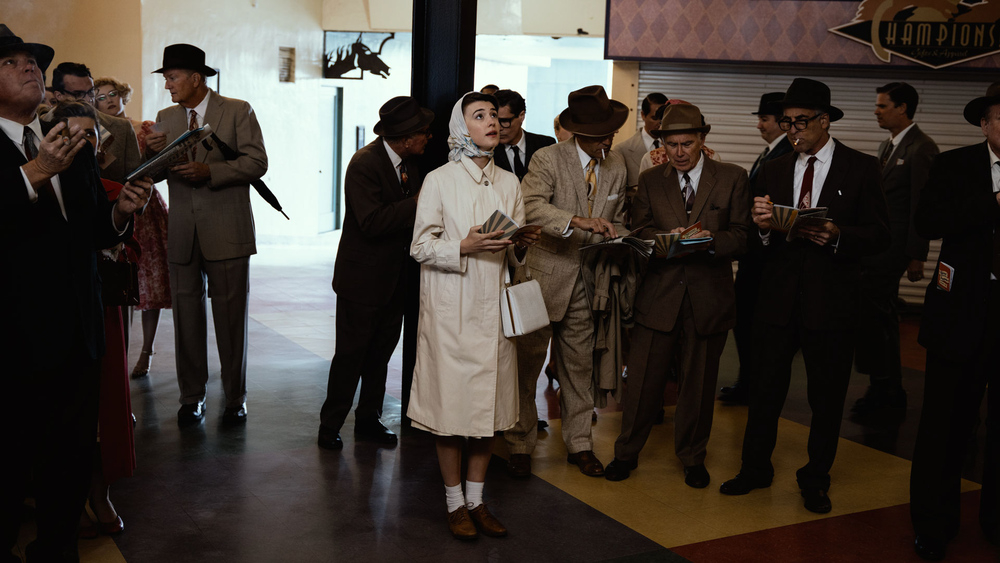
The more seemingly responsible Lee and Muriel, meanwhile, attempt to realise Lee’s dream without JuIius’ help, buying a property on a new San Diego estate. Lee has a day job, while Muriel does part-time waitressing work. Deploying tricks of the trade she has learned from conversations with Julius, she listens to men discussing which horses might win at the local racetrack, dresses herself up to visit, and starts making bets which pay off handsomely. Through a friendship with an attractive married couple, particularly the wife, she discovers an underground gay club which opens a whole new world to her that she never knew existed.

For Muriel, part of the clincher for moving into the estate is that when she and Lee first visit, she strikes up an immediate friendship with neighbouring single homeowner Sandra (Sasha Calle) who sells food produce (which turns out to be simply a case of a misleading sign from a previous owner of her house) and plays an exotic musical instrument. Lee is out at work during the day, so Muriel can often drop in on her friend for a chat. One night she goes round there when Sandra is hosting an all female book club which turns out to be a gay party, and Sandra makes a move on her. After this, Muriel embarks on a double carnal life, enjoying her husband in the evenings and nights and her new-found gay lover in the afternoons. However, Muriel may be on to too much of a good thing, a set-up inevitably due to come crashing down.
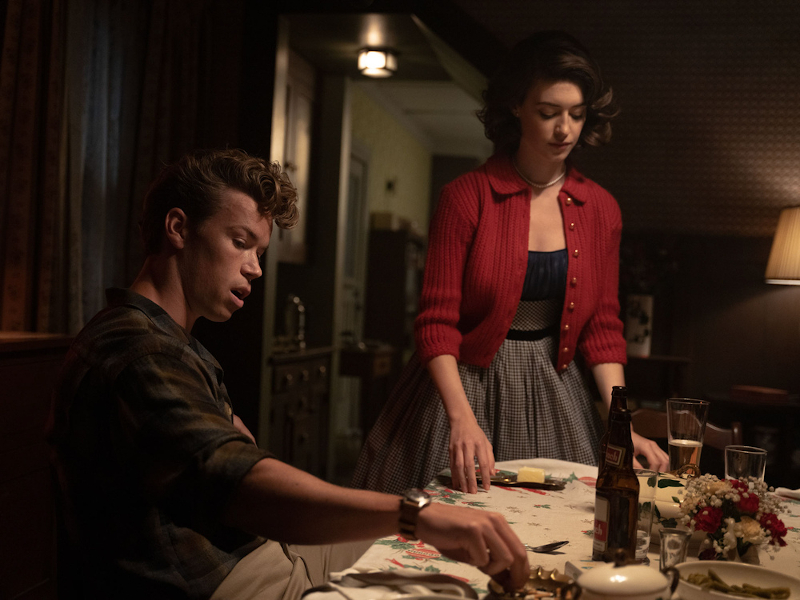
Lee, seemingly the driving protagonist at the start, is oblivious to what is going on with both his wife and his brother in their hermetically sealed worlds separate from each other, assuming she is selling her house to fund the couple’s dream while she is actually making a killing on the horses. He turns out not to be the protagonist at all, but the conventional character ultimately left high and dry by the other two, who may or may not be embarking on something together.
Adapted by Bryce Cass from the 1919 book by Shannon Pufahl, this is an extraordinary vision of the US in the 1950s which, like its two seemingly secondary characters who turn out to be two separate main protagonists, constantly surprises. As the focus shifts from the husband pursuing the traditional American dream, it throws up all manner of unsettling scenes in the lives of his wife and his brother and, ultimately, the darker, hidden side of 1950s America.

One of Julius’ attempts when he has some recent gambling earnings in his pocket to offer his body to an amorous man results in his getting mugged. Equally memorable are the early casino scenes when he cases the goons patrolling the premises. In a Vegas awash with alcohol and sex, he attends an outside nighttime dark glasses party where a man proclaims to a woman, “this is America, baby,” as an A-bomb test explodes on the horizon. Darker times await Julius in Tijuana as he attempts to track down the missing Henry in a dangerous world of chancers, cheats and criminals.
Muriel’s timeline is no less absorbing for the audience, comprising as it does illicit phone calls to her brother-in-law behind her innocent husband’s back, her dolling herself up for her visits to the racetrack about which her husband knows nothing, and her entry into strange, building interiors functioning as single-sex, relationship network hubs, a message board in one of which will ultimately prove her salvation.
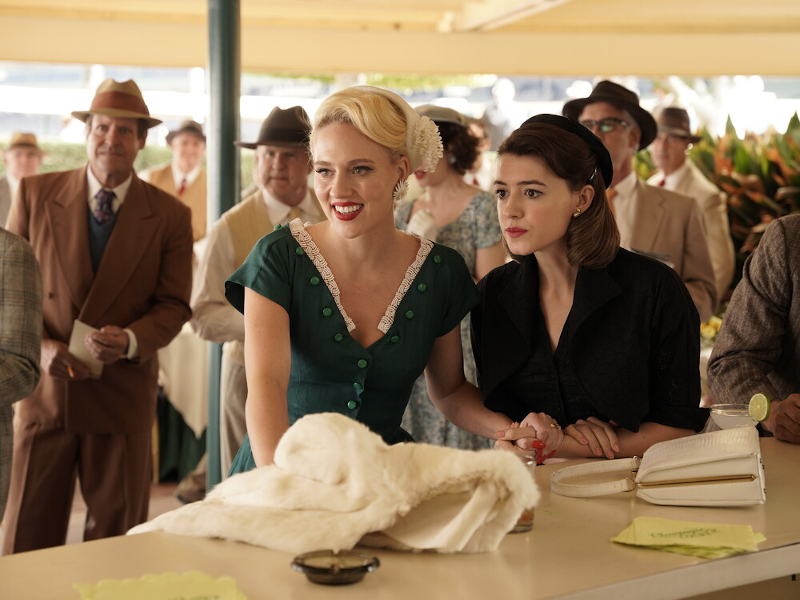
The production design and costumes are, frankly, to die for. Muriel’s inherited house contrasts heavily with the San Diego estate, the former remaining in the back of your head as the narrative inevitably proceeds. The casino lookout attic is a marvel. And when Muriel transforms her outfit for her first visit to the racetrack, it’s nothing less than a revelation. The period fringe worlds it enters into prove completely engrossing, as does its parallel narrative. To anyone who has seen director Minahan’s stunning and edgy debut feature Series 7: The Contenders (2001), the sheer genius of this current offering will come as no surprise. It doesn’t hurt having cinematographer Luc Montpellier (Women Talking, Sarah Polley, 2022; The Saddest Music in the World, Guy Maddin, 2003) and shrewd exec producer Christine Vachon (Past Lives, Celine Song, 2023; Carol, Todd Haynes, 2015; I’m Not There, Todd Haynes, 2007; Hedwig and the Angry Inch, John Cameron Mitchell, 2001; Swoon, Tom Kalin, 1992) on board either.
There are so many films which look like something really special, which ultimately turn out not to be. On Swift Horses is not an easy sell, and I’m not sure its distributor knows exactly what to do with it. Yet like a much more intimate variation on this year’s equally impossible to categorise if far more spectacular Sinners, Ryan Coogler, 2025) it’s the real deal. Miss it at your peril.
On Swift Horses is out in cinemas in the UK on Friday, September 5th.
Trailer: