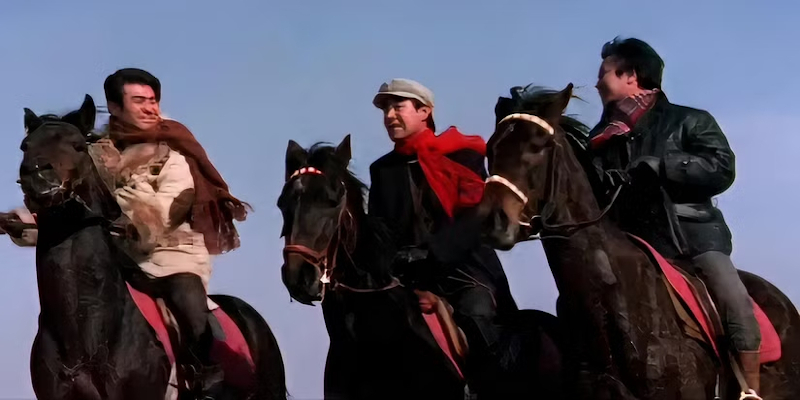
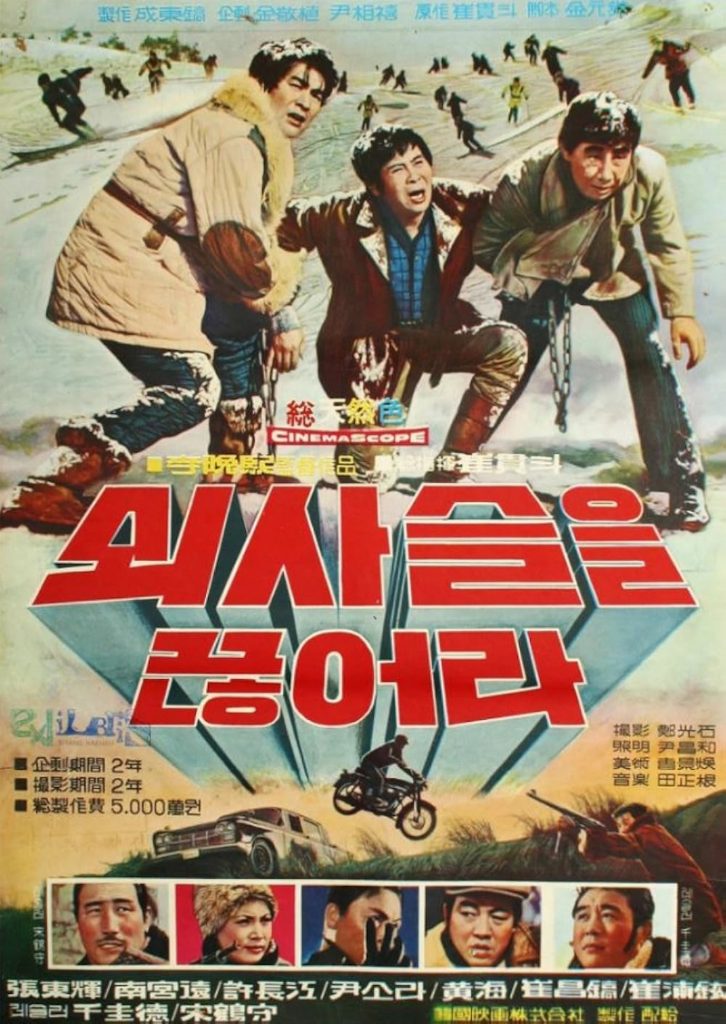
Director – Lee Man Hee – 1971 – South Korea – Cert. tbc – 98m
***1/2
Three Koreans each with dubious motiveshunt for a small statue of Buddha containing the names of anti-Japanese resistance fighters – from LKFF, the London Korean Film Festival 2025 which runs in cinemas from Wednesday, November 5th to Tuesday, November 18th
Much like the statue containing the microfilm sought by the characters of North by Northwest (Alfred Hitchcock, 1959), a small statue of Buddha holds the names of anti-Japanese resistance fighters and is similarly desired by Break Up The Chain’s protagonists. Not that this Lee Man Hee late career offering is in quite the same league as Hitch’s espionage romp, even if its dialogue does from time to time refer to drama and performance in much the same way, particularly in the opening ten minutes.
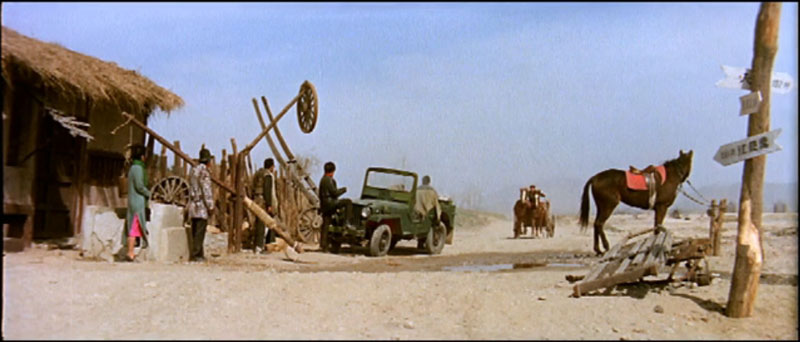
Otherwise, though, it’s a very different animal: essentially, three male protagonists chasing a MacGuffin. Cheol Su (Namkoong Won from Cheongnyeo, Lee Man Hee, 1975; Insect Woman, Kim Ki-young, 1972), is an outlaw, Tae Ho (Huh Jang-gang from Eunuch, Shin Sang-ok, 1968), a gangster and Dal Gun (Jang Dong-hwi from The Marines Who Never Returned, Lee Man Hee, 1963), a spy for the Japanese. It recalls nothing so much as legendary Spaghetti Western The Good, The Bad and The Ugly (Sergio Leone, 1966), in which three characters chase after a hoard of gold.
Kim Won-tae’s screenplay throws in Ryang-ze (Yoon So-ra from The Pollen of Flowers, Ha Gil-Jong, 1972), a spy in the Mata Hari vein, and has all three men vying for her affections – as if one MacGuffin weren’t enough (and this second one seems somewhat redundant, since the Buddha statue is already doing the job of moving the piece along nicely). Early on, she invites the three to her inn having been advised by a compatriot to keep the spy Dal Gun there by doing whatever it takes. It’s later communicated that this is the brothel she runs rather than an innocent bar or inn via her pairing two waitresses off with the other two men.
This brothel which might as well be a cafe or a bar is a long way from the harsh, gripping social realism of Lee’s masterpiece A Day Off (1968) which got it refused a release by the Korean authorities for over thirty years; in addition, apart from a passionate kiss between two characters in the closing minutes, Break Up The Chain is pretty much devoid of sex or sexual intrigue. It’s almost as if Lee is steering clear of any potentially controversial material. There’s a great deal in the script about Koreans, however dubious their motives to start with, coming through in the end to serve Korea. The film bolsters nationalist sentiment, but you wonder if Lee’s heart is really in it.
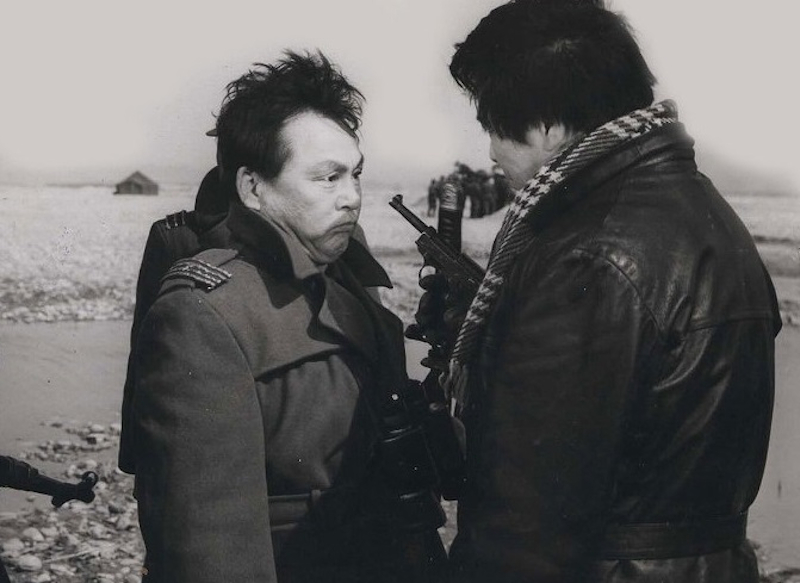
Instead, for the most part, he delivers a series of enjoyable enough action and character-based set pieces, even if the fight scenes here with their largely unconvincing fake kicks and punches would swiftly be eclipsed by the kung fu action epics coming out of nearby Hong Kong in the 1970s.
There are moments and sequences that transcend such limitations, however, when you sense what might have been. A number of scenes have windows being broken so that characters can easily climb through them. People are captured and tortured by the Japanese.
Perhaps the high point is when the villain of the piece, the Japanese Imperial Army’s General Konoe (Hwang Hae), threatens to shoot the three men in the back as they are about to descend a staircase. It’s a scene that possesses a dramatic bite that most of the film, conceived as a superficial mass entertainment, lacks.
Break Up The Chain plays plays in this year’s London Korean Film Festival 2025 strand Dramas of Resistance: The 80th Anniversary of Liberation as one of two Manchurian Westerns, the other being The Good, The Bad, The Weird (Kim Jee-woon, 2008). The LKFF runs in cinemas from Wednesday, November 5th to Tuesday, November 18th.
Trailer (LKFF 2025):
FURTHER PROGRAMME INFORMATION:
Facebook: @theLKFF
Twitter: @koreanfilmfest
Instagram: @london_korean_film_festival
Homepage: https://www.koreanfilm.co.uk/