Director – James Cameron – 2025 – US – Cert. 12a – 195m
Immersive Cinema *****
Screenplay ***1/2
Return to Pandora – this time, with a terrifying tribe whose trust in the planet’s spirit has been wiped out by a volcano – second Avatar sequel is out in cinemas from Friday, December 19th
Whatever you think of the Avatar movies – of which this is the third – there’s no denying that audiences love them, and that these films are, for the time being at least, critic-proof. The original Avatar (2009) is a remarkable work, right at the cutting edge of what one might call immersive cinema, with Cameron making superb use of 3D in an industry which long ago decided 3D was a fad useful primarily for jacking up the price of tickets: in Cameron’s hands, however, 3D goes hand-in-hand with artistic intent as he involves you in a planet or a world – Pandora – with its own, unique, eco-system. Having done that, the question is, where can you go. The second film Avatar: The Way of Water (James Cameron, 2022), in this writer’s opinion, is just as impressive as a further piece of immersive cinema; however, while it delivers some extraordinary sequences, it fails to deliver in terms of story in the way that the original did.
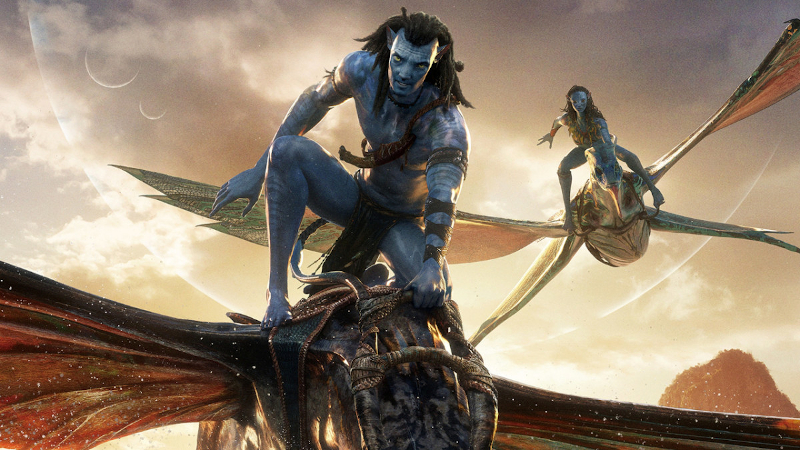
That brings us to the current, third entry, which understands that at least part of the reason people go to movies like this is the immersive aspect to the degree that for the first half hour, very little seems to happen and your brain is just allowed to immerse itself back into the world of Pandora. Which is a strangely satisfying experience. That may be in part because the middle teenage child Lo’ak (performance capture including voice or Pcap: Britain Dalton) of the avatared human Jake Scully (Pcap: Sam Worthington, worth tracking down in recent thriller Relay, David Mackenzie, 2024) and his native Na’vi partner Neytiri (Zoe Saldaña) feels responsible for the death of his sibling at the end of the previous film. While the other other members of the family unit are still trying to process that, Lo’ak has a harder job because of his instrumental role, as he sees it, in his brother’s death.
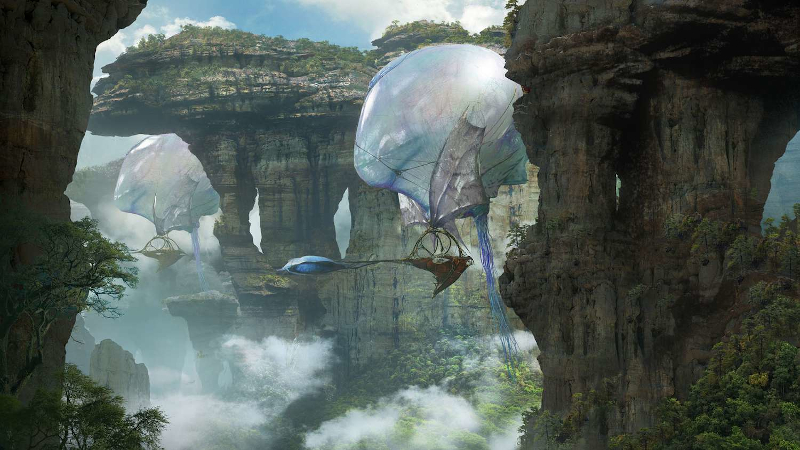
Further intrigue is generated in the form of Spider (Jack Champion), the human who must constantly wear a breathing mask to survive Pandora’s atmosphere, getting into difficulty when the battery charge on his mask gets dangerously low and he’s forgotten to bring his ready-charged backup with him. It’s decided that, for his own safety, he needs to go back to live with the other humans who’ve set up a Pandora-friendly science lab. To make the journey, an agreement is struck with another tribe, known as the Wind People, led by Pektak (David Thewlis), who are traders travelling the planet by means of gigantic, jellyfish-like creatures whose forms resemble organic airships.
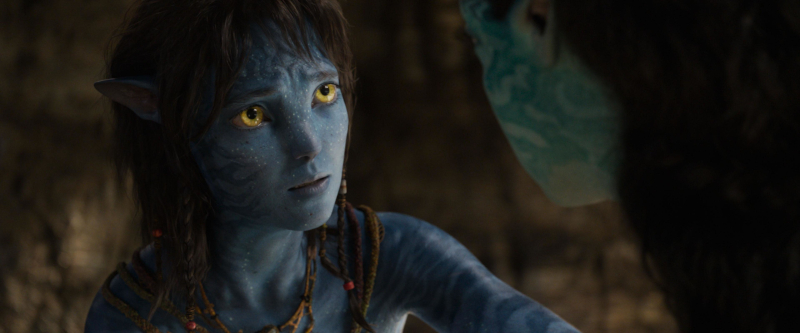
Initially, Spider is to make the journey alone, but with various siblings unhappy about this, not least teenager Kiri (Sigourney Weaver) who has fallen in love with him, that changes to the whole family going along.
The Avatar films have always been about huge brushstrokes of storytelling, and the first half hour here, lacking the violent conflict with the invading humans or Sky People, just lets you enjoy the world of Pandora, in aspects both familiar and new, and get reacquainted with its characters. The returning cast includes Kate Winslet as Ronal, a pregnant matriarch of the water tribe and Trinity Jo-Li Bliss (the dancing partner in the last section of The Life of Chuck, Mike Flanagan, 2024) as Scully and Neytiri’s youngest daughter Tuk.
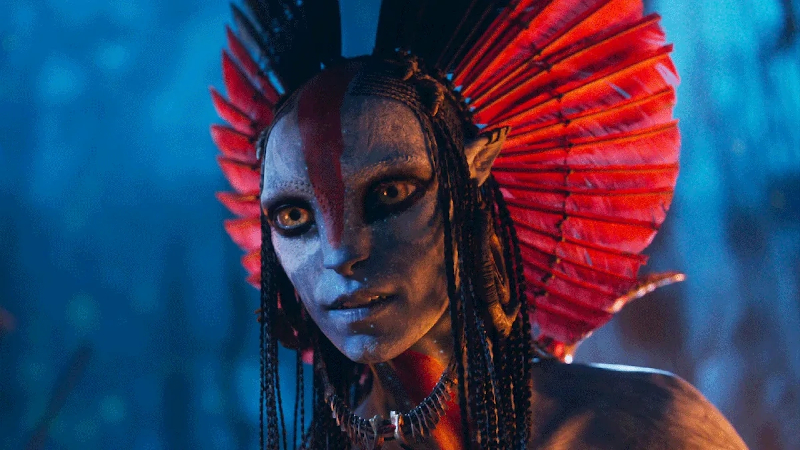
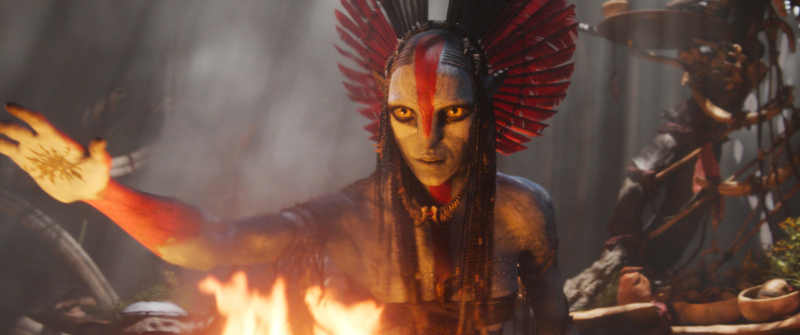
Then the travelling Wind People, with Jake and family on board, are attacked. Not, as you might expect, by the Sky People, but by a new tribe, the Ash clan whose world-view with planetary mother Eywa as benevolent guiding force has been obliterated by their village being destroyed by a volcano. To cope with this, they have become a marauding rather than a peaceful people, leading raids on other tribes under the leadership of the fearsome Varang (Oona Chaplin from Anchor and Hope, Carlos Marques-Marcet, 2017; Game of Thrones, TV series, 11 episodes, 2012-13). Chaplin astonishes with a performance that upstages every other in the film; she is quite simply magnificent here. Plot wise, it comes as no surprise when she later partners with avatared Sky Person villain Quaritch (Stephen Lang).
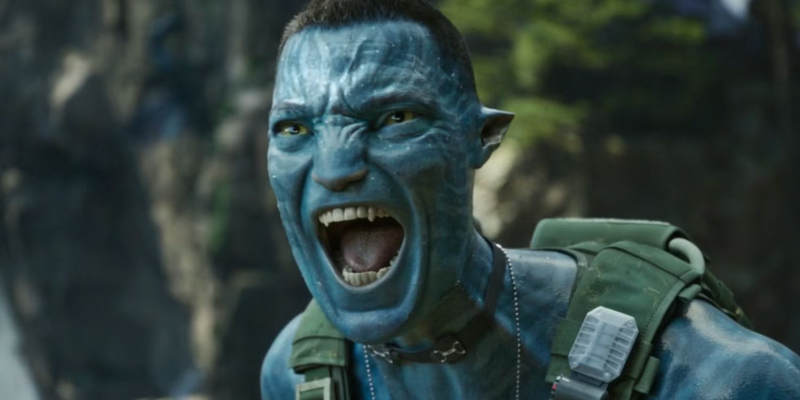
In the meantime, there are several skirmishes and confrontations between various members of Jake’s family and the Sky People, first on their own and later in cahoots with the Ash People, most impressively a sequence in a vast, human city which makes the industrial factories at the end of The Terminator (James Cameron, 1984) and Terminator 2: Judgement Day (James Cameron, 1991) look like early production sketches for a much bigger and more complex, location-based sequence. The city has a similar industrial aesthetic, but it’s a vast area (with considerably more variation, as that implies) rather than a mere, sole abandoned warehouse. Consequently, it allows Cameron to stage much more complicated scenarios.
It’s true that there is no bravura sequence to match some of the cleverly orchestrated water action in the second film, however, this time round Cameron and his co-writers Rick Jaffa and Amanda Silver – the team who wrote not only Avatar: The Way of Water but also the recent Planet of the Apes franchise (2024, 2017, 2014, 2011) and Jurassic World (2015) – feel much more focused on the characters than the plotting and action, and the proceedings feel all the better for it. That element makes the whole work all the better as immersive cinema, because you’re more emotionally involved with the characters, and consequently Cameron’s weaving of his cinematic magic is all the more effective.
Avatar: Fire and Ash is out in cinemas in the UK on Friday, December 19th.
Trailer: