Director – Tamara Kotseva – 2025 – North Macedonia – Cert. 12a – 81m
*****
A farmer, whose livelihood has collapsed thanks to economics and government policy, cares for a stork with a broken wing – in cinemas from Friday, December 12th
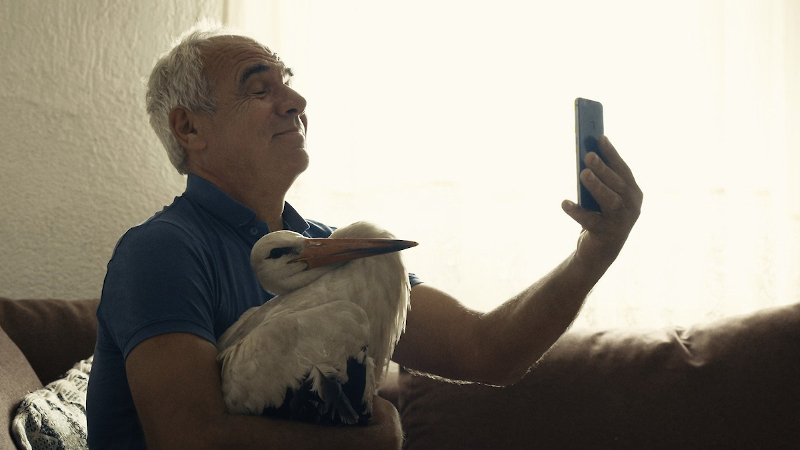
This begins with a simple voiceover story. Silyan, ostracised from the other storks because he was different, is noticed by a similarly lonely father who takes pity on the stork and invites it to live with him.
Then it swiftly switches to two parallel narratives within the same geographical area.
In one, a man’s extended family builds a new storey onto their house for the son and daughter in law. The act of building is very much a family affair, with even the man’s small granddaughter mucking in.
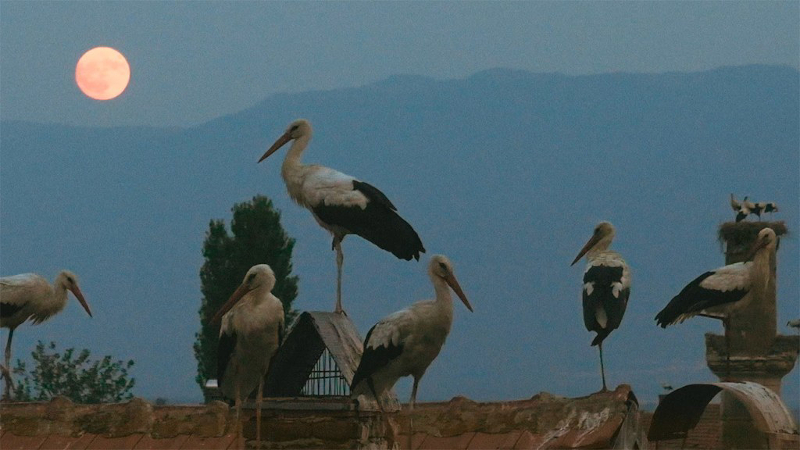
In the other, a flock of storks build their nests on the roof of an old farmhouse building nearby.
The man is a farmer (Nikola Conev); his extended family help him pick this year’s harvest of vegetables, then accompany him to a string of local farmer’s markets to sell his produce. At this point, the man hits a problem; the going rate has dropped. And he can’t get a decent price for his produce. He’s used to the wheeling and dealing that normally goes on, so he holds out for a viable offer.
On this occasion, however, no-one offers him the amount he needs to break even for the different vegetables he grows, and he and the family return to the farm having sold not one vegetable. He is a broken man.
He and the family join protest marches with other farmers facing the same situation. As part of their protest, they dump some of their now worthless vegetables on the surface of the road. Much of the rest gets dumped on rubbish tips, eyesore areas on a beautiful, rural landscape.
His son, seeing which way the economic wind is blowing, moves to Germany with his family to get the work he knows can be found there. The farmer’s wife (Jana Conev) goes with them. The farmer is left alone as he stays behind in the hope of at least being able to sell his various pieces of land for what they are worth. But, here too, he draws a blank. He lowers the prices, but still gets no takers.
One day, driving a bulldozer across one of the rubbish sites, the old man spots a wandering stork. Most of the storks have gone, perhaps because of the areas unpleasantly turned into rubbish tips, but not this one. And with good reason; when the farmer checks out the bird, he discovers that it has broken a wing, and therefore can’t fly.
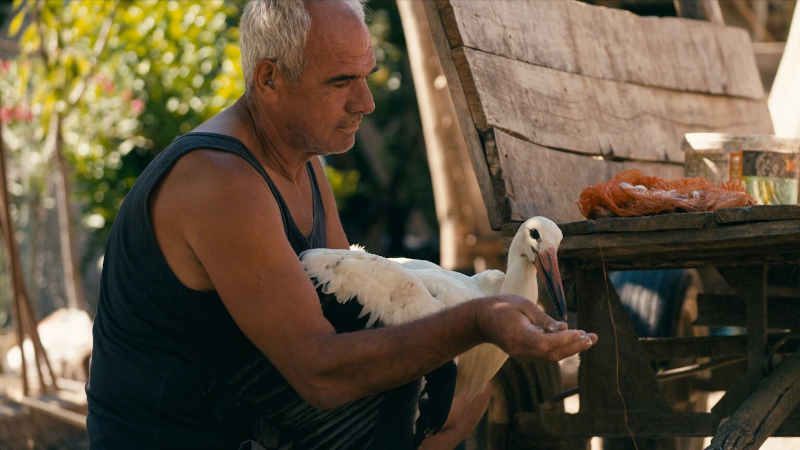
He drives the wounded bird to an animal rescue clinic in a nearby town, where they are unable to take the creature in but bandage up the damaged wing and give the bird back to him. Slowly, man and bird bond with one another…
The end credits reveals a list of people playing characters with the same names. Which rather changes the nature of what you’ve just seen – you assumed the camera was following people around recording them in real time, but, in fact, these credits suggest that the camera is following non-actors re-enacting their experience for the camera, which is not quite the same thing, however similar it may look to the uninformed viewer.
It’s a curious, documentary hybrid of breathtaking wildlife cinematography and skilfully observed (or re-created then observed) personal tragedy – albeit a tragedy in which farmer Nikola Conev seems to slowly but surely come to terms with his fate, yet refuse to move from his land.
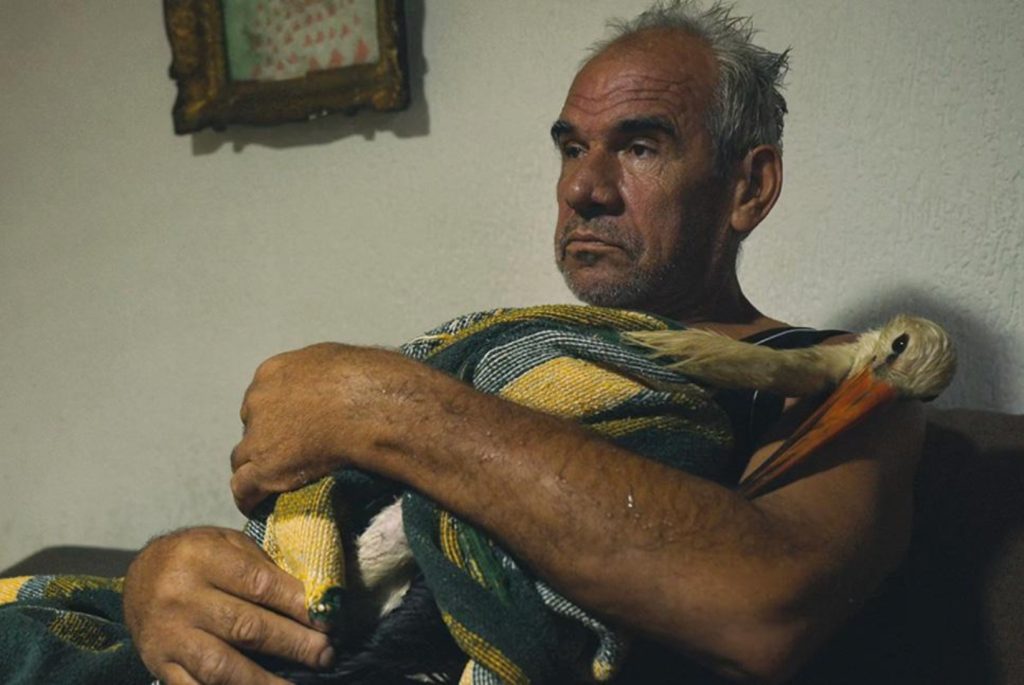
The early footage of the storks building a colony of nests is engaging, not least for its juxtaposition against the farmer’s family adding another storey to their home. Indeed, the piece’s great strength seem to lie in the places where these two narrative strands cross – which is to say, all the sequences (and there are a lot of them) in which the old farmer and the stranded stork appear together.
One of the strongest moments has the stork standing on a balcony, and the old man sidling up to it, but not too close so as not to alarm the beast. The effect of this shot is both profound and magical. Elsewhere, the man sits inside his home stroking the injured creature, which doesn’t really understand what has happened to it and probably has no comprehension of binding wounds for the purpose of healing physical damage.
The whole contains numerous such moments, and while this is by no means a children’s film – some of the ideas about failing businesses and economic migration explored here are quite grown up – some children might respond well to that aspect of the production. For the adult viewer, there’s something strangely compelling about it all. Perhaps those of us who live in cities feel a strong attraction towards the isolated rural existence away from which farming families like this one are being taken.
The Tale of Silyan is out in cinemas in the UK on Friday, December 12th.
Trailer: