Director – Mohamed Ali Nahdi – 2025 – Tunisia, Cyprus, Qatar, Saudi Arabia – 85m
*****
A young boy is diagnosed with a tumour in his arm, and his parents must guide him through his ensuing medical treatment – premieres in the Critics’ Picks Competition of the 29th Tallinn Black Nights Film Festival
My third Critics’ Picks entry is another five star movie. Which is great, but once again, I wonder, for how many more films can this last? What IS true is that this is not another ‘urban unease and finding your way in the world’ movie like China Sea (Jurgis Matulevičius. 2025) or Mo Papa (Eeva Mägi, 2025), it’s something altogether different.
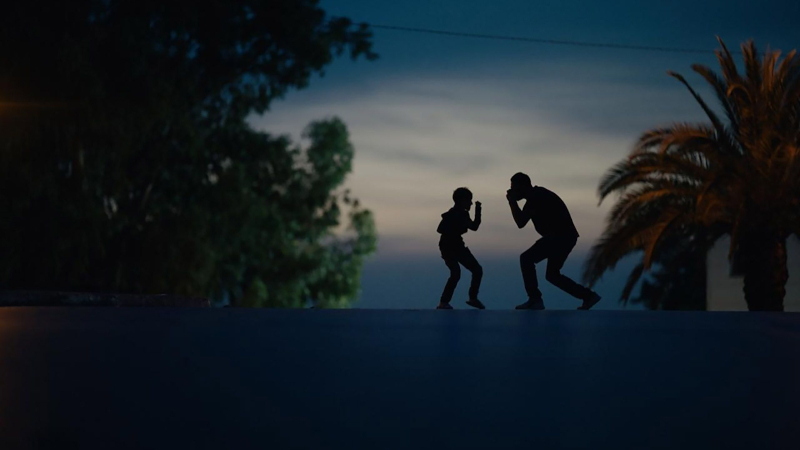
Sabri (Hedi Ben Jabouria) is a very ordinary eight-year-old boy who likes boxing. We first meet him out with his dad in the cinema where the pair are watching a black and white movie about boxing. They return home where Sabri looks at his dad’s old photos of his days as a boxer in Rome.
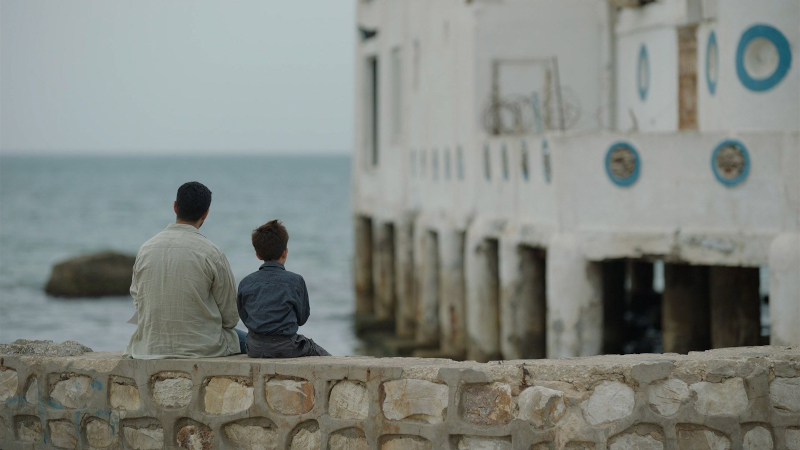
They are interrupted by Sabri’s mum Semia whose name curiously isn’t spoken until about ten minutes before the end of the movie (Afef Ben Mahmoud) and who wants to know why she can never reach Kamel (Helmi Drid), the boy’s dad, on the phone. It’s because the battery’s dead, he explains, and anyway, she can always reach him via Hamadi’s phone. There’s more. She doesn’t want Kamel showing the boy pictures of his boxing past. There’s more still. She wants a second child. Kamel reminds her that they can’t afford this.
Later, she is not well pleased when Sabri gets into trouble for boxing at school.
And then, at home with his dad while his mum’s out, Sabri suddenly can’t change his clothes because his arm hurts. This comes out of nowhere. There follows the first of many scenes where one or another parent or both carries the boy in their arms as they dash frantically to or return from the hospital.
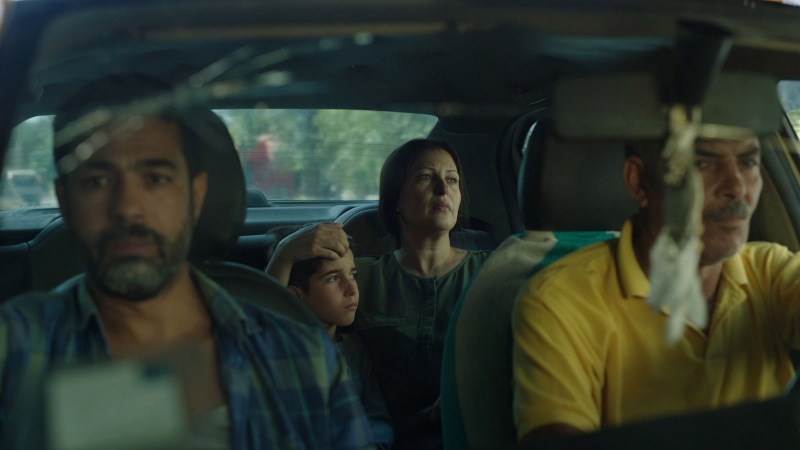
At emergency services, the first thing that happens is an examination. Parts of the boy’s arm are painful to the touch. They send him down the corridor for an X-ray to see if there’s a fracture (there isn’t). He needs a scan today or tomorrow to find out why the arm is swollen. Kamel is less than enamoured of the place, concerned at how long it’s taking people to get a packet of painkillers, and has the scan done at a private clinic, prompting his wife to ask where he’s going to get the money.
(Side note: here in the UK, we have a National Health Service (NHS) which is paid for by taxes and provides healthcare free at the point of need to any UK citizen. So, no worries about medical bills, because there aren’t any – and there won’t be, unless the country is foolish enough, as many fear it might be, to elect the right wing clowns waiting in the wings to turn it into a For Profit system like that in the US and allow them and like minded profiteers to cash in, God help us.)
They are awaiting the scan results at home when Sabri starts burning up with fever, and dad rushes him into the hospital, failing to flag down a taxi but getting a lift from local man Wahib on his motorbike. The doctor tells Kamel they’ve found a mass at bone level and a biopsy is required. Later, both parents are told the boy needs to start chemotherapy.
Kamel joins his boss in a small lorry cab to drive a number of workers to a job. Semia visits her less than sympathetic mother who berates her for quitting her fashion school studies a year early to follow Kemal. Late, she recants, unexpectedly turning up at the door to wordlessly hand her daughter a wad of cash. And later still, she and her husband turn up for Sabri’s ninth birthday party – although the husband doesn’t come in, and comments at the party by Kamel suggest some bad blood between them.
In the hospital, Sabri is put on a ward with a girl Nour (Islem Wassar) who is also going through chemo, her mum by her bedside. With Sabri throwing up, Semia wants to call a nurse for help. It won’t do a thing, advises the other mum; you have to learn to handle it yourself.
Boxing plays more of a part in what follows . Kamel visits his old gym to get sparring work from boss Taher (Lamine Nahdi). (This links the film in some way to another of this year’s Critics’ Picks selections, the gym and kickboxing-centred China Sea, Jurgis Matulevičius, 2025.) Kamel sells his old boxing belt for money to increase the family funds paying for the boy’s treatment. As Sabri’s survival looks increasingly uncertain, Kamel reacts by going out on the streets for 48 hours, getting involved in a punch-up with club bouncers and being arrested.
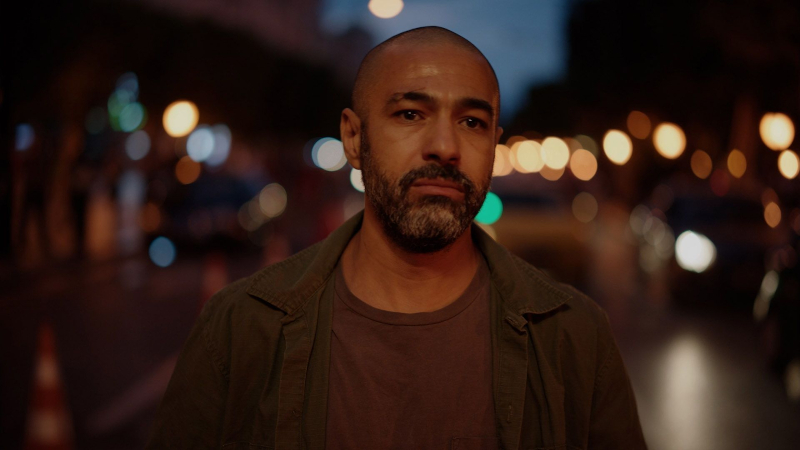
Meanwhile Sabri, unable to look after himself given his worsening condition, feels himself “no longer a man”. His dad disagrees, telling the boy he’s a champion, that he wants to knock the disease out in the first round. The boy takes this on board, but it will ultimately give rise to a sense of failure within him. He is beset by dreams, where he effectively fights against the camera’s point of view, putting up an increasingly unsuccessful defence, until the dream in which he is lying, beaten, on the floor and the umpire can be heard counting.
The narrative skilfully takes you through the process of dealing with doctors and a health service (having undergone cancer treatment myself in the UK system, I could relate very personally to all this and couldn’t spot any gaffes), both for the parents, who react in different ways, and the child.
One particularly arresting scene – the whole film is arresting, actually, from the get go – has the camera set up as the doctor’s point of view as he tells the two parents the bad news. We watch as the mother loses it emotionally while the father is shocked into a non-reactive numbness, gets up and walks off. This is the start of his 48 hour absence. “This happens,” comments a female nurse to the mother shortly afterwards, “husbands desert in these kinds of situations.” Gender difference, eh?
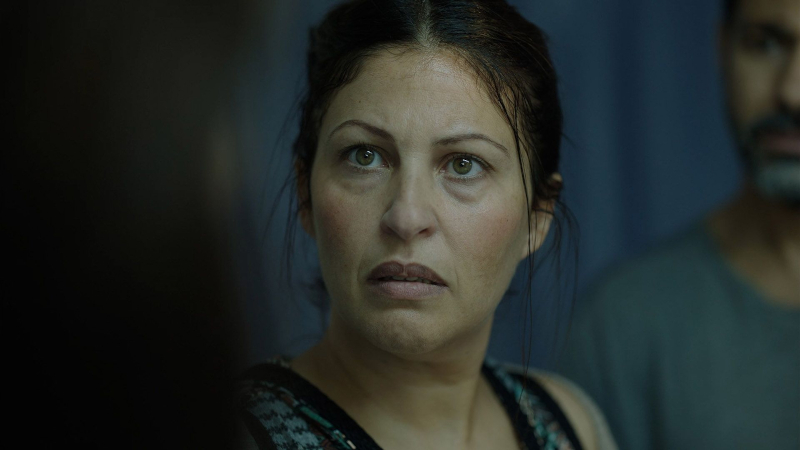
While all this is extremely well performed by its leads, including the boy, and sensitively directed, with a commendable complete lack of sentimentality, praise should go to cinematographer Hatem Nechi who has a great eye for composition. As with director Mohamed Ali Nahdi, Nechi never sentimentalises: there are no pretty, chocolate box-y or decorative images here. Nechi’s work never draws attention to itself or detracts from the film: rather, it adds to it on numerous levels. To give but three examples (there are many, many more):
One: In the journey of father and boy from the cinema to home at the start, they walk the street as a bus goes past, obscuring them from our view. This is both ordinary and everyday yet, at the same time, breathtaking.
Two: After receiving the news of the need for a biopsy, Kemal loiters outside the doctor’s office. His sharp, in-focus face is bisected by the out-of-focus horizontal blinds of the office window between the office and the corridor.
Three: Mum and boy are lying, asleep, in mum and dad’s bed. It’s like a cross-section of a womb: home, rest, security. Dad returns from his binge of absence, realises they are asleep, and slips quietly into the bed beside them.
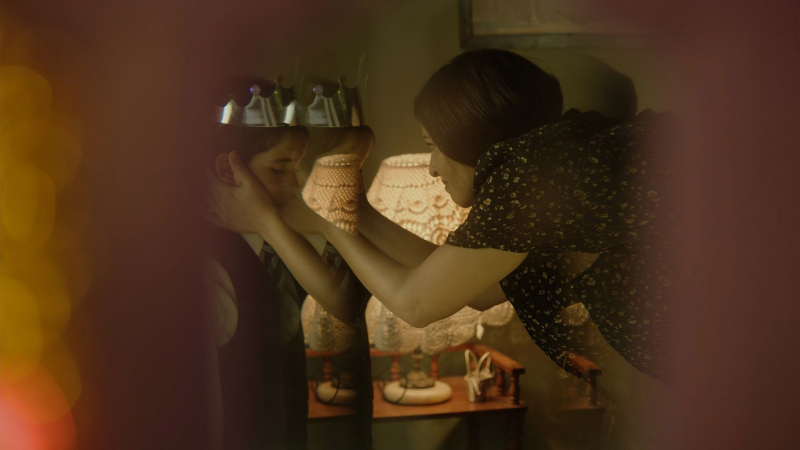
In addition to its other considerable merits – the film would play well alongside tale of post-car accident toddler trauma Ponette (Jacques Doillon, 1996) and recent hospital health worker dramas All We Imagine as Light (Payal Kapadia, 2024) and Late Shift (Petra Blondina Volpe, 2025) – the film is therefore a must see for anyone with even slightest interest in the art of cinematography.
This is a remarkable, powerful and compelling film on a difficult subject. It takes you with it, and never falls into the obvious trap of sentimentality. It deserves a much wider release: well done to Critics’ Picks for selecting it.
Round 13 premieres in the Critics’ Picks Competition of the 29th Tallinn Black Nights Film Festival which runs in cinemas from Friday, November 7th to Sunday, November 23rd 2025.
Critics’ Picks mashup trailer:
Festival teaser trailer: