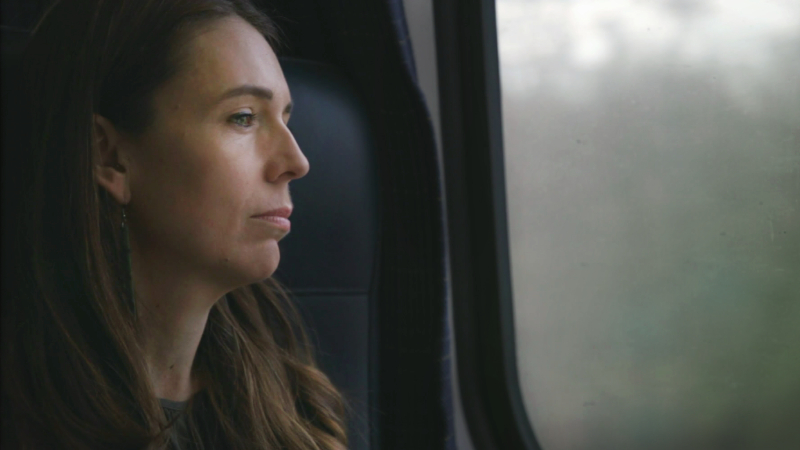
Directors – Michelle Walshe, Lindsay Utz – 2025 – US, New Zealand – Cert. 12a – 102m
*****
A portrait of Rt Hon Dame Jacinda Ardern, New Zealand’s 40th Prime Minister – out in UK and Irish cinemas on Friday, December 5th
There has never been a documentary quite like this before, and perhaps there never will be again. For one thing, it turns out that Jacinda Ardern’s partner Clarke Gayford is an established TV producer who shot a wealth of home movie footage, albeit with professional equipment, throughout the period for which she served as New Zealand’s Prime Minister. For another, this home movie footage covers her pregnancy and the early years of her daughter Neve. For a third, as an MP she became involved with a project in which MPs would record their thoughts at various points during their tenure. When she agreed to this, no-one, including herself, had any idea that she would subsequently become Prime Minister. And that’s the fourth reason: this is a portrait of a PM in office who had no intention of being either a party leader or the Prime Minister of a country. And then who suddenly found herself the sole candidate for the post of leading New Zealand’s Labour Party weeks ahead of a General Election, in which she led the party to victory,
In this documentary, Jacinda (as I shall call her) describes being the leader of a country as “the worst job in politics”. Indeed, just as unexpected as her rapid ascendancy was her stepping down in 2023. She talked to three confidantes, including Clarke, all of whom advised her to stay on – so in the end, her decision to leave the post was hers alone, taken against others’ advice. She describes the feeling the day after as like having a great weight lifted off her shoulders. In retrospect, she clearly has no regrets either about stepping up to do the job when circumstances required or stepping down when she did. As she puts it, she had dealt with three major crises and didn’t feel she had enough fuel in the tank to cope with another one.
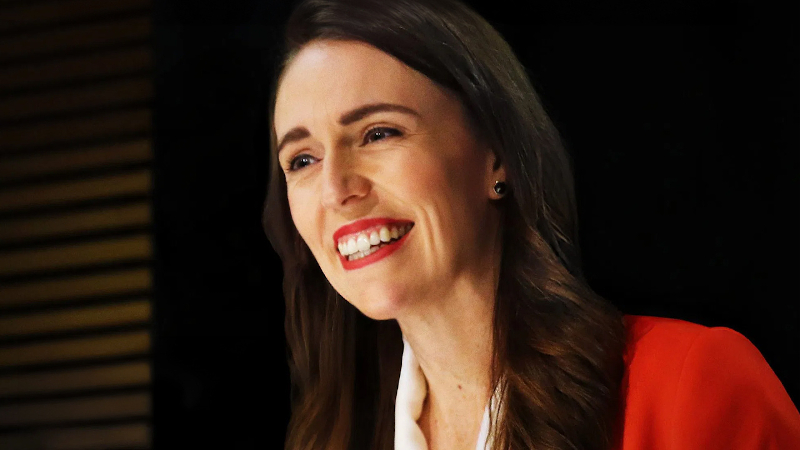
Approaching the 2017 election, she was Labour’s Deputy Leader when, in the face of disastrous low poll ratings, Labour’s leader Andrew Little stepped down. No-one else was in the running for the job but her,. She had no time for focus groups or redesigning herself as an electable leader, instead simply being herself which, against widely held, so-called wisdom in political circles, meant that she has an authenticity that most political leaders today lack. She is a born optimist, was passionate about looking out for the interests of ordinary New Zealanders, and refused to pander to right wing rhetoric demonising immigrants. Against expectation, running under the upbeat slogan Let’s Do This, she won.
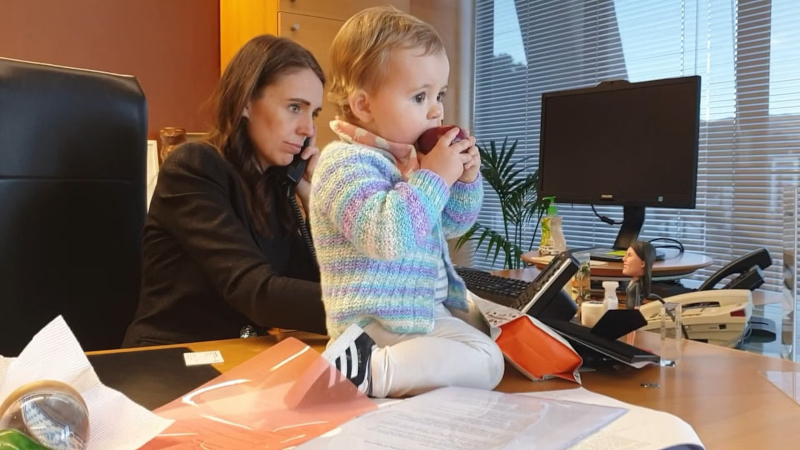
She hadn’t been in the job long when she held a press conference, captured by the cameras and so included here, announcing that she was pregnant. She continued to serve as PM both through her pregnancy and as a mother, with Clarke taking on as much of the parenting duties as her could. When she went to the United Nations, partner and baby went with her. Neve turns out to be incredibly cute and winsome, typified by one memorable sequence in which she and her mum are in a government office with maybe twenty or thirty people, many of them members of the government, and Neve goes around them all shaking their hands and saying, “pleased to meet you”.
As Jacinda points out, the tenure of a world leader is defined not so much by manifestos or intentions, but by events or crises that occur when the incumbent is in office to which their response is required. She faced three.
In the aftermath of the Christchurch mosque shootings, in which a man shot about a hundred people, killing just over half of them, she considerably tightened New Zealand’s gun laws, outlawing automatic and semi-automatic weapons and introducing a buyback programme to enable people to get rid of them. Footage here includes people handing in their weapons at specially designated centres where we see gun barrels inserted into machines which bend them so as to render them unusable.
In 2020, in the face of the COVID-19 pandemic, she swiftly closed New Zealand’s borders (in marked contrast to Britain where PM Boris Johnson kept the borders open and encouraged people to travel to get the pandemic over with as fast as possible, regardless of the cost in terms of human lives). Unlike the rest of the world, New Zealand swiftly became COVID-free, but Jacinda is constantly worried about further outbreaks and a couple of times is forced to introduce local lockdowns in specific areas when cases of the disease arrive.
After the pandemic there was a backlash – by maybe a mere one percent of the population, she was advised – who, latching onto social-media-popularised conspiracy theories like Q-Anon, interpreted her lockdown policy as authoritarian. Representatives of this group camped out on the lawn outside the Parliament Building, eventually starting a fire and being cleared by the authorities. You watch her in the building trying to do business as usual while these protests are going on before giving up and taking her work home with her.
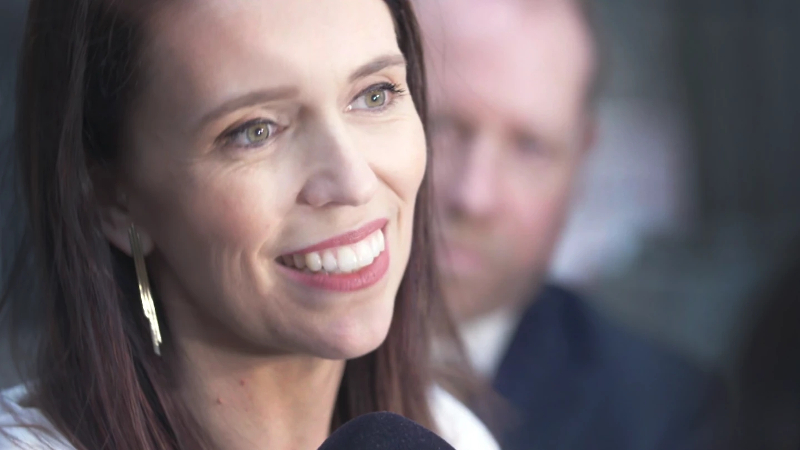
When asked what her political philosophy is, she responds, “kindness”. You can see that in her reform of the gun laws, he attempts to increase ordinary people’s social welfare and her lockdown strategy. The latter, in particular, in inspired by her hero, the Antarctic explorer Ernest Shackleton who, when his ship became locked by ice, concentrated on the survival of his men rather than his original goal. She followed similar aims throughout the pandemic, with the political opposition accusing her of being someone who doesn’t do economics.
The autobiographical family footage and Jacinda’s numerous tape recordings detailing her thoughts at various points in her premiership furnish the two filmmakers – one American (Utz) and one a New Zealander (Walshe) – with a wealth of material, from which they fashion a well-paced and compelling portrait. The home movie footage means that the film is much more personable than with would otherwise have been; perhaps the things you remember most are moments like Jacinda resting a mug of tea on her bump during pregnancy, or the scene mentioned earlier in which Neve goes around shaking grown-up hands. The home movie footage, however, ultimately serves the wider portrait of this important political figure father than the other way round, portraying her as a fully-rounded person with a family life outside (and, indeed, inside!) work. Ardern’s undeniable optimism comes through constantly, and, at a time when most politicians are regarded as out of touch, she remains a rare leader capturing the hearts of and looking out for the people she genuinely seeks to serve. As such, this intimate portrait proves highly affecting; quite possibly the most inspiring movie you’ll have seen this year.
Prime Minister is out in cinemas in the UK and Ireland on Friday, December 5th.
Trailer: