Director – John Carpenter – 1974 – US – Cert. PG – 83m (71m Directors Cut)
*****
Let There Be Light: The Odyssey of Dark Star
Director – Daniel Griffith – 2010 – US – 118 mins
*****
A bored crew of astronauts travel through space blowing up unstable planets – out now as a 4K Ultra-HD and Blu-ray Box Set, and a standalone Blu-ray
Carpenter’s 71-minute cut of his extraordinary debut feature is a lean, if tacky, sci-fi comedy that succeeds because of clever characterisations in the script and exemplary use of minimal resources in its production. Begun as a student film at USC, it preceeds his more polished, widescreen thriller efforts of the 1970s starting with Assault on Precinct 13 (1976) and Halloween (1978) with their relentless, pounding scores which he also composed and which would enable him to reinvent himself as a performing musician much later in his career. With no driving beat, Dark Star’s keyboard tones merely hint at what is to come musically.
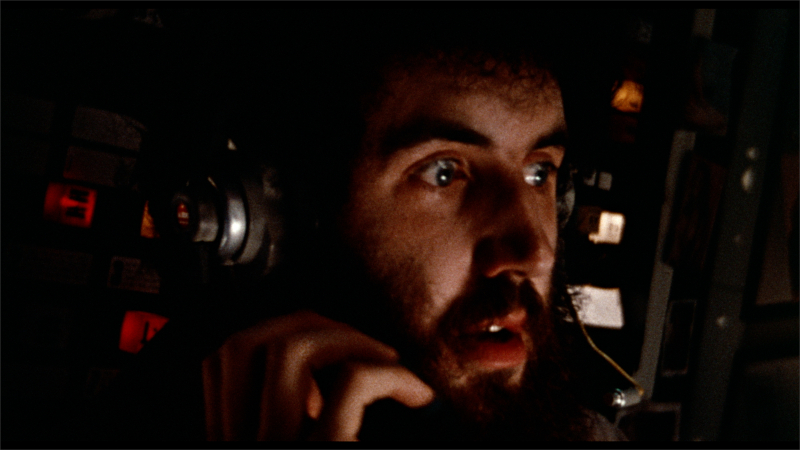
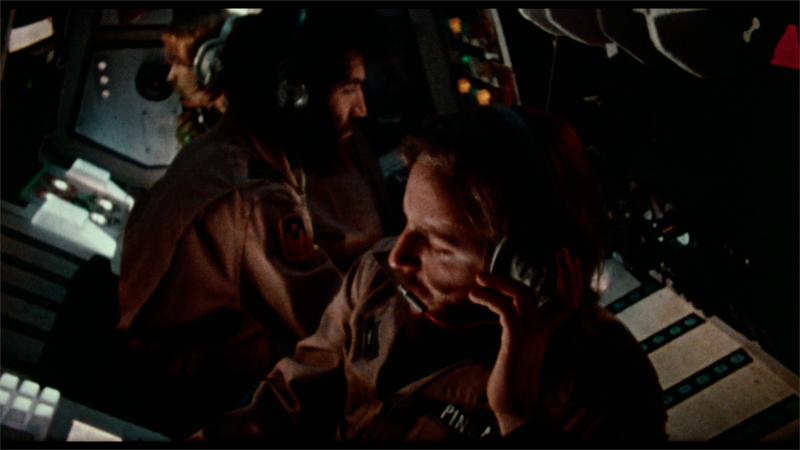
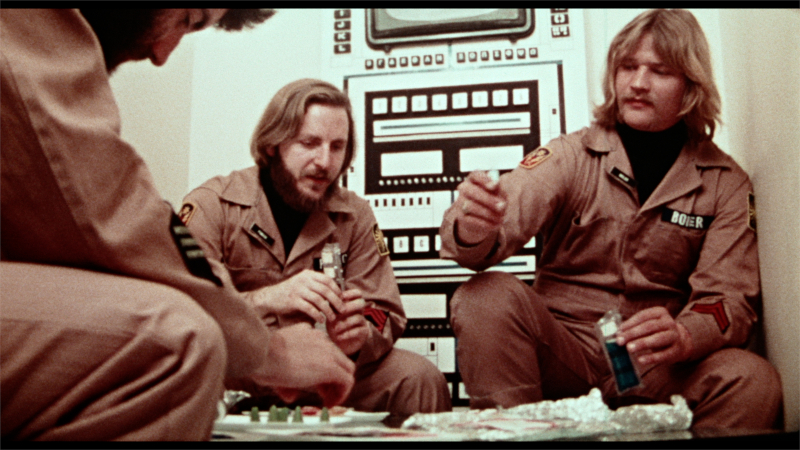
The spaceship interiors are deceptively simple. One is a small room with four seats crammed side to side alternately facing from which four crew members operate the ship. Or, rather, three – Lt. Doolittle (Brian Narelle), Sgt. Pinback (Dan O’Bannon who also co-wrote the screenplay with Carpenter, served here as editor, production designer and part of the special effects crew, and would later write both Alien, Ridley Scott, 1979 and Aliens, James Cameron, 1986), and Boiler (Cal Cuniholm) since their leader Commander Powell was killed by a malfunctioning seat circuit (!), an incident from which the crew clearly haven’t recovered.
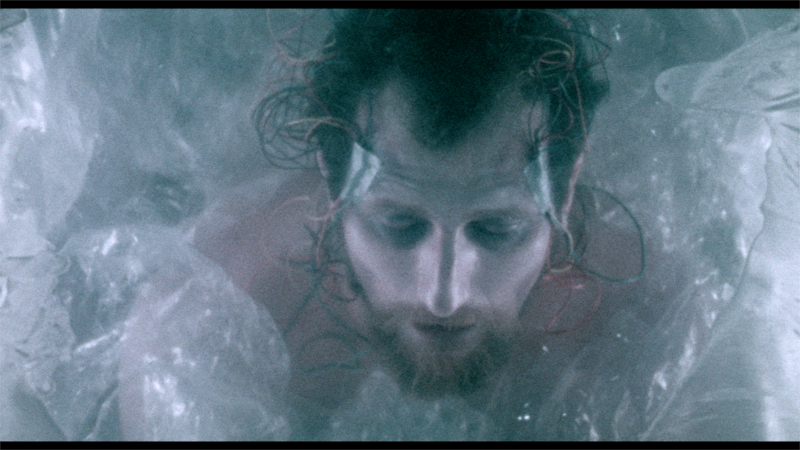
A fourth member Talby (Dre Pahich) sits on a bubble atop the craft, these days visually anticipating nothing so much as the droid R2D2 in an X-wing fighter in Star Wars (1977) and sequels. Towards the end, Doolittle consults Commander Powell (Joe Saunders) – who is still on board and communicable with having been cryogenically frozen.
A second set is a short section of corridor which turns a corner at one end and her a stairwell (i.e. a fixed position ladder) off it. The script gets a remarkable amount of mileage out of this and the four seat control room. There is also a room in which Pinback records his latest diary entry on an eight-track cartridge (!) (basically a yellow wall with a seat and desk in front), not to mention a lift shaft and a lift interior.
The ship moving through space as it hunts down and destroys unstable planets is achieved through elementary cut-out animation, although both ship and bomb is created as a models by Greg Jein, to enable Talby to go outside the ship and parley with the bomb.
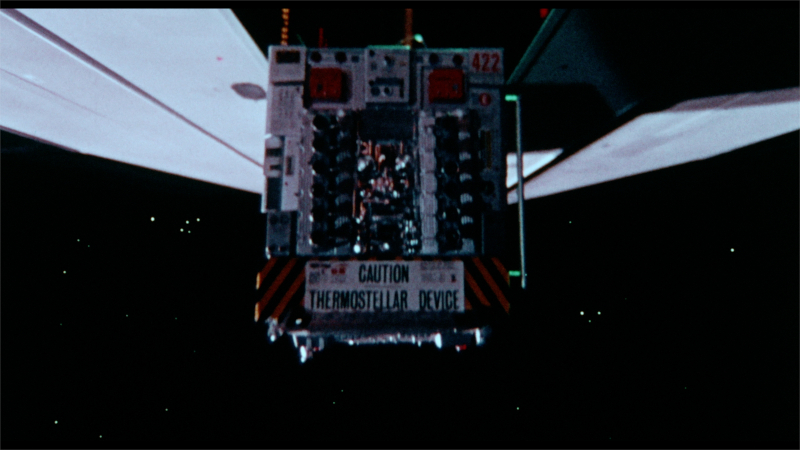
The characters are strangely engaging, as they instruct and converse with a bomb before it launches to detonate a planet or talk among themselves bemoaning the fact that the food served up by the ship in usually some variant of chicken. In addition to the talking, conversing bomb, the ship’s computer has a voice – in the form of a sexy woman (Cookie Knapp, the wife of cinematographer Douglas Knapp).
Further interest comes in the form of an alien – basically a beach ball with lizard feet (performed by to Nick Castle, later the co-writer of Escape From New York, John Carpenter, 1981, and director of The Last Starfighter, 1984) – the ship’s mascot which torments Pinback when he goes to feed it, trapping him in a lift shaft.
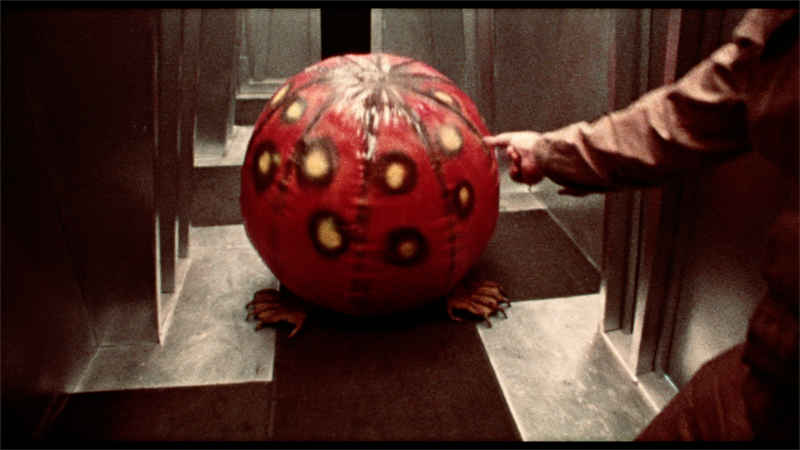
For the finale, a second bomb undergoes an existential crisis and, its detonation schedule locked down and begun, decides not to drop from the bomb bay, putting the ship and crew at risk.
It’s a film made by nerds with a great deal of love and affection, and is surprisingly enjoyable. There is a reason it has survived the test of time as a cult movie; there’s definitely something about it.
The 83-minute version, if you watch it after the 71-minute version (perhaps it would be wiser to watch the longer version first) doesn’t really add anything except padding, with some pointless extra material about the bomb at the start, more conversations between the computer and the bomb in the middle, some additional material in the alien sequence and further material of the crew relaxing and Pinback trying to wind up his two colleagues with joke glasses with spring out eyes (Boiler) and dangling a model goose (Doolittle). Doolittle then storms off to pay a musical rig of bottles and pan. If I were to sit down and watch the film again, I’d go for the 71-minute version. Sometimes less is more.
Towards the end of his feature-length audio commentary, the extremely geeky ‘Super Fan Andrew Gilchrist’ talks briefly about producer Jack H. Harris’ insistence on shooting an extra 15 minutes to bring the film up to feature length and the rumour that Carpenter, whose USC student feature this was, broke into USC to steal the negative as they wouldn’t let him have it. Gilchrist also points out such details as, for example, the space suits being based on the Mattel action figure Major Matt Mason, the legend “use only at sub light velocity” on the bomb timer and a shot where the special effects crew forgot to add laser beams.
You might think by this point that you know Dark Star, but the comprehensive and informative documentary Let There Be Light: The Odyssey of Dark Star (118 mins, Daniel Griffith, 2010) (on the Blu-ray only disc) will make you think again. While its access to John Carpenter is limited to an audio only interview and Dan O’Bannon (who died tragically of Crohn’s Disease in 2009) is mostly represented by a comprehensive interview with his surviving wife Diane, the film includes fascinating interview material with Jack H. Harris (distributor), Cookie Knapp (voice of ship’s computer), Douglas Knapp (cinematographer), Brian Narelle (Lt. Doolittle), Bill Taylor (optical effects), Tommy Lee Wallace (associate art director, who went on to direct) and Jeff Burr (the documentary’s associate producer, a USC alumnus who went on to direct). Director Griffith uses the material very effectively in telling the story of how a USC student film became a theatrical release.
You’ll come away with a knowledge of what parts of the film were shot when: for example, the beach ball alien section all came about during the process of chopping out some dead wood from the student version and shooting additional footage to bring the film up to theatrical feature length. The 83 minute version is the theatrical cut, while the 71 minute is not, as you might expect, the original USC student version, but rather the theatrical cut with bits removed with which John Carpenter was unhappy.
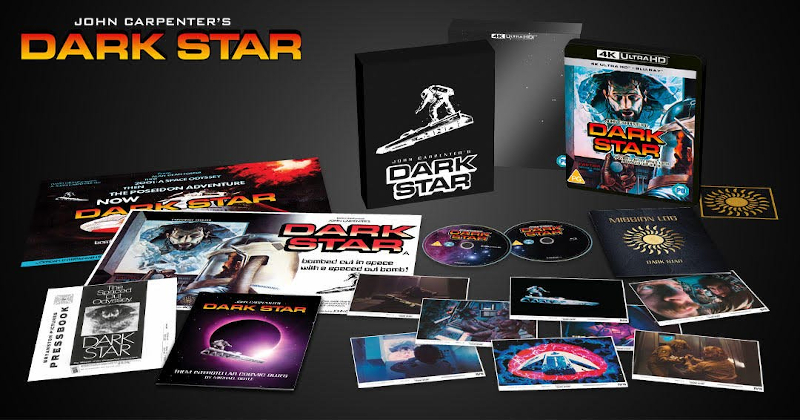
The regular Blu-ray also includes among other things a fascinating, 30 minute plus interview with Alan Dean Foster, who wrote the novelization of Dark Star, as well as reproductions of the poster, lobby cards and press pack. The overall clamshell with O-Ring Box set, limited to 500 units available exclusively from Fabulous Films’ website, features the 4K UHD versions of the film on an additional disc, plus a Dark Star Mission sew-on patch. The company have lived up their name here, as this truly is a fabulous package. It helps no end that the film is something very special to start with.
Dark Star is out on Blu-ray, and Fabulous Films exclusive 4K Ultra-HD and Blu-ray Box Set and standalone Blu-ray in the UK on Tuesday, November 11th.
Trailer: