Director – Gerald Fox – 2026 – UK – Cert. 15 – 97m
**1/2
A journey through the dream imagery of silent cinema and its cinematographic effects, augmented by present day stagings before the camera – out in UK cinemas on Friday, April 17th
Long fascinated by dream imagery in cinema, director Fox attended the Harvard course run by its Professor of Film Studies Vlada Petrić (1928-2019) to which this documentary essay is dedicated, being based on and quoting intensely from the latter’s theories.
Additionally, it just about works as a useful primer in silent cinema for the uninitiated provided you’re aware of its inherent biases and limitations. These may well be linked to the films (or film libraries) for which producer-director Fox secured rights, because there’s a far greater amount of French movies than you might expect. Or, these may may simply reflect Petrić’s theories and tastes.
Either way, the selection of movies here also leans towards the avant-garde in not only France but also the US. Then it throws in specific films from Griffifth (Edgar Allan Poe, 1909; The Avenging Conscience / Thou Shalt Not Kill, 1915) and Hitchcock (The Ring, 1927), China’s Romance of the Western Chamber (Hou Yau, 1927) and Japan’s A Page of Madness (Teinosuke Kinugasa, 1926). It does manage a section on German silent cinema, which includes the two key films The Cabinet of Dr. Caligari (Robert Wiene, 1919) and Metropolis (Fritz Lang, 1926) among others, but far less time is spent on that country than France.
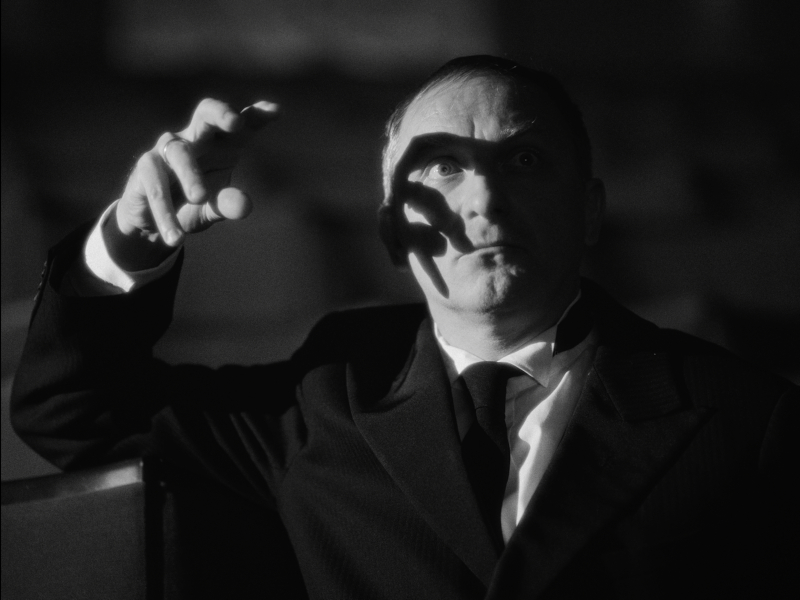
To some extent, the choice of films is further decreed by the idea of silent cinema. So although Petrić (Goran Kostic) talks about the influence on sound cinema of silent era techniques, he never uses clips from the sound era, with or without sound. Except that he includes two shorts by the US avant-garde director Maya Deren from the 1940s (Meshes of the Afternoon, 1943; Ritual in Transfigured Time, 1946) by which point the silent era was over and to make a silent film was a definite stylistic / budgetary choice.
It’s also telling that he cites these silent techniques and filmmakers as influencing “Welles, Fellini, Bergman, Resnais and Tarkovsky who propagated the oneiric aspects of cinema.” For a start, great though Bergman undoubtedly is, I’d question his inclusion as oneirc. These were all names touted fifty years ago as great directors, but the list curiously omits the likes of Lang and Hitchcock (both of whom started their directorial careers in the silent era, and are mentioned here in that capacity only) and more recent directors such as Cronenberg, Lynch, Švankmajer, Von Trier or Wong Kar-wai. It also omits the Archers (Powell and Pressburger).
And as so often in studies of ‘cinema’, animation is completely excised. (There’s a whole argument as to whether Švankmajer makes animated films or is not. Lynch came through them from painting.)
The word ‘kinaesthesia’ comes from ‘kine’ (movement) and ‘aesthesis’ (sensation) to denote ‘the sensation of movement’. Petrić used it in the sense of the cinema experience “activating sensors in the viewer’s mind thereby producing kinaesthesia, but then Fox leaves out the pioneering films of the Lumiere Brothers such as The Arrival of a Train (1896) which is supposed to have caused the audience to duck when a locomotive engine passes a over a camera placed on the track.
He dives in instead with two films. France’s A Trip to the Moon (Georges Méliès, 1902) is “a visualisation of a stage director’s fantasy that surpasses the make-believe of the stage by using optical tricks” as stars and planets dissolve into girls via double exposure. This is contrasted with US production Dream of a Rarebit Fiend (Edwin Porter, 1906) “the farcical presentation of a nightmare” in which a man in top hat and tails clings to a lamppost as the camera rolls on its axis to give the impression of movement, double exposed with shots where the camera moves rapidly through location scenery. No mention is made of the source material, a newspaper cartoon strip by Winsor McCay who would go on to become one of the great pioneers of animation.
Photographic backgrounds are extolled as an advance over painted backgrounds in an extraordinary refusal to confront the cinema’s embrace of photographic naturalism. The one film to suggest a completely different direction the medium might have taken, The Cabinet of Dr. Caligari, with its unrivalled exaggerated, painted sets unlike anything seen since, is briefly glossed over in a section on German expressionism later, the connection unmade.
There’s no contextualising of the French films, with Fox moving happily from Parisian art movement-derived practice by the likes of Fernand Leger , Man Ray and Jean Renoir, the latter being the son of the painter Renoir to innovative film makers such as Abel Gance, the visionary behind the five and a half hour epic Napoleon (1927). and Jean Vigo (Zero de Conduit, 1933; L’Atalante, 1934). He does cover Un Chien Andalou (Luis Buñuel, Salvador Dali, 1928), made by a former assistant to director Jean Epstein and a celebrated artist, but even there, he doesn’t really bring up any significant context.
Russian films and montage (Eisenstein, but no Battleship Potemkin, 1925) also get a mention, as do early Scandianavian films.
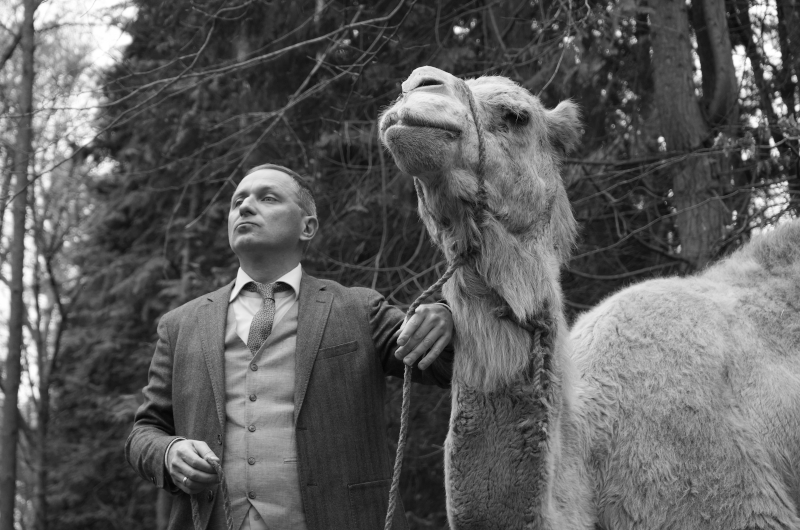
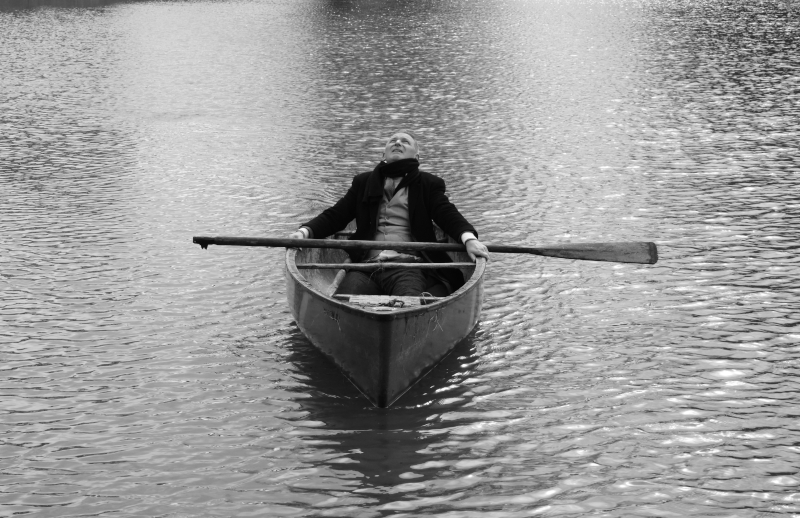
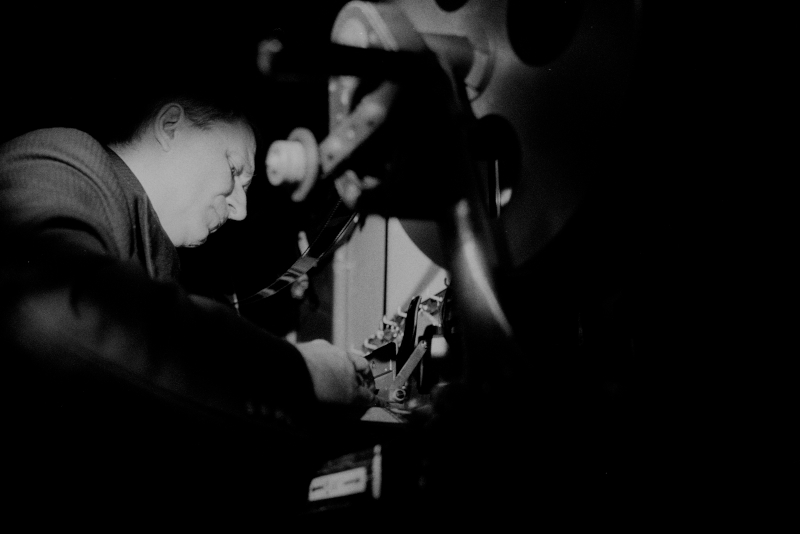
Fox clearly loves the films he’s excepting, enough to link them via sections in which he shows Vlada Petrić / Goran Kostic in black and white recreations of the various silent techniques under discussion and illustration. Incredibly, these never include the colourisation or tinting of film from the silent era.
It would make for a fascinating comparison with that other recent documentary on the possibilities of cinema and camera-led media Fantastic Machine (Axel Danielson, Maximilien Van Aertryck, 2023) which had more of a purpose; this one feels more like a travelogue through silent movies, and a highly idiosyncratic selection of silent movies at that.
Kinaesthesia is out in cinemas in the UK on Friday, April 17th.
Trailer: