Directors – Iain Forsyth, Jane Pollard – 2025 – UK – Cert. 15 – 96m
*****
Musician and cultural icon Marianne Faithfull is interviewed at length, and her life and artistic achievements examined from several angles – compelling documentary is out in UK and Ireland cinemas on Friday, March 20th
Who is Marianne Faithfull? Given that, sadly, she died during the making of this documentary about her, we should ask another question. Who was Marianne Faithfull?
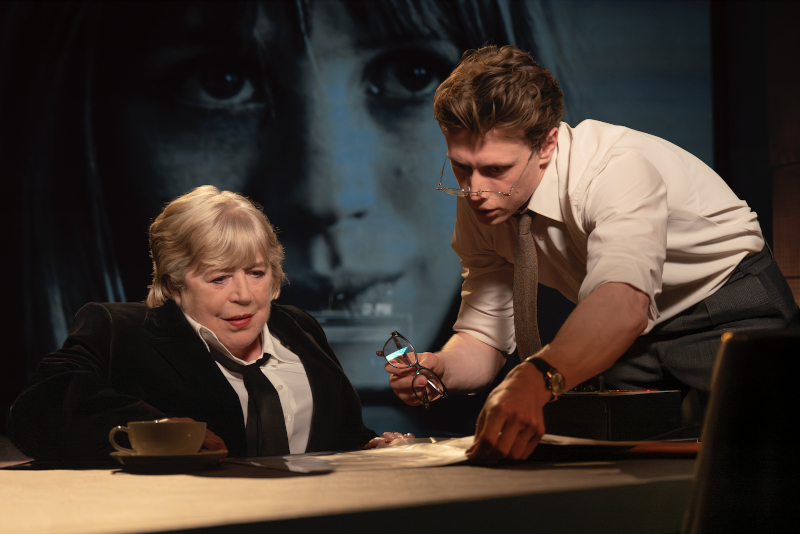
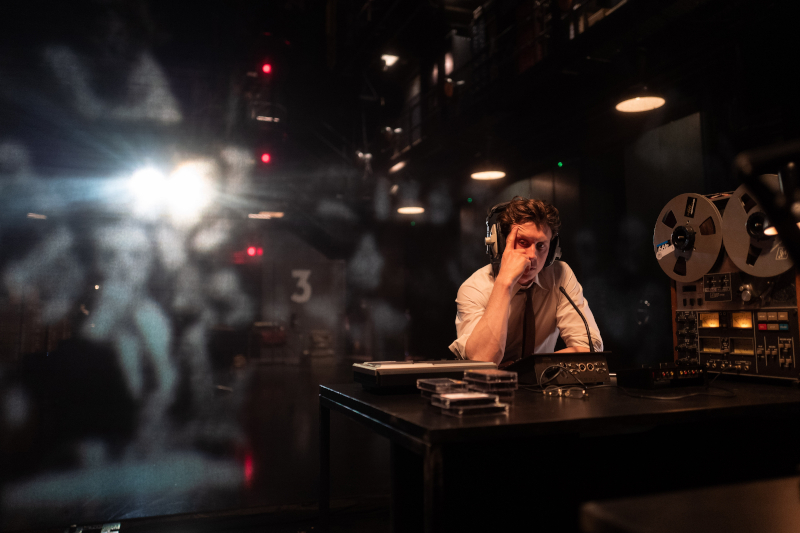
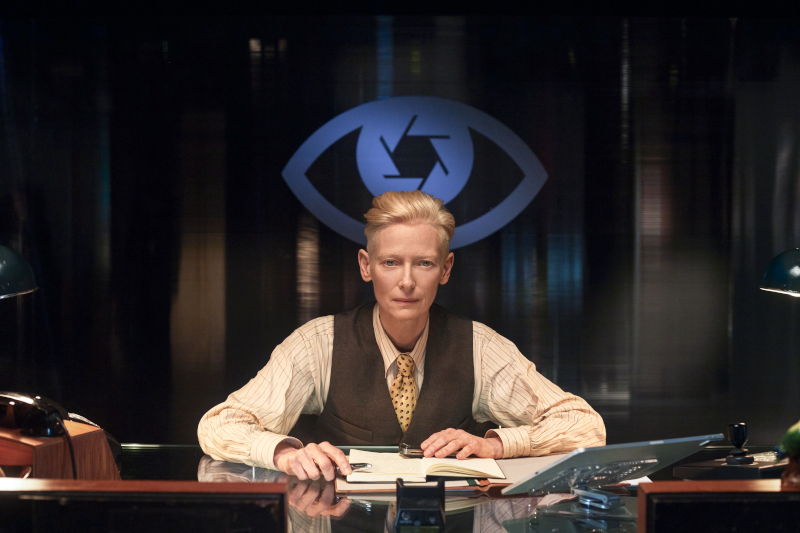
Marianne appears extensively here as a real life, a 78-year-old interviewed by actor George MacKay (from The Beast, Bertrand Bonello, 2023; Femme, Sam H. Freeman, Ng Choon Ping, 2023; 1917, Sam Mendes, 2019) for The Ministry of Not Forgetting, an institution created specially for this film narrative where it is run by Tilda Swinton (from Memoria, Apichatpong Weerasethakul, 2021; Snowpiercer, Bong Joon Ho, 2013; Orlando, Sally Potter, 1992) in a suit and tie who delivers all manner of fascinating pronouncements about Marianne’s life and work, and at one point even explores that territory by choreographing a dancer’s movements.
While The Ministry of Not Forgetting provides a structure within which Faithfull’s humanity and legacy can be explored, this latest film from Forsyth and Pollard (20, 000 Days on Earth, 2014; The Extraordinary Miss Flower, 2024) is characteristically kaleidoscopic. When she appeared “on the scene” (as people would have said in the 1960s) with the hit As Tears Go By, penned by Mick Jagger, Keith Richards and Rolling Stones’ manager Andrew Loog Oldham, she was branded as a happy-go-lucky type in publicity prose which she decries in the contemporary interviews for this film as mostly false. The music business wanted a persona it could sell, and tried to pigeonhole her into a category into which she simply wouldn’t fit.
As footage from Don’t Look Back (D.A. Pennebaker, 1967) attests, at one point she was in a room with Bob Dylan and others. He wanted to sleep with her, she recalls in the new interviews, but she turned him down because she was about to marry someone else. She became friends with beat poet Allen Ginsberg, who she remembers fondly, and later was the girlfriend of the Rolling Stones’ Mick Jagger.
By coming at its subject from several different angles, the current documentary is much more arresting than that other, more formulaic and traditionally structured piece about another partner of a member of the Stones, Catching Fire: The Story of Anita Pallenburg (Alexis Bloom, Svetlana Zill, 2023).
Marianne was celebrity news at a time when the ground rules of media were very much being established. Having just miscarried her and Mick’s baby, she was photographed by a member of the paparazzi who had gained entrance to her hospital room by wearing a doctor’s coat. Two weeks later she was standing on stage beside Mick in a Rolling Stones spectacular.
She was constantly writing her own poetry and song lyrics. When she came up with the song Sister Morphine, she was panned for writing and singing about drug abuse as a woman. No such outcry greeted the song when it subsequently appeared as a track on the Stones’ album Sticky Fingers (1971). For men, at that time, singing such material was ok. For women, not so much. Cue the round table of celebrity women talking about how Marianne, as a female artist, was pilloried by men in the media for things they would have no objection to men doing.
Swinton brings up the subject of Redlands, Keith Richards’ Sussex home raided for drugs by police in 1967 where Faithfull was found wearing only a fur rug, immediately turning her into misogynist media fodder and effectively destroying her career for the next decade while she went into rehab and got herself back together.
Even in the several years when she disappeared from public view, Faithfull never stopped writing, reinventing herself in the punk era with the album that gives this film its title. Coaxed to talk about this by MacKay, you can see that in retrospect she’s much happier with this material then that which was foisted on her in the sixties: it felt to her like she had finally found a way of publicly using her own voice.
In addition to their various perspectives on Faithfull’s personal and artistic history, Pollard and Forsyth set up recording sessions, some have other female artists redundantly attempt to cover Faithfull’s songs, while other longer and more vital sequences show Faithfull herself performing with various musicians, among them Thurston Moore.
They also unearth footage of her rehearsing with Hal Willner, her mentor and friend in later years, for her performance as Pirate Jenny in Kurt Weill / Berthold Brecht’s Threepenny Opera, giving humanity to and embracing the morally complex character – and, in the process, showing a whole new artistic side of herself.
It’s clearly something of a blow to have the subject of your documentary die during filming, but here the directors, through the voice of Tilda’s woman from the Ministry, turn this to their advantage, by showing us what no-one knew would be Marianne’s final singing performance when they captured it on film. Accompanied by Nick Cave (the subject of 20, 000 Days on Earth), his longtime collaborator Warren Ellis, and others, her performance provides both a moving epitaph and an appropriate finishing point.
In the end, you come away not so much with the picture of the bright young thing of the 1960s, more with the woman Marianne was in her final years, and her wider, not inconsiderable place in pop culture.
Broken English is out in cinemas in the UK and Ireland on Friday, March 20th.
Iain Forsyth and Jane Pollard’s exhibition / installation Miseris Succurrere Disco is at Fitzrovia Chapel until Wednesday, March 25th.
Trailer: