
Director – David Bickerstaff – 2026 – UK – Cert. U – 93m
****
A journey through the current Tate Britain show and art history about the two rival landscape painters – out in UK cinemas from Tuesday, March 10th
This latest Exhibition on Screen entry kicks off in uncharacteristic fashion with photographic shots of landscape (typical of views that used by painters Turner and Constable) accompanied by an excerpt from the poem Richmond by James Thomson (1834-1882), a favourite of both painters whose work will be similarly deployed (voiced by Robert Lindsay) at appropriate intervals throughout this documentary.
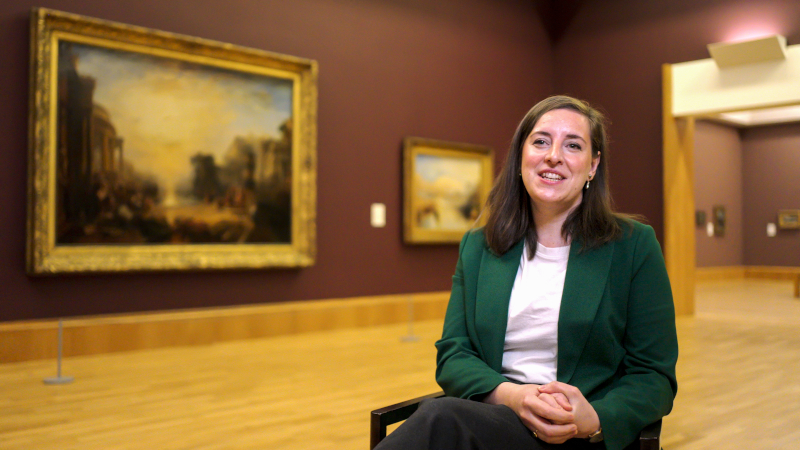
However, the film soon moves into more familiar territory with shots of present day London and of the Tate Britain’s current Turner & Constable exhibition, with visitors admiring some of the paintings on display. Amy Concannon, Manton Senior Curator, Historic British Art, Tate Britain, notes that this show represents the first time the two painters have been displays side by side on such a vast scale. Turner & Constable were born within a year of one another, which became a catalyst for the current show’s displaying them together.
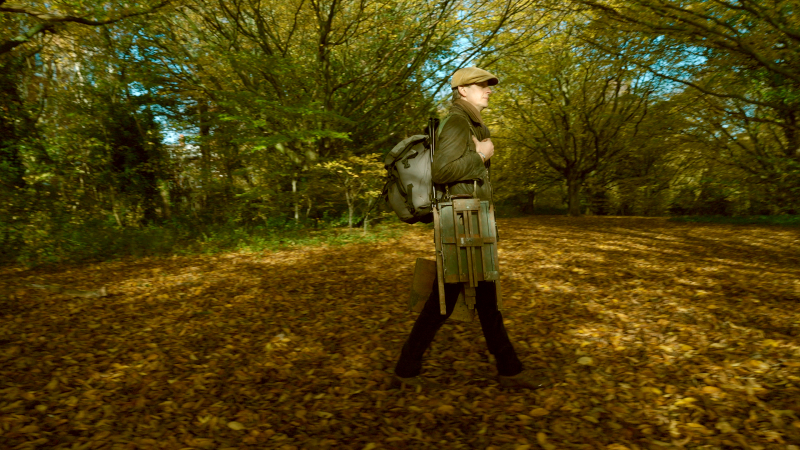
Artist, writer and broadcaster Lachlan Goudie talks about the “dazzling” influence of both artists on the likes of Delacroix. Nicola Moorby, Tate Britain’s Curator of British Art 1790-1850, points out the anxieties of the period, with the French Revolution and the Napoleonic Wars in their wake, not to mention political system upheavals, an awareness of social injustice, and advances in science and technology behind the Industrial Revolution. On the screen as she says this is Turner’s iconic Rail, Steam and Speed – The Great Western Railway (1844) with its railway engine crossing a viaduct in a haze of paint.
The work of both artists, she suggests have seeped into the British national consciousness to such an extent that we talk about Turner’s sunsets or Constable clouds, even mythologising their images as tourist locations.
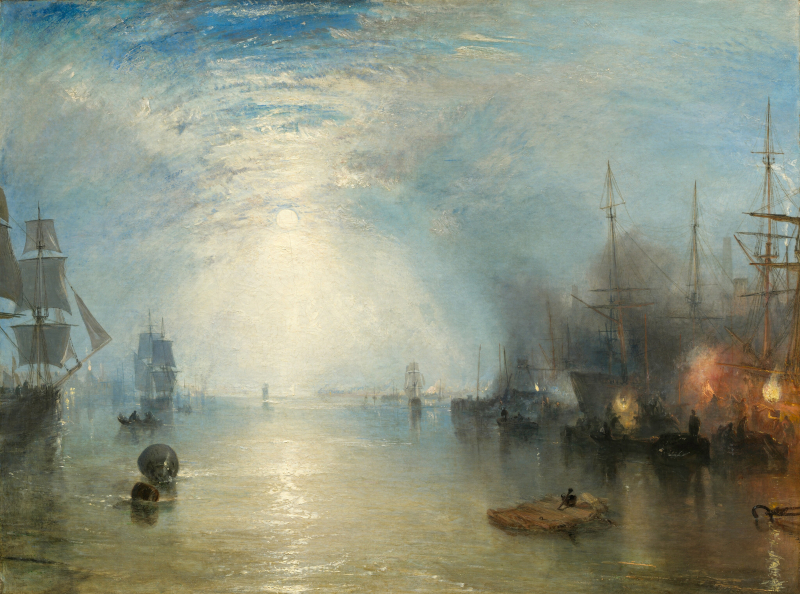
The exhibition opens with portraits by both artists at around age 20-21. alongside a picture by each that they gifted to the Royal Academy upon becoming accepted as members – A Welsh castle by Turner and a lock gate in Suffolk by Constable. Jumping forward to Turner’s later, more familiar career, Goudie credits Turner with lighting the fuse of impressionism in his painting of what he saw in front of him in the moment, studying light, colour and atmosphere. At the same time, Constable was breaking down the brushstrokes of his paintings trying to suggest the inflections of light and the sparkles on a leaf. Both are fascinated by the way that paint can show how light affects our everyday world.
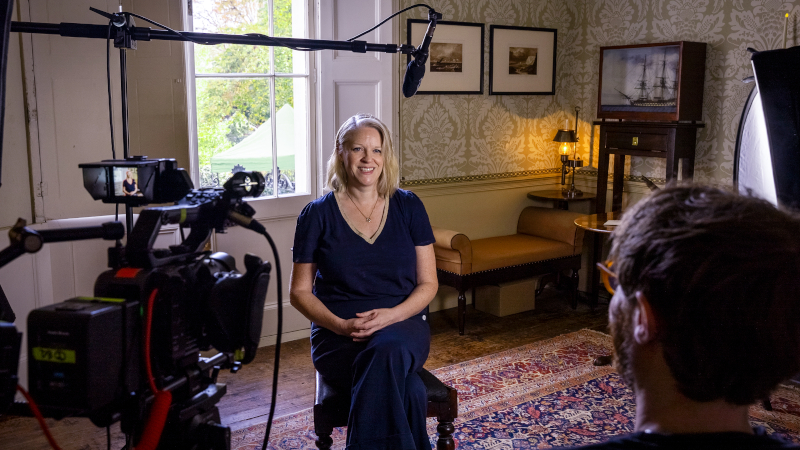
Turner, says Moorby, grew up in Covent Garden among theatres, print shops, pubs and London’s red-light district, so he picks up an awareness of things being bought and sold, including art which can facilitate upward mobility and make the artist a lot of money. (His father ran a wig-making and hairdressing business.) Turner senior would display his son’s watercolours in their shop window.
If Turner was a go-getter urban type, Constable was the well-heeled country boy who grew up in rural Suffolk and East Anglia amidst open fields and skies. His father ran a successful milling and grain exportation business.
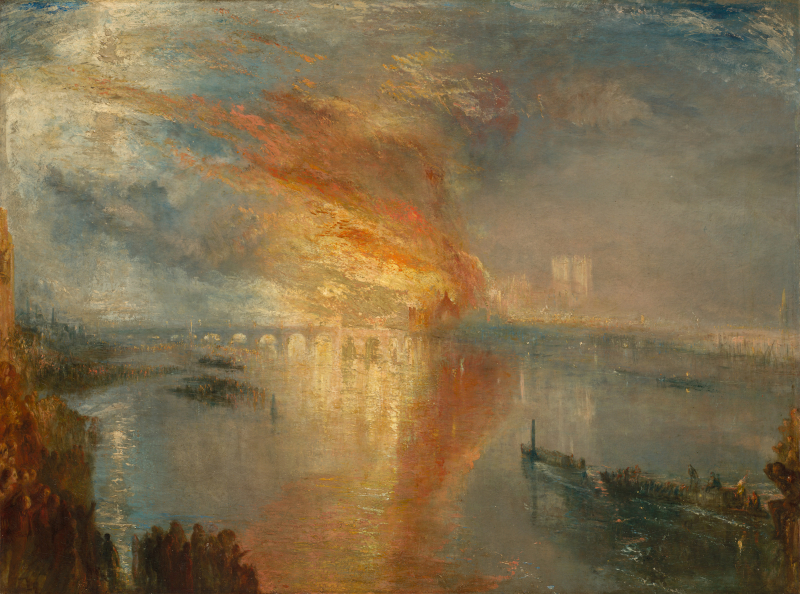
With the recent foundation in 1768 of the Royal Academy at Somerset House, a stone’s throw from Covent Garden, and the accompanying emergence of a new British school of art, the country’s artists aspired to membership of the RA, not least because it enabled charging the highest prices for their output. Child prodigy Turner had become a member at age 27, the youngest age of any artist to do so in the Academy’s history; Constable joined much later. Both were influenced in their paintings by the landscape paintings of Claude Lorrain, developing something of a rivalry by the 1820s.
Turner’s first RA exhibits were in both watercolour and oil. Fisherman at Sea (1796) is one of the first Turner oil paintings to attract critical attention and set him on the rapid path to success, notes Richard Johns, Art Historian, University of York.
Traditionally, British artists would go to Italy, but with that travel prevented by the Napoleonic Wars, Turner resorted to home-grown areas like Wales and the Lake District for mountains and grand scenery. Although Constable’s great love was Suffolk, in 1806, he too ventured up to the Lake District to learn how to depict dramatic light and shade.
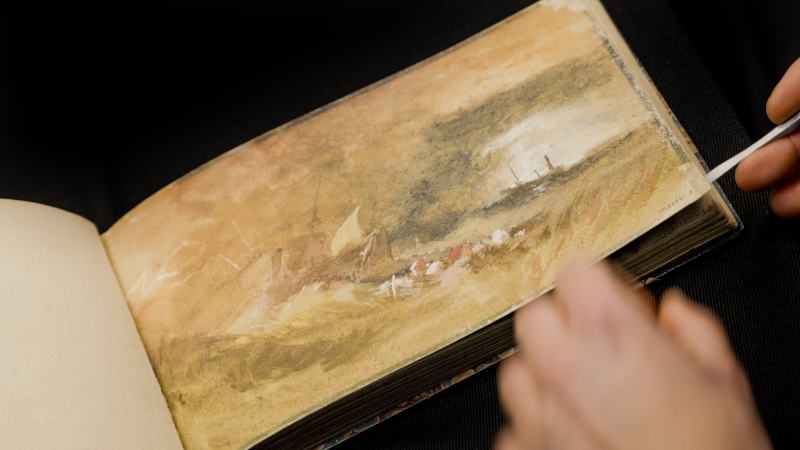
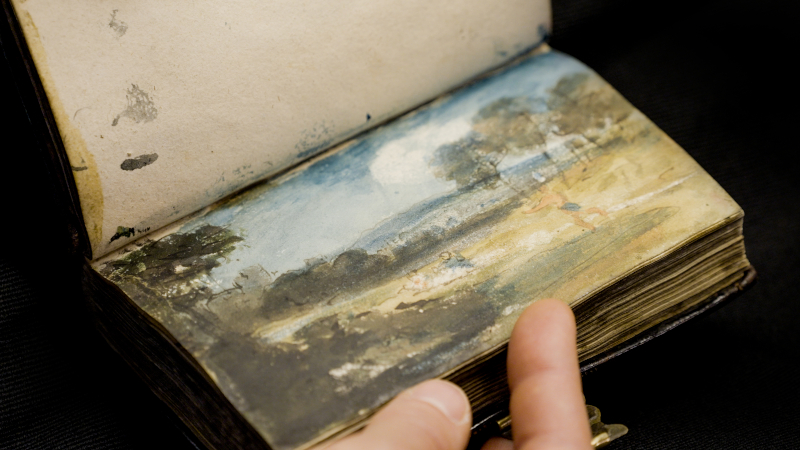
Goudie talks about artists’ sketchbooks; how Turner’s rapidly sketched visual notes would enable him to construct paintings in his studio; Moorby contrasts this with Constable’s plein air process of painting outdoors, building up a vast visual research library for later use in the studio. Except that Constable took the then unprecedented step of completing full blown paintings outdoors, for instance Flatford Mill, Scene on a Navigable River (1817), Stour Valley and Dedham Church (C.1815), and The Wheatfield (1816).
A short sojourn in 1802 notwithstanding, when a brief treaty between France and England enabled Turner to visit the Louvre and get as far as the Alps, he didn’t visit Italy until 1819, well after the 1815 declaration of peace, where his first-hand experience of the landscape moved him to start using far more yellow than before in paintings such as The Bay of Baiae (1819).
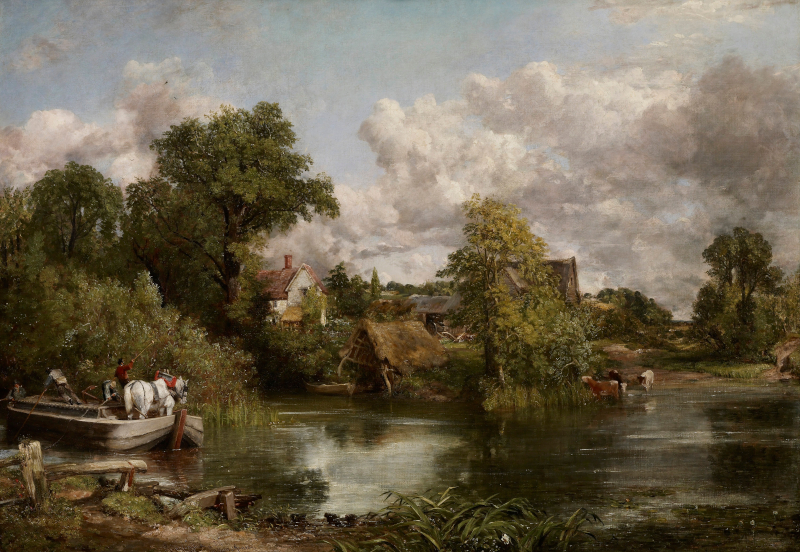
An hour in, the film gets around to Constable’s most famous painting, The Hay Wain (1924, now in the National Gallery), a huge success not in England but when exhibited in Paris, where it can be seen as a major influence in what later emerged as Impressionism.
By 1832, the two artists were seen as equals. Constable, on the RA hanging committee, put one of his own paintings and one of Turner’s side by side.
More was to come: Turner’s extraordinary Snow-storm; Steamboat off a Harbour’s Mouth (1842) and hazy landscape The Blue Rigi (1842); Constable’s On the River Stour (c. 1834-7). Goudie pushes back against the idea that these two painters should be seen in opposition – Turner the thrilling radical versus Constable to careful observer. Both artists were obsessed with the depiction of light, albeit doing so in very different ways.
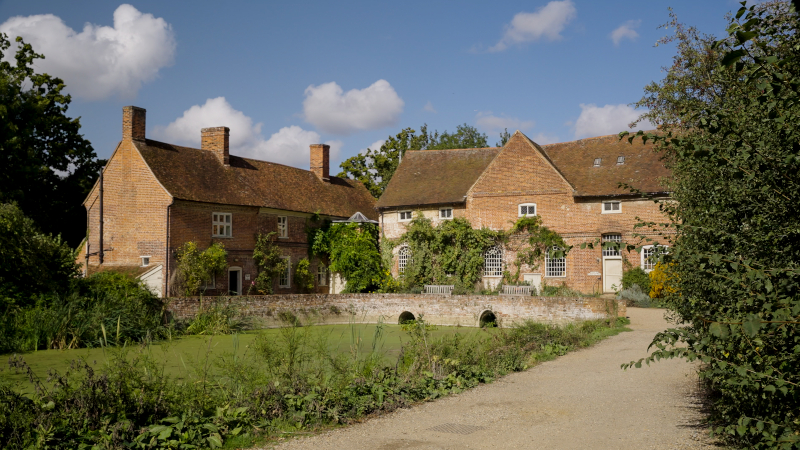
Constable died unexpectedly in 1837, while Turner lived on for another 15 years during which he produced many of the works now considered his masterpieces such as The Fighting Temeraire tugged to her last berth to be broken up (1838). Ironically, Turner hasn’t truly invented himself at the time of Constable’s death.
The film is punctuated by shots going around the exhibition. Anyone who has visited the show will know it has been extremely popular and tends to be packed, so the film affords a useful chance to see something of the show without the crowds.
The exhibition is one of Tate Britain’s blockbuster shows; in many ways, Exhibition on Scree’s coincidental film is likewise one of their blockbuster efforts. The film works as a helpful overview of both artists or as an excellent introduction for those planning the visit the exhibition. If you’ve already seen the exhibition, it works well as a good reminder and summing up of what’s in there, which might well make you want to go back for another visit.
Exhibition On Screen: Turner & Constable is out in cinemas in the UK from on Tuesday, March 10th. Check your local cinema for details or click here.
The Turner & Constable exhibition continues at Tate Britain until Sunday, April 12th.
Trailer: