Director – Philippa Lowthorpe – 2025 – US, UK – Cert.12a – 115m
*****
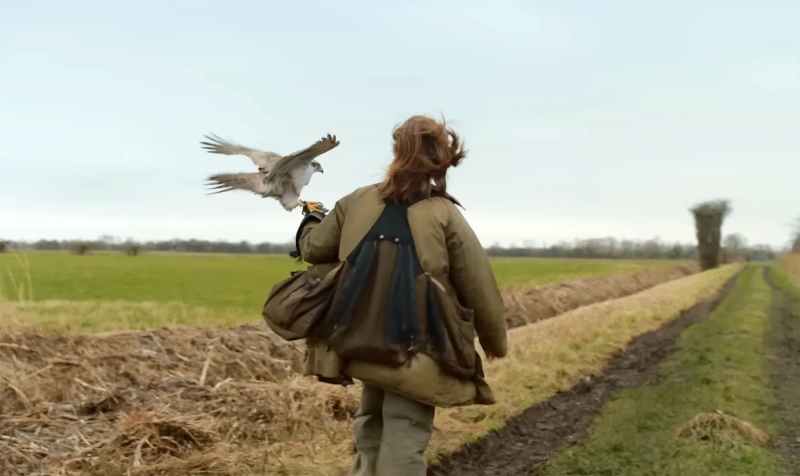
An academic grieving her recently deceased photojournalist father buys and trains a goshawk then turns in on herself – adaptation of bestselling memoir is out in UK cinemas on Friday, January 23rd
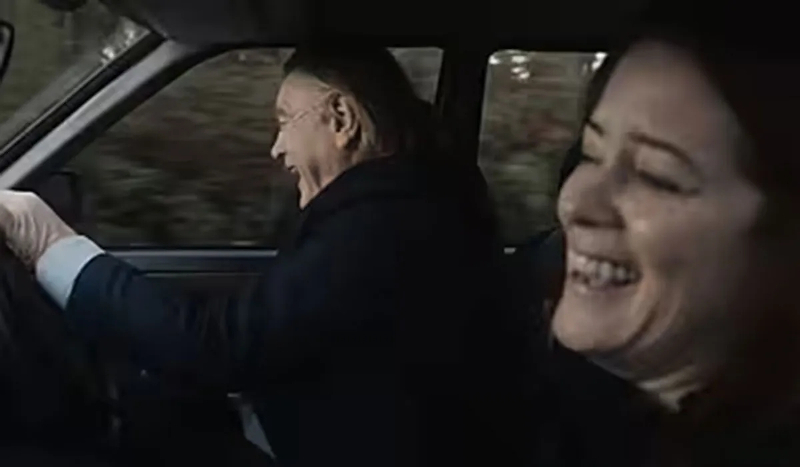
Helen (Claire Foy) phones her dad to tell him she’s just seen a pair of goshawks. Her dad (Brendan Gleeson), with whom she would often venture out into the English countryside, is a top photojournalist who has made a career out of waiting with his camera – for hours sometimes – to catch just the right moment to tell a story. Technically, he is retired, but still carries on working. And then a few days after Helen sees the goshawks, her mum (Lindsay Duncan) phones. Dad died, suddenly, unexpectedly. He’s gone. Except that, in the manner of the bereaved, he’s still there. Everywhere Helen goes, she remembers flashes of him from the past, things they did together. They were very close.
She works as an academic, teaching science at Cambridge, and not unusually is disenchanted with her students, wishing they’d show a bit more interest. She has been invited to apply for a position in Berlin, and as her best friend Christina (Denise Gough) says, if she applies she’ll probably get it, so they go out to celebrate. But having lost her dad, even though her brother is with her mum and everyone says there’s no need for her to be there too, she feels guilty.
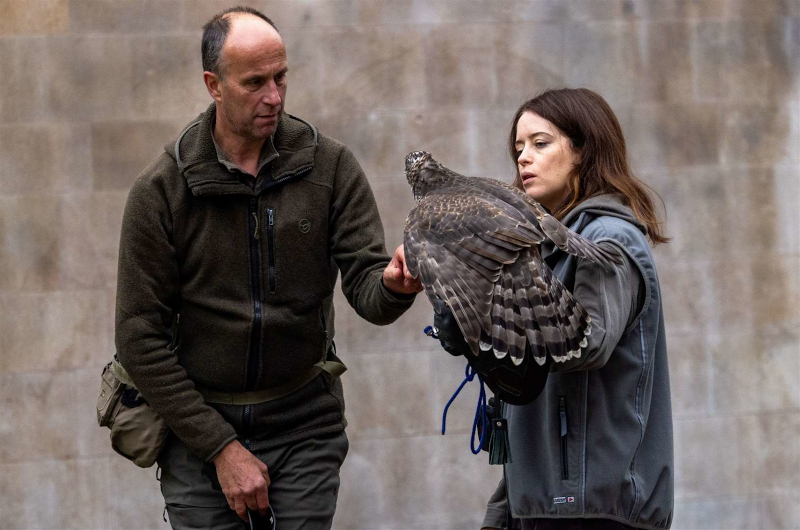
Needing something to keep her mind off her dad – possibly a fool’s errand – she buys a goshawk with intent to train it to hunt (it’s a predator; that’s what they do; what she is doing is facilitating that). Her old friend Stuart (Sam Spruell), very knowledgeable about birds, advises her against it, as they can be difficult birds. But her mind is made up. She knows what she wants, too; when the seller turns up in a quayside rendezvous that could be mistaken for a drugs deal, with two boxes each containing a goshawk. On removing the hawk’s cowl, she immediately bonds via eye contact with the first one he shows her, then has to fight hard since the second bird is hers while the first one is promised to someone else; despite his protests about it necessitating his redoing the paperwork, he gives in.
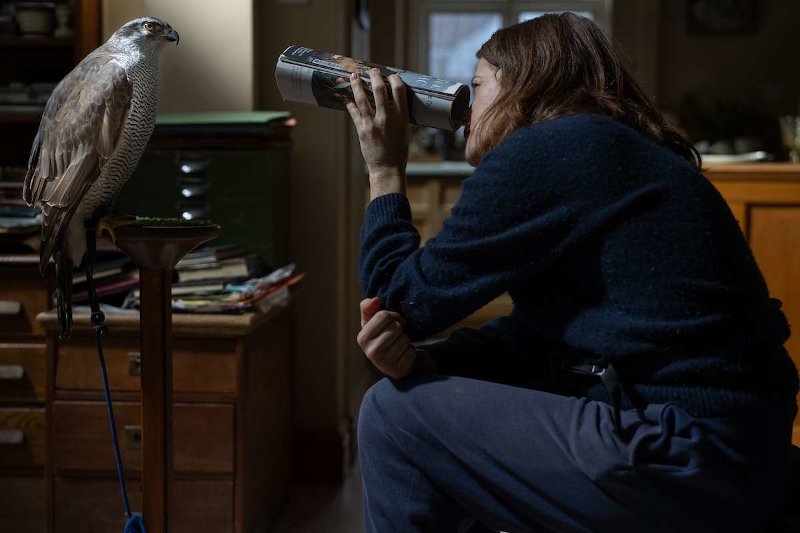
Now she’s alone in her Cambridge flat with the as yet unnamed bird; she must teach it to trust her so that it relaxes in her presence. Slowly but surely, she wins it round, taking it on her glove around the local streets, going to a green open space to teach it to fly increasing distances from Stuart’s glove to hers, then out to the countryside where it can have a chance to hunt properly.
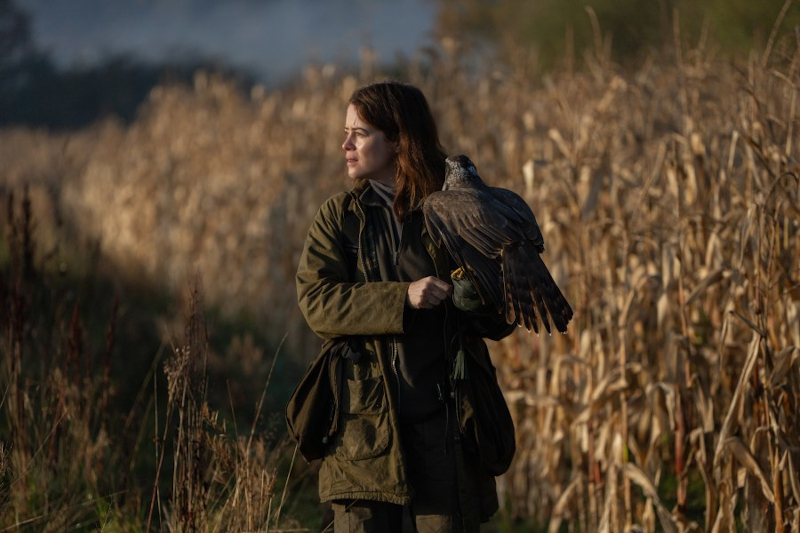
While all this is going on, she never did get round to applying for the Berlin position. And her accommodation, tied to the job, is due to end a month or so into the new year. And one day, she is so busy spending time with her bird – now named Mabel – that she misses a class she was supposed to give. Having agreed, as the family wordsmith, to give dad’s eulogy, she suddenly realises she hasn’t even started on that, either. Nor has she started work on a lecture she’s due do give. And when friends such as Christina knocks at her door, she starts pretending that she’s not there in the hope that they’ll go away and leave her alone. With her flat getting increasingly ramshackle and messy, she takes refuge in a big cardboard box in the middle of the room…
There is much to admire in this marvel of a low budget British feature. Whilst Claire Foy completely convinces as the bereaved daughter, the project places greater demands upon her mastering falconry basics and interacting with the goshawk (there were apparently five used on the production, including two that did all the hunting stunts which had been trained from birth to fly alongside airborne drone cameras). These scenes are profoundly moving, yet you’re watching a human actor (Foy) or actors acting, while the bird is doing whatever it does. Not acting, exactly, perhaps not even giving a performance, but just being, and perhaps delivering something special for the camera on occasion. (All cast and crew on the set had to be dressed in toned-down colours to put the bird at ease.)
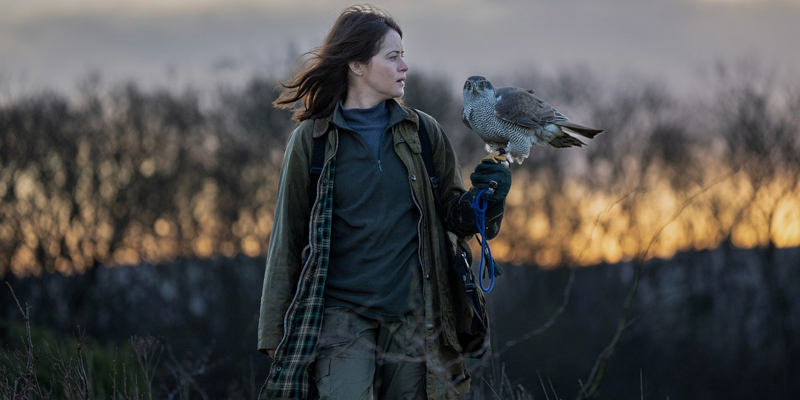
In terms of the hawk, as opposed to Helen, all this builds up to the sequences where the hawk hunts down her prey, which are enthralling in a way that they wouldn’t be had the film been made with visual creature effects rather than real live animals. (Visual creature effects can give rise to enthralling cinema, but it’s a very different pleasure from the one experienced watching real live animals here.)
There are glimpses of the bird, such as its first sight of Helen from inside the box, that give a real insight into its character. As well as Cambridge streets, Foy as Helen walks the goshawk round a faculty party where people marvel at the bird. For me, though, the highlight of their extraordinary human-bird relationship is when Helen is teaching it to feed (or gaining the bird’s trust so that it will feed in her presence). One particular shot, which seems to go on for ever, has her waiting on and coaxing the bird, which periodically flaps its wings to fly away several times, which it can’t do because it’s tethered to her hand, although it eventually settles down.
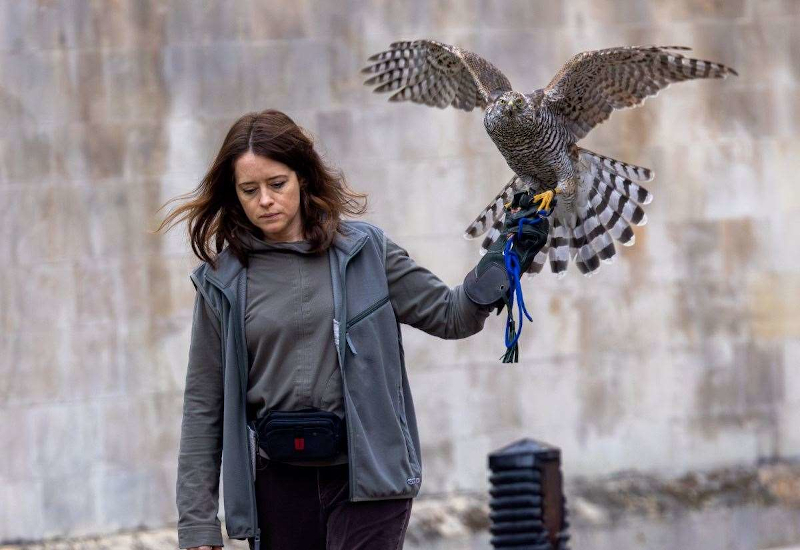
Lowthorpe (Misbehaviour, 2020; two episodes of acclaimed series The Crown, 2017; Swallows and Amazons, 2016) began her career in documentaries, and although this is a narrative feature, a milieu she she handles deftly, her considerable experience in documentary proves invaluable. Like Helen’s photojournalist dad, who could almost be a metaphor for making a film like this with a real life bird, Lowthorpe and her collaborators with the bird are patient and keep the camera rolling. They and the audience are rewarded with moments such as when Foy offers the bird a crumpled up ball of paper and it learns to play ‘catch’ with her.
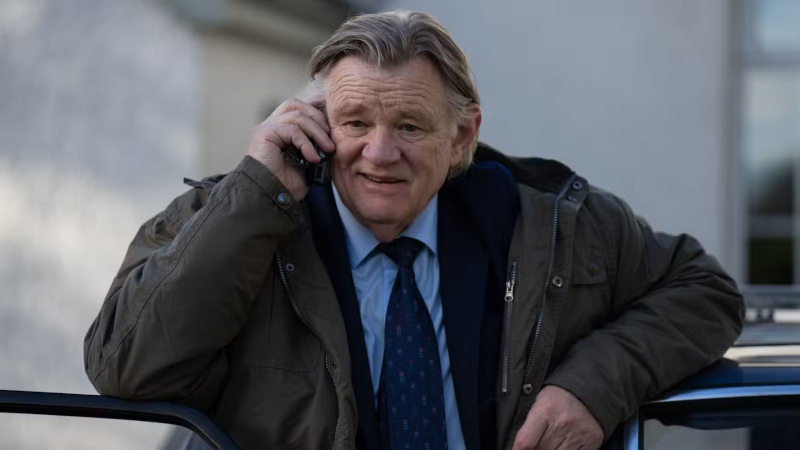
If the woman-bird bonding forms one core of the film, it contrasts with the numerous flashbacks in which Helen remembers her dad. You might imagine that Gleeson would be seen briefly and then gone – but, no, although appearing mostly in his daughter’s memory, Gleason as dad puts in numerous flashback appearances, possibly notching up more time on screen than any of the other living characters around Helen, including best friend Christina.
In the end, the film is part father and daughter relationship, part woman and bird relationship, and part daughter’s bereavement of her late father. Ultimately, the third of those is the most significant, although the other two resonate with it in various ways. The whole thing is profoundly moving on a number of levels, and highly recommended.
H is for Hawk is out in cinemas in the UK on Friday, January 23rd.
Trailer: