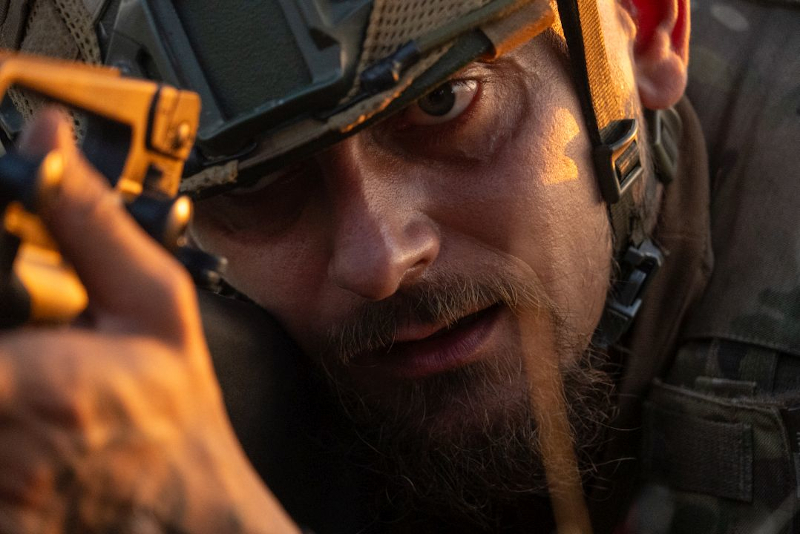
Director – Mstyslav Chernov – 2025 – Ukraine – Cert. 15 – 107m
****
A small Ukrainian Army unit advances through a narrow strip of war-scarred forest to recapture a village from the occupying Russians – documentary from the makers of 20 Days in Mariupol is out in UK and Irish cinemas on Friday, August 1st
Set in the 2023 Ukrainain offensive to take back land occupied by the Russians in the East of Ukraine, this covers the advance of a small, Ukrainian army unit, the 3rd Assault Brigade, on the country’s Russian-occupied village of Adriivka, located on the outskirts of the town of Bahkmut. Given that the latter is two hours away from Kharkiv, the hometown of director Mstyslav Chernov (20 Days in Mariupol, 2023), the location has a clear personal significance for him. He and his Associated Press colleague Alex Babenko take their camera with the unit on their mission.
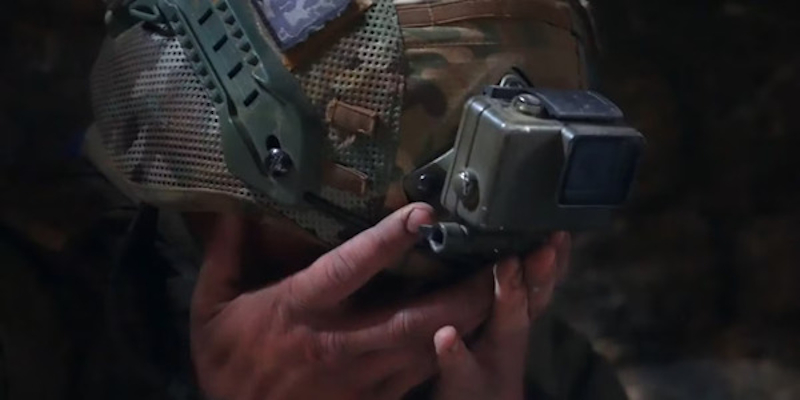
The soldiers are all equipped with helmet cams, giving the filmmakers additional material to play with. Such technology is unimaginable as recently as 25 years ago. One might argue that war has changed little, that it’s still much the same, horrible phenomenon it always has been. The advent of the cam, however, means that an audience can watch the viewpoint of a war participant up close and personal. Whatever else this documentary might be, it’s most definitely a product of the 21st Century.
There is something compelling about the idea of a vast area of land (fields) that is impassable (because, mines) and a small strip of land (forest, not mined) running through the middle of it. Which is the geographical trajectory in which the narrative takes place. That is the situation in which these soldiers find themselves. There is a sense on which, once the film is underway, that you know (in both military and narrative terms) exactly what ground it is going to cover. However, that is not how warfare works. So it is with this film: you know where it is headed in terms of objective, terrain and geography, but not in terms of human experience and cost.
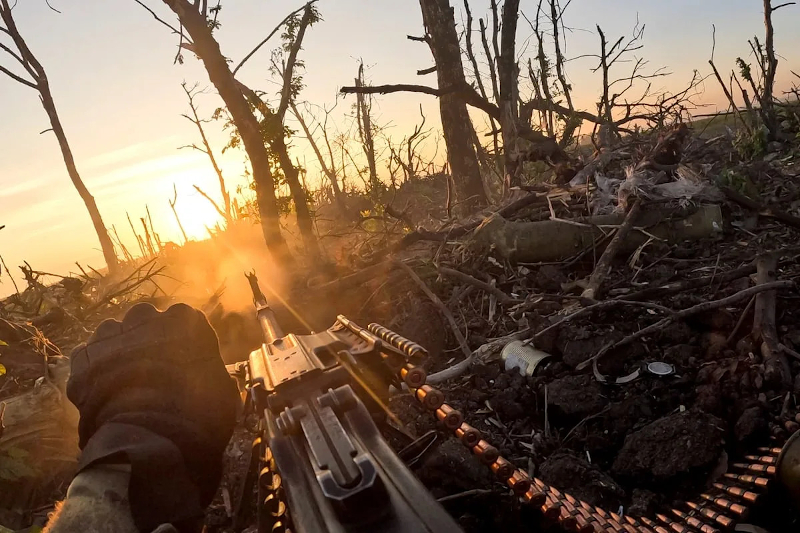
After advancing fairly rapidly through the very first part of the forest, the pace slows. The forest trees are lifeless, like spectres in a gothic horror novel. There’s nothing romanticised about the images before our eyes, though. Some of it shows the painfully slow advancing process, men with heads down crawling on all fours. At one point, the lead soldier stops moving, either dead or injured. His colleague, yards behind, has to get closer and work out whether the man in front is dead or alive.
Then there are the pauses in between advancing, when one soldier or another relaxes and talks to the camera / the filmmakers about life. Inevitably, their participating in a war – in which they might be alive one moment and dead the next, or are alive now but will have departed in a year’s time or less – tends to focus the mind. They talk about the civilian lives they have left behind, their wives, their young families who they will, perhaps, never really get to know because they are away. The basic stuff of life which, when the chips are down, is what really matters. The reasons, ultimately, people fight to defend.
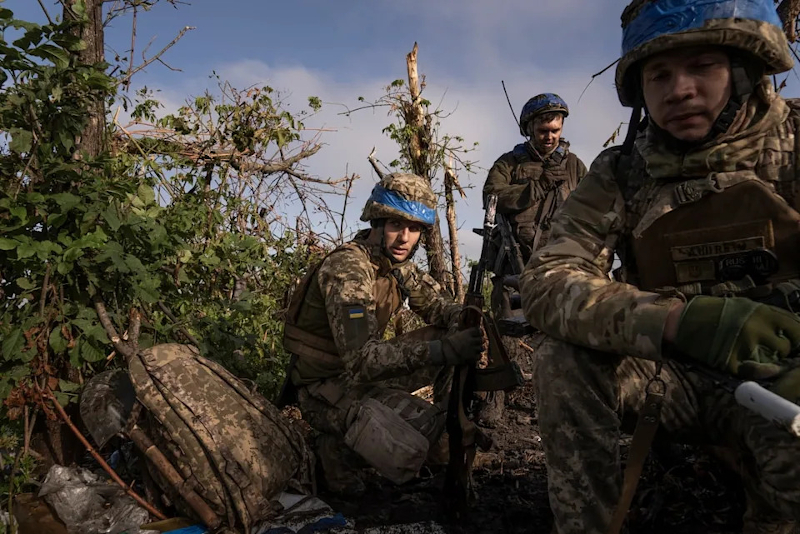
You get a real feel for who these men are as they talk before your eyes. Some of them are dead before the mission has run its course. Others survive, but voice-over narration tells us that, for example, one of them will be killed in a subsequent military action in five months time. These people live before our eyes thanks to the miracle of cinema, yet outside, in the real world, they are no more. If anything, this heightens their bravery as we watch them; ordinary individuals thrust into an extraordinary situation in which they push themselves to the limit for their nearest and dearest, and for their fellow countrymen. It’s both heroic on one level and a senseless waste of human life on another. It brings the horror of war down to an everyday level. And yet, somehow, the phenomenon remains incomprehensible.
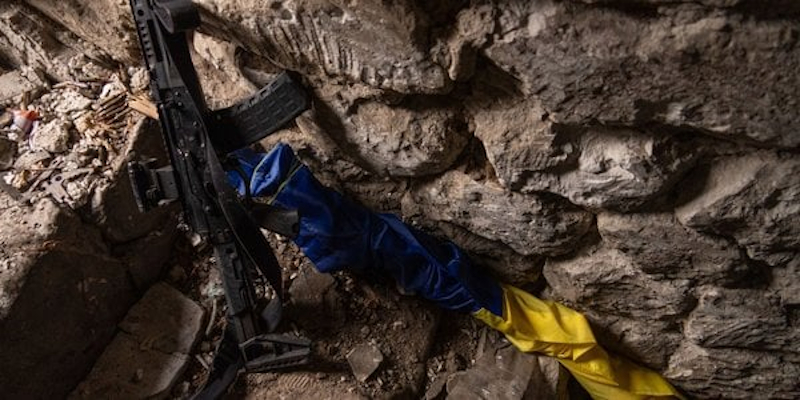
Perhaps it could be any war, anywhere: men advancing through difficult terrain towards an unseen foe. And yet, it’s very specifically the Ukraine conflict, at once hopeful and hopeless. The objective is to raise the Ukrainian flag over Andriivka once more, but when they finally get there, the place turns out to be uninhabitable, somewhere that people used to call home which has to all intents and purposes been wiped off the map.
This comes towards the end of the piece, and is contrasted with a march in honour of the Ukrainian war dead, with a large proportion of the marchers women and children.
The whole thing makes for harrowing yet essential viewing.
2000 Meters to Andriivkais out in cinemas in the UK and Ireland on Friday, August 1st.
Trailer: