
Director – Jim Jarmusch – 2025 – US – Cert. 12a – 110m
*****
Three separate stories follow visits by three separate sets of adult siblings to, respectively, an elderly father, an elderly mother, and a deceased parents’ cleared home – out in UK cinemas on Friday, April 10th
This harks back to a couple of earlier Jarmusch movies which similarly consist of a small number of stories: Night on Earth (1991) with five cabbies on one night in different cities and Mystery Train (1989) with its three linked stories set during one night in Memphis. There’s no suggestion that the three stories in Father Mother Sister Brother – set in rural North America, Dublin and Paris – are taking place simultaneously, international time differences notwithstanding, but they could well be, because all three take place in similarly good weather conditions. The first is rural, with snow on the ground, while the latter two are urban.
All three of FMSB’s stories feature similarities which link them beyond the overall siblings / parent(s) theme. These are both expected – car journeys to the home of the parent or parents, time spent in their presence or absence – and unexpected – skateboarders seen from the can en route, a Rolex watch. There are also similar, almost routine moments in all stories, such as drinking cups of tea – or coffee – together.
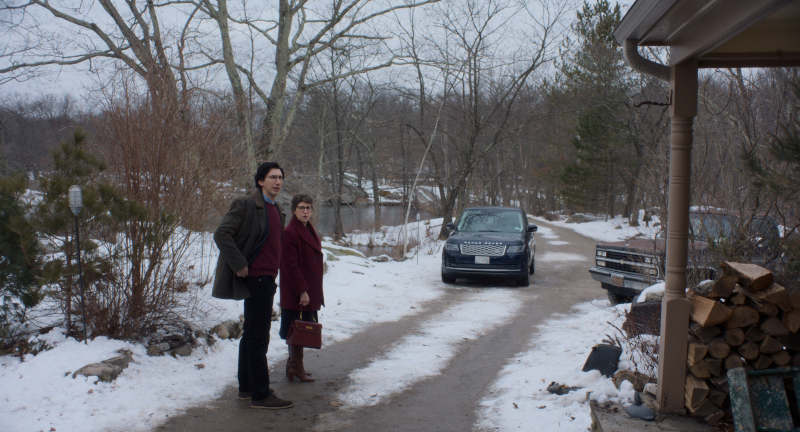
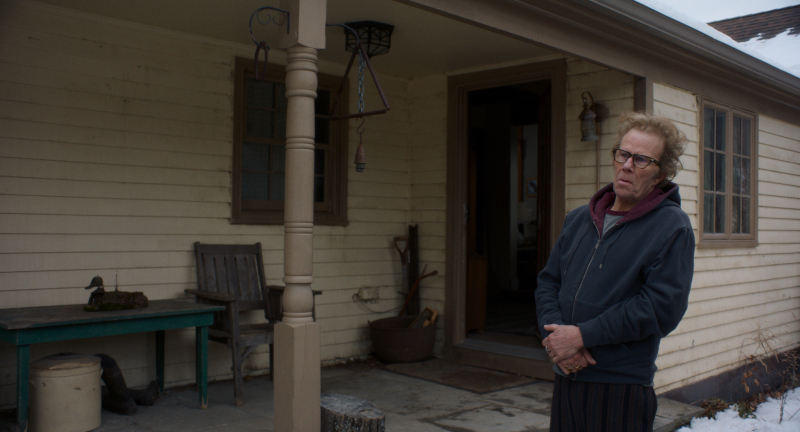
The first story takes Jeff (Adam Driver) and Emily (Mayim Bialik), in the same car, to the isolated rural home of their father (Tom Waits). On the way, driving along roads through snow-covered countryside, they pass a group of skateboarders who, as Jeff notes of that sport’s practitioners, seem to be everywhere these days. It emerges that Jeff, who is concerned about their father’s financial situation, has given him money; Emily, who doesn’t share the same level of trust in their dad, suggests this might be in part why Jeff’s wife divorced him.
At their dad’s, during a visit which might be described as strained at best, he offers them first water and then tea, using both drinks as an occasion to make a toast, causing Jeff to question whether you can make a toast with either drink. Their father seems well, but is evasive when Jeff asks to see the water butt he paid his father to have repaired, saying he just wants to spend the time with the two of them, not worrying about stuff like that. Emily spots his ‘fake’ Rolex, which she is sure is not a fake. It’s a loving portrait of an old reprobate, a perfectly judged performance by Waits, a trusting son who consistently falls for his scams but gives him the benefit of the doubt, and a daughter who sees straight through him.
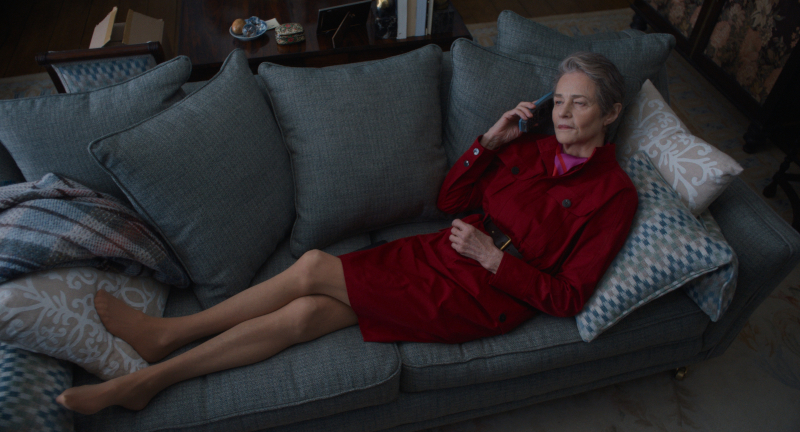
The second story takes Timothea aka Tim (Cate Blanchett) and Lilith (Vicky Krieps) to the moderately posh Dublin town house of their mother (Charlotte Rampling). This starts with the mother talking on the phone to a friend about what a good idea the friend’s suggestion of annual afternoon tea with her daughters was as a way of meeting up with them at her home periodically. Mother is a successful author of romantic fiction novels, but she doesn’t like to talk about them with her children, who at one point look through a box of copies of different titles while she’s out of the room.
The buttoned down but self-reliant Tim is delayed by car problems on the way, which she manages to fix herself whilst waiting for the car repair call out people to arrive; the grifting, pink-haired Lilith arrives by faked Uber with a girlfriend as driver so she can get her mother to pay for the return Uber after the visit. Skateboarders are observed en route. Mother takes great pride in her afternoon tea rituals, having put a lot of effort into buying the right cakes and setting out the round table just so. You sense a polite distance and tension between mother and daughters, but also between the two very different daughters themselves.
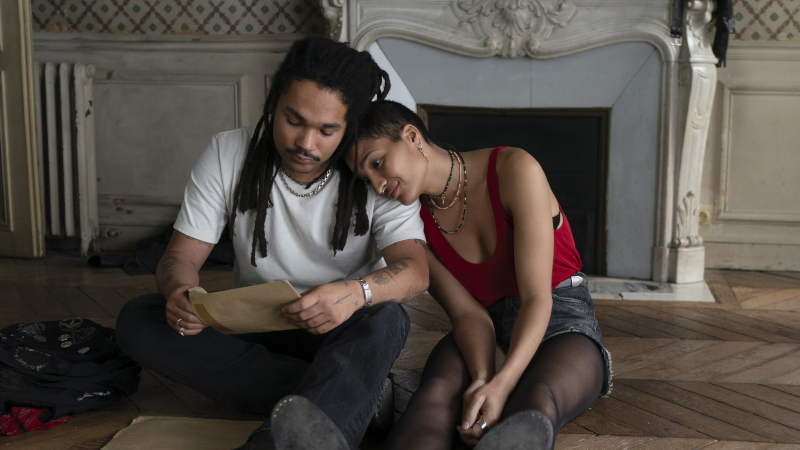
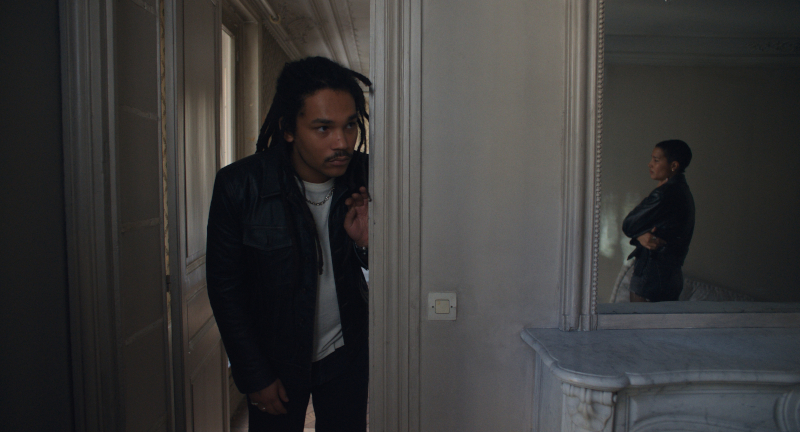
The third story takes twentysomething twins Skye (Indya Moore) and Billy (Luka Sabbat from The Dead Don’t Die, Jim Jarmusch, 2019) through the streets of Paris by car, passing the inevitable skateboarders, to the cleared apartment of their late parents, who were killed in a plane crash. Because neither parent, whatever their faults might have been, is no longer with them, it’s a very different tale to the other two, even though, at the same time, it’s somehow similar. All three stories are as much about the relationship of the two siblings to one another, as well as to their parent(s). However, with the parents gone, the dynamic changes, throwing the siblings much more back on themselves.
The twins are very relaxed and at ease with each other’s company. Skye expresses her gratitude that Billy has gone through all the work of getting the apartment cleared. They relax together and you suspect that they see each other more often than the siblings in the two prior stories, but then, these characters are younger.
All three stories once again demonstrate Jarmusch’s considerable skill at casting. Well, not exactly casting, because he takes actors and builds characters / stories around them, but the way he does it, it works very well. Try and imagine any of the characters here being played by different actors – it either wouldn’t work, or the narrative(s) would have to be completely changed.
It’s a gentle, quiet offering from Jarmusch with its many pleasures to be found in part in Frederick Elmes (first story) and Yorick le Saux’s (second and third stories) unobtrusive cinematography, Mark Friedberg and Marco Bittner Rosso’s unfussy production design, and Antony Vaccarrello and Catherine George’s costumes, the latter particularly memorable in the Dublin sequence where, as Charlotte Rampling proclaims, “we seem to be accidentally colour co-ordinated.”
Even more than these aspects, but drawing upon them, are the characters Jarmusch has created and the performers who breathe life into them. Not a moment goes by when you are not completely hooked by whichever character or characters are on the screen.
It’s also hard to imagine the younger Jarmusch of Mystery Train and Night on Earth making this film. These are an older person’s concerns – how do we deal with our parents, how do we deal with our kids, what happens when our parents die and suddenly our generation is left alone, with no barrier between us and death. If you personally have already lost one or both parents, the movie may make you think of them as you watch, although not, I hasten to add, in a triggering way.
This writer director has always been something of as maverick, but this new film, while it couldn’t have been made by anyone else, is a highly original piece delving into areas rarely so well explored in cinema. A small movie, perhaps, but a true gem; one of Jarmusch’s most profound works.
Father Mother Sister Brother is out in cinemas in the UK on Friday, April 10th.
Trailer: