
Director – Chris Petit, Emma Mathews – 2025 – Finland – Cert. 12A – 88m
****
A diary film about a boy with epilepsy, his interior world, and parenting – out in UK cinemas on Friday, April 3rd
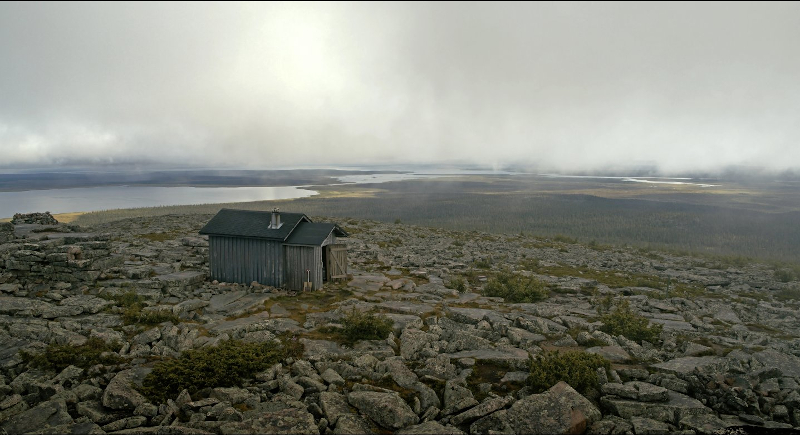
Opening and closing, more or less, with one of the quieter themes from Once Upon a Time in the West (Sergio Leone, composer: Ennio Morricone, 1968), and images first of a boy / young man clambering over coastal rocks and finally of the same young man and his father looking out from atop rock formations near “the top of the world”, this fits into the personal diary school of documentary filmmaking.
The two co-directors are life partners Chris Petit (Radio On, 1979) and Emma Matthews; the subject their son Louis, who started having epileptic fits around age 12. Following various NHS misdiagnoses, the family moved to the Netherlands where they could legally get hold of medical cannabis which, it turned out, cured Louis as long as he kept taking it.
In former times, notes the unseen narrator (Jodhi May from Dune: Prophecy, TV series, 2024; The Last of the Mohicans, Michael Mann, 1992, A World Apart, Chris Menges, 1988), people with this condition would be taken as demon-possessed and burned at the stake, or (under the Nazis) forcibly exterminated. The voice over, being female, reads as the voice of the boy’s mother Emma. The father is described as a man of few words, so it seems logical that it would be the mother doing the talking.
(Matthews and Petit are credited as two of the three cinematographers, along with Jussi Eerola, one of the producers.)
Louis’ epileptic fits merely represent the visible tip of the iceberg as far as his condition goes. As his mother puts it, it was like someone disappearing on a journey to some other, unknown world hundreds of times who, when they returned, might not be able to find their way around this present world.
Snatches of one-way dialogue, with his mother asking Louis, “are you there?”, convey this succinctly.
Indeed, at the height of the ravages of his condition, Louis lost the ability to do things he loved such as playing tennis or playing the guitar. The one thing that kept him going was art. His paintings and drawings articulated the strange worlds of his interior journeys in a way that, for him, words could not.
The snatches of images from Louis’ art are often quite abstract and nightmarish. These are complemented by visual clips from shorts A Trip to the Moon (Georges Méliès, 1902), Alice in Wonderland (W.W.Young, 1915), and Fleischer Brothers’ Betty Boop and Koko the Clown cartoon Snow White (Dave Fleischer, 1933).
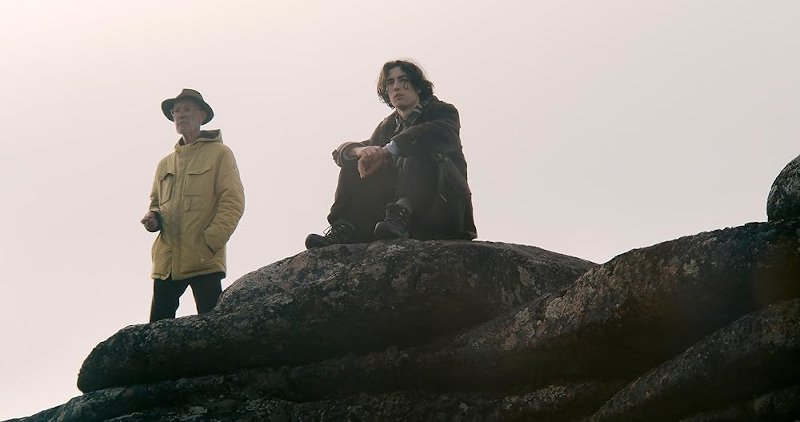
These images are embedded in the whole amidst mobile phone home movie footage of (mostly) Louis and (occasionally) his mum or dad (mostly) on trains and (occasionally) in the family car, much of which footage can be taken in the context of father and son going on a trip to the top of the world.
Verbally eschewing at one point the label road movie, indisputably applicable to Petit’s earlier Radio On, this loosely takes the form of a railway movie, albeit one where it’s mostly impossible to follow the geographical points of the route. Instead, it plays out as a life journey through the mind under Louis’ medical condition, and of his mother trying to navigate it on behalf of her son. A life movie, if you will.
It’s a remarkable film, successful in its modest aims, and strangely engaging.
D is for Distance is out in cinemas in the UK on Friday, April 3rd.
Trailer: